Tired of goalie and coach talk that features a lot of minutiae? Don’t worry, I am too. That’s why I’m excited to dive into the bluelines of Vancouver and Seattle. Deciphering the differences between the six combined goalies of Vancouver and Seattle is not easy even for the brightest of hockey writers, let alone fans who aren’t paid to understand the finer details of each position. This part is going to be easier to understand, though, because Meghan Turner and Cara Gardner Morey made it quite easy to differentiate between the two front offices’ theories on how to build a successful PWHL blueline.
PWHL Seattle’s Roster
| Name | Pos. | Born | Birthplace | Height | Shoots | Contract |
|---|---|---|---|---|---|---|
| Carly Jackson | G | 1997 | Amherst, NS, CAN | 5’5″ | L | 25/26 |
| Hannah Murphy | G | 2003 | Kingston, ON, CAN | 5’10” | L | 26/27 |
| Corinne Schroeder | G | 1999 | Elm Creek, MB, CAN | 5’11” | L | 26/27 |
| Cayla Barnes | D | 1999 | Corona, CA, USA | 5’2″ | R | 27/28 |
| Emily Brown | D | 1998 | Blaine, MN, USA | 5’7″ | L | 25/26 |
| Megan Carter | D | 2001 | Milton, ON, CAN | 5’8″ | L | 25/26 |
| Mariah Keopple | D | 2000 | Menomonie, WI, USA | 5’9″ | L | 25/26 |
| Aneta Tejralová | D | 1996 | Praha, CZE | 5’5″ | L | 25/26 |
| Anna Wilgren | D | 1999 | Hudson, WI, USA | 5’8″ | L | 24/25 |
Courtesy of EliteProspects
Maybe the funniest and most unintentional difference between the two teams is that Seattle only has one right-handed blueliner under contract (Cayla Barnes), and right-handed Lyndie Lobdell is a Seattle draft pick with no contract currently. Vancouver has Sophie Jaques, Ashton Bell, and Sydney Bard as their right-handed blueliners under contract, with the unsigned draft pick Nina Jobst-Smith, as well as camp invite Karley Garcia. For the people who believe handedness matters, then, yes, this is a notable difference. But for those who don’t believe it matters a whole lot, it’s a curious difference, nothing more.
As I mentioned in passing in my previous article about expansion goalies, if you save money on some parts of the roster, it will allow you to spend more elsewhere. Seattle went with a more traditional goalie depth chart, so they’d only need to give a bigger contract to one goalie, while Vancouver is paying two goalies a decent chunk of change. We don’t know the actual numbers. However, it’s not difficult to imagine through how the goalies were added to each team’s roster and their PWHL experience what their general salary ranges might be.
Unintentionally, this is looking like we’re building up to the forward section for Seattle because, just like their goaltending, they haven’t gone with a very big name type of defence. It’s not as though Cayla Barnes or Anna Wilgren or Aneta Tejralová are unknowns. It’s clear, though, that Seattle went into the expansion process with the same idea that they built their goaltending depth chart: we’re going to put players in roles and positions that they’re supposed to be in. For example, Seattle wasn’t going to go out and get three or four first-pair level blueliners. That’s expensive.
In order to save money to spend on other parts of the roster, Seattle budgeted for each defensive position. With Barnes and Wilgren, you get a top pair that’s played together. Barnes is obviously going to take higher than average salary because she puts up points, and she showed in Montréal that she can play a near top pair role. Wilgren isn’t a flashy player, she’s not going to be going out of her way to create offence, and she’s going to be the shield to Barnes’ sword. Barnes is able to do her thing pushing the play because Wilgren has the defensive part of the game covered. This gives Seattle a top pair that’s potentially not going to ask as much money as other top pairings in the PWHL, especially Vancouver.
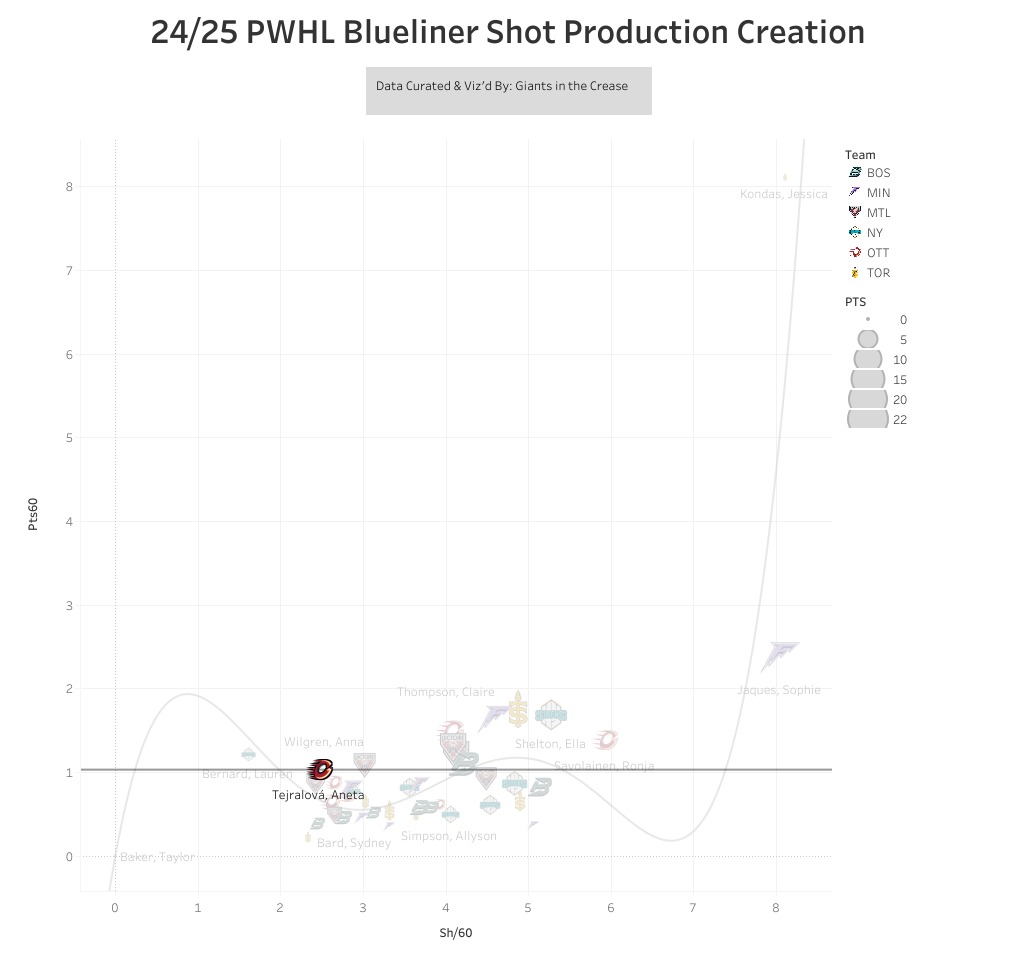
Then there’s Tejralová, who is probably underrated. She finished third on the team in average time on ice (19:25) and played a large role in stabilizing the blueline play in the playoffs behind the Bell/Larocque top pair. Tejralová is capable of providing the kind of offence you’d like to see from your second pairing as she finished 12th in points per 60 minutes of play (1.03) among blueliners last season. She’s not going to drive offence, but she’s going to facilitate it. Most importantly for Seattle, she’s not going to be on a big contract, and she can anchor a second pairing.
That leaves Seattle with Mariah Keopple, Emily Brown, and Megan Carter to fill in the last three spots. The unsigned Lobdell is looking like she’s slated to start at the seventh blueliner slot. With Keopple, Brown, and Carter, Seattle has three players who are going to provide stability in the bottom three spots. They all bring a certain amount of toughness in their own way. Keopple led the PWHL in shot blocks (60) and in blocks per 60 (7.3).
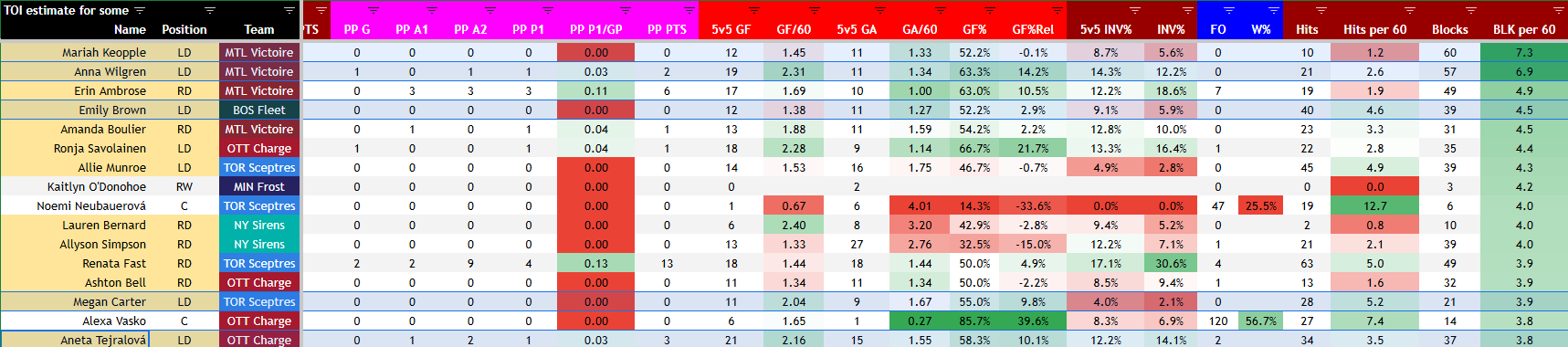
With Carter, Seattle will be getting someone who is very well rounded. She’s going to hit, and she proved that last season when she up the league’s 14th highest hits per 60 (5.2). There’s some puck moving ability there, especially in terms of her passing. Offence can happen when she’s out there; she just won’t be driving it. Last but not least, Carter will also fit the role of shot blocker, as she finished 14th in PWHL shot blocking per 60 (3.9). She’s the type of blueliner who can float between the second and third pairings, while, once again, due to her circumstances, be on a not-expensive contract.
Then there’s Emily Brown, Sue Bird’s favourite player. Brown is another bruiser on the Seattle blueline. She finished 24th in hits per 60 (4.6) and fourth in blocks per 60 (4.5). When you lay out each blueliner’s playstyle and effectiveness, it’s clear what Seattle is looking to do: they want a defence that is primarily a hassle to play against. It’s the Montréal model but toned down a bit on the offensive side. Seattle brought in four blueliners very capable of throwing themselves in front of pucks and throwing themselves at opposing players. They want to make it hard on opponents getting to the high danger scoring areas in front of the net.
It’s not a bad idea especially with Corinne Schroeder in net. This is modern hockey so you need some offence and puck moving from your blueline which is where Barnes and Tejralová come in. Barnes is going to shoulder the offensive load on the blueline. She’ll be quarterbacking the power play and generating offence. There needs to be some level of offensive depth on the blueline and that will be the expectation for Tejralová. Potentially, considering how hard Seattle went for defensive blueliners, Tejralová can find some more offence now that she won’t have to carry her pairing defensively.
While Seattle is prepared for war in the defensive zone with their legion of Amazonian warriors, Vancouver wants to bring the battle to the offensive zone with their blueline. Yes, Cara Gardner Morey is new to the PWHL, but it’s clear that she at least watched the last two playoffs closely, especially the latest one. To set the stage for how different these bluelines are, Seattle’s motto on defense is “crossing our blueline is a death sentence,” while Vancouver’s is “downhill hockey”.
I wasn’t kidding about Gardner Morey having closely watched the latest PWHL playoffs and that being a highly influencing effect on who she brought onto the roster. Vancouver’s top four blueliners are looking like Claire Thompson, Sophie Jaques, Ashton Bell, and Melissa Channel-Watkins. All four of these blueliners were in the 2025 Walter Cup Final, and Jaques and Channel-Watkins have a Cup from the 2024 season as well. This is a highly experienced top four who all played large roles in getting their team as far as they did.
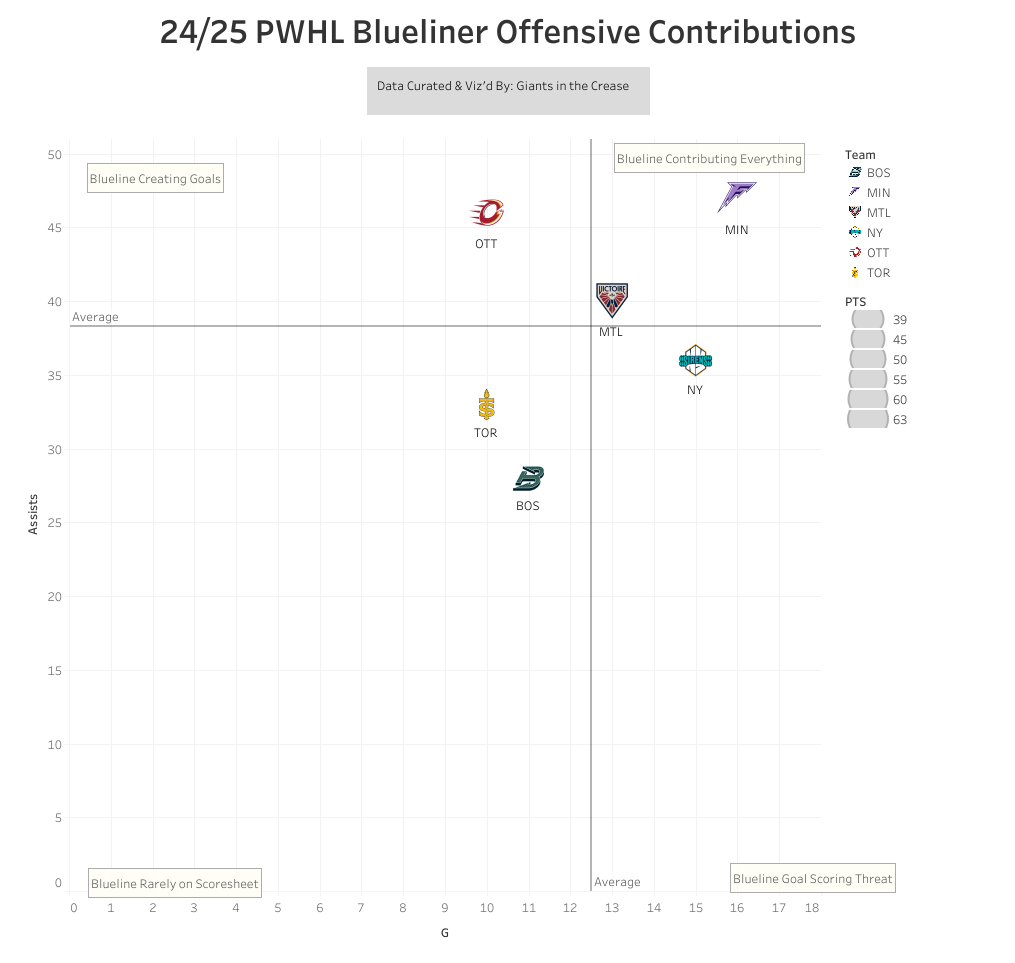
There were other blueliners on Ottawa and Vancouver who obviously have a lot of experience now themselves, so why these four? In general, it’s because these four blueliners are very good puck movers as the least and elite at their peaks. The next logical question is why stack the top four with puck movers when Seattle is going for a more balanced approach. I’m obviously not part of the Vancouver front office, but I’ll give an educated guess that they saw Ottawa versus Minnesota as Ottawa being balanced versus Minnesota being more on the puck-moving side. When the Frost won the Cup in four games, it drove home the point that puck movers win games.
It’s hard to argue against that point. I’ve been diving into some of the more minutiae stats of the Ottawa and Minnesota series. When Ottawa went on their run that led to them not only making the playoffs but also getting by Montréal to make it to the Walter Cup Final, they had nearly perfected the art of a devastating forecheck and counter-attacking. What do you do when you have a team that’s built with speed? Relentless puck pursuit.

Looking at this chart of cumulative shots-for percentage, we can see where Ottawa gets their puck pursuit game on track. And then the results followed. From game one to game 14, Ottawa is an inconsistent team that’s yet to figure out how to consistently bring to bear its speed. In game 15, we see Ottawa take a big jump in terms of shots-for percentage and even-strength shots-for percentage (EVSF %), then keep that level to the end of the season. From game one to game 14, Ottawa won five of their 14 games played. The inconsistency was rather blatant in all ways. From Game 15 onwards, Ottawa won nine of their 16 games. Most importantly, once Ottawa’s EVSF % got above 50% at Game 15, it never dipped below 50%, EVSF %, meaning Ottawa controlled nearly every game they played for the last 16 games of the season. Having a high EVSF % makes it easier to make the playoffs that way.
They carried that into the playoffs versus Montréal, and their puck pursuit wasn’t being stopped. Game One didn’t go Ottawa’s way shots-wise. But Game Two and Four Ottawa controlled the shots, and in Game Three, it was essentially a coin flip. With more opportunities to score, we all know what happened next, as Ottawa would win the series by a slim margin. But that’s how they wanted to play and it worked. Ottawa earned themselves a trip to the Final.
The obvious question is: what does Ottawa’s relentless puck pursuit have to do with Vancouver taking three of Minnesota’s top four blueliners? After what Ottawa did to Montréal, it didn’t look like the Charge were slowing down. Montréal’s scoring depth came into question but their blueline has always been considered good with Kati Tabin, Erin Ambrose, Anna Wilgren, and Cayla Barnes. How was Minnesota going to turn the tide against Ottawa when Montréal struggled to?

By having Sophie Jaques, Claire Thompson, and Melissa Channel-Watkins on the blueline. These three were great at moving the puck, especially Jaques and Thompson. They were beating the Ottawa forecheck that became the bane of the PWHL and sent the puck the other way. This was clear through the eye test, and the shots-for percentage numbers of the series showed that to be the case as well. Apart from Game Two, Minnesota controlled the series because their blueline was great at moving the puck. Ottawa couldn’t tip the momentum in their favour the way they did against Montréal, and that proved to be the difference.
Just having Jaques alone means that Vancouver is going to have at least 20 minutes of the puck going one direction—that one direction being the offensive zone. Jaques finished 15th in the PWHL last season in shots on goal per 60 minutes (8.05) among all skaters. The next closest blueliner was Ronja Savolainen at 5.63 shots on goal per 60, sitting 54th in the PWHL. Then, there’s Claire Thompson, who has more than earned her reputation as being a high end offensive blueliner. She finished 33rd in PWHL points per 60 (1.62) among all skaters, just a tad behind Ella Shelton and Renata Fast.
Not only did Gardner Morey decide that she wanted to replicate the blueline of the two-time Cup winning champion Minnesota Frost, but she wanted to double down on the puck-moving abilities of that blueline. So, she brought in three of the Frost’s top four blueliners. And on top of that, she added Ottawa’s best playoff puck-moving blueliner in Ashton Bell, rather than find a Lee Stecklein equivalent. Bell can still provide a good defensive game, but she’s very good at moving the puck. It’s a top four that’s going to be very good at keeping the puck out of the defensive zone because they transition so well.
To round out the Vancouver blueline, there’s Sydney Bard and Emma Greco under contract. There’s also Nina Jobst-Smith, who was taken in the entry draft but is still awaiting a contract, plus Karley Garcia, who was given a camp invite. With this group of players, Gardner Morey still wanted to keep with the puck-moving philosophy the rest of the blueline has but also ensure there’s some grit on the blueline as well. Greco had an impressive 6.7 hits per 60 and 3.8 shot blocks per 60.
Even Bard found herself with some acceptable gritty numbers that will ensure hard working play. Jobst-Smith is capable of delivering fine all-around play as she was the number one blueliner at the University of Minnesota-Duluth and Team Germany. Then there’s the Karley Garcia option who is just a mean SOB who will make life not fun in the defensive zone. This is where Morey Gardner goes back to what made Minnesota successful and replicating their third pairing of Natalie Buchbinder and Maggie Flaherty. Both are capable of playing tough games with some puck-moving skill.
Personally, I really like a mobile defense. My personal philosophy is that offence comes from the back end, and like Gardner Morey, I think that’s been proven the last two playoffs. Personal preference means nothing, though, when it comes to results. It’s extremely difficult to look at that Seattle blueline and believe it’s going to be an easy time. They still have Barnes and Tejralova to move the puck, while the other four blueliners make you regret being on the ice. It’s very possible this approach will see more success.
What it’s going to come down to is two factors: the coaching and the forwards. Can the coaches get the most out of each blueline? It doesn’t take someone with much experience to figure out both coaches have a lot of talent to work with and wouldn’t have taken the job if they didn’t think they could find success with these defensive units. Then there’s the forwards. Can the defense work together with the forwards to find success in all three zones? Breakouts don’t work if the defense can’t get the puck to the forwards or the forwards can’t get open to receive a pass. These defensive units were built with the idea in mind that they’ll work together with the forwards. And in the last part of this series, we’ll see if the defense matches up with their forward corps.