Happy Basketball Wednesday, presented by The BIG EAST Conference. The clock is ticking on the WNBA season, although as we discussed last week, not quite as quickly as it is being portrayed in some circles. But amid a very newsy weekend for collective bargaining negotiations, let’s not miss a critical piece of information first shared by the WNBA Players’ Association on Sunday.
“Union leaders also said on Sunday that they will be divvying up $9.25 million to players from licensing revenue generated since 2020 from jersey sales, trading cards, video games and other merchandise,” ESPN’s Katie Barnes reported. “The union expects to share that money by June 1.”
This item was tucked within a larger story about the fact that the WNBA earned enough money to generate a revenue payment, and to the level that even under the old CBA revenue sharing system, the league is going to pay the players $8 million. This is, in itself, a vitally important marker as we evaluate where the WNBA is as a business right now. It reinforces how important it is for the two sides to reach an agreement to allow this momentum to continue to build.
But the disbursement of $9.25 million, dating back to 2020, caught the eye of many players, agents and front offices folks around the league as well. Questions ranged from “Wait, how much?” to “Why did this take so long?”
The answer is complicated, the practical effects are stark and the impact on the union’s operations in 2026 and beyond is profound.
Let’s start with when this happened. Back in 2020, the WNBPA decided, rather than to distribute income from licensing, to keep it as a “war chest” to insulate against any bumps in the road. This took place the very year the PA and the league agreed to a new CBA. Nor did the WNBPA revisit this decision, even after the effects of COVID-19 led to a delayed start to the season itself.
This is, according to three different sources who spoke to The IX Sports, a different decision than those made by several other unions representing professional players that season. But let’s be clear: we’re not talking about a massive amount of money set aside. According to the WNBPA’s fiscal 2021 LM-2 form reviewed by The IX Sports (for laypeople, the annual accounting form submitted to the IRS), that licensing take-home from OneTeam Partners came to just $601,799.
But as with many of the financial building blocks within women’s basketball, that changed, and pretty dramatically, from 2024 to 2025. The total from OneTeam Partners checked in at $704,353, according to the WNBPA’s LM-2 from 2024. In 2025? The LM-2 listed the OneTeam Partners revenue as $3,543,442, with another $1,267,442 on its way (accounts receivable). The PA also, per this LM-2, invested $300,000 in OneTeam Partners itself. (Insert your level of Caitlin Clark responsibility here, your mileage may vary.)
A spokesperson for the WNBPA told The IX Sports that the PA made the decision to withhold these payouts “in anticipation of protracted negotiations”. This may seem odd on its face, considering such a decision dates back to 2020, right after the last CBA was signed. But it is not uncommon practice within other pro sports unions, with one source telling The IX Sports that a major men’s union once allowed marketing revenue to build up for 20 years in case of a rainy day for one reason or another.
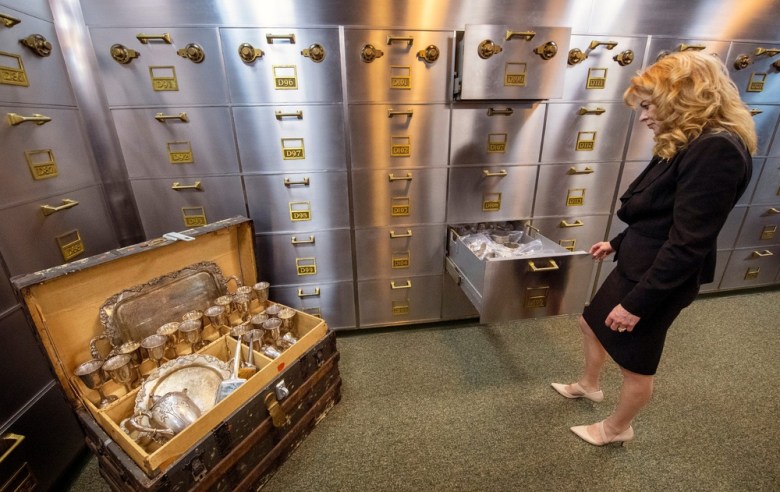
The most important part of this reality on the ground here in 2026 is that the WNBPA now has itself a strike fund. Again, that disbursement of $9.5 million covers OneTeam and other partnership revenue dating back six years, but does not include, for instance, 2026 revenue. Considering that the largest portion of that existing revenue was generated in 2025, it isn’t difficult to imagine a similar or even greater output coming directly to the PA in 2026, whether a game is played or not.
In fact, while conventional wisdom would suggest that the revenue in such instances will be bigger if the WNBA season commences on time, the PA has itself a way to turn public sentiment in support of the players directly into a publicly supported funding mechanism. Think of this like the WNBPA’s version of World War I and II War Bonds.
To be clear, there are some potential downfalls to this new structure, but they are all seemingly down the road.
For one thing, several agents pointed out to The IX Sports that not all players are driving the revenue on things like trading cards to the same degree. Clark and Angel Reese cards sell far more and for far more money than many others. The PA, according to one agent, treated signing a Group Licensing Agreement (GLM) as a mandatory prerequisite for joining the union upon entering the league. But two legal experts The IX Sports spoke with cast doubt on the PA’s ability to enforce that with future agreements, should a player choose to opt out. There’s precedent for it: Barry Bonds did this with MLBPA back in 2003.
OneTeam Partners Managing Director and Chief Legal Officer Tim Slavin did not respond to an email asking how long the current agreement between OneTeam and the WNBPA is signed for, nor did a spokesperson with OneTeam Partners. Eventually, this is going to be an issue, according to three different agents I spoke with.
Then there’s the fact that OneTeam Partners’ relationship with MLBPA is under investigation by the FBI, specifically the Eastern District of New York. In a statement, OneTeam stressed that it is not itself a target of the investigation in an email to The IX Sports:
“OneTeam and its employees are not, and have never been, targets of the Eastern District of New York’s investigation and have been fully cooperative. Any reporting that characterizes the EDNY investigation as targeting OneTeam is inaccurate.
“OneTeam remains unwavering in its commitment to maximizing value for its partners and conducting its business with the highest standards of integrity and accountability. OneTeam stands firmly behind its work for the athletes it proudly serves.”
Of course, MLBPA is one of the founding members of OneTeam. And OneTeam’s survival is critical to not only the cash flow of the WNBPA but of other companies who are working directly with OneTeam as well, including Unrivaled and soccer unions the NWSLPA (who represent the NWSL players) and the USWNTPA (who represent the national team players).
Four different sources familiar with the investigation told The IX Sports they are confident that the operations of OneTeam itself are not a cause for concern. Still, any issue with OneTeam, as it relates to the WNBPA, is really for the next negotiating standoff.
This time around? The WNBPA has created and can rely on a financial structure that serves as a de facto strike fund, the kind usually found on the owner side of the ledger. (Witness MLB’s owners just last week.) Sure, it is newsworthy that the WNBA brought in enough money to trigger revenue sharing, especially as an easy-to-understand talking point about the league going forward.
But a union on this kind of financial footing heading into crunch time of negotiations? Now that’s a really big deal. The $9.25 million in licensing and $8 million in revenue from the league is a total of more than $17 million before a single dollar of 2026 licensing or league revenue sharing come in.
For reference: according to the WNBPA’s LM-2 from 2019, the union’s total assets on hand as the union and league negotiated the final stages of the last CBA? $673,906.
Much more to come on this on this week’s The IX Sports Podcast Women’s Basketball Edition.
Jacob Mox and Jackie Powell contributed reporting to this story.
Listen now to The IX Sports Podcast and Women’s Sports Daily
We are excited to announce the launch of TWO new podcasts for all the women’s sports fans out there looking for a daily dose of women’s sports news and analysis. Stream on Spotify, Apple Podcasts or anywhere you listen to podcasts, and make sure to subscribe!
This week in women’s basketball
Yvonne Hawkins is a critical part of the Vanderbilt renaissance, Joyce Bassett writes.
Of course Pat Coyle can’t stop coaching. Of course.
Inside Angel Reese’s return to Unrivaled.
Angie Holmes, live from Iowa Senior Day.
May your memory be a blessing, Kara Braxton.
I just loved this piece from Tee Baker on UConn Senior Day.
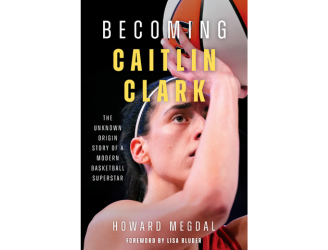
“Becoming Caitlin Clark” is out now!
Howard Megdal’s newest book is here! “Becoming Caitlin Clark: The Unknown Origin Story of a Modern Basketball Superstar” captures both the historic nature of Clark’s rise and the critical context over the previous century that helped make it possible, including interviews with Clark, Lisa Bluder (who also wrote the foreword), C. Vivian Stringer, Jan Jensen, Molly Kazmer and many others.
Five at The IX: Azzi Fudd and Sarah Strong, UConn
| Mondays: Soccer |
| By: Annie Peterson, @AnnieMPeterson, AP Women’s Soccer |
| Tuesdays: Tennis |
| By: Joey Dillon, @JoeyDillon, Freelance Tennis Writer |
| Wednesdays: Basketball |
| By: Howard Megdal, @HowardMegdal, The IX Sports |
| Thursdays: Golf |
| By: Marin Dremock, @MDremock, The IX Sports |
| Fridays: Hockey |
| By: @TheIceGarden, The Ice Garden |
| Saturdays: Gymnastics |
| By: Jessica Taylor Price, @jesstaylorprice, Freelance Writer |