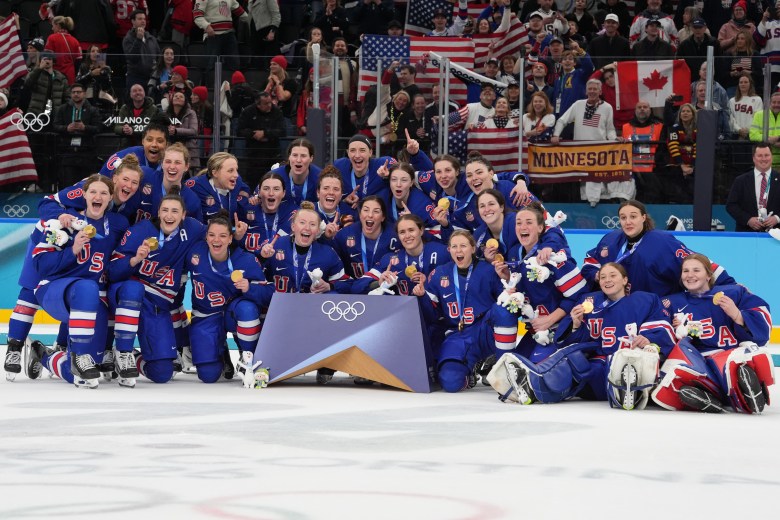
Team USA entered the 2026 Olympics with one goal in mind: capturing their third Olympic gold medal. They accomplished that in style, going a perfect 7-0 while outscoring their opponents 33-2. They never made it into an intermission without scoring until the gold medal game, nor did they trail an opponent until the second period of that game. Simply put, it was a dominant performance from arguably the best American team ever assembled. With the tournament in the rearview mirror, it’s time to reflect on some of the top U.S. storylines and players, plus take a look at where you can follow the players now as they continue their professional and collegiate seasons.
Three Storylines From Team USA’s Tournament
The youth movement is officially a success.
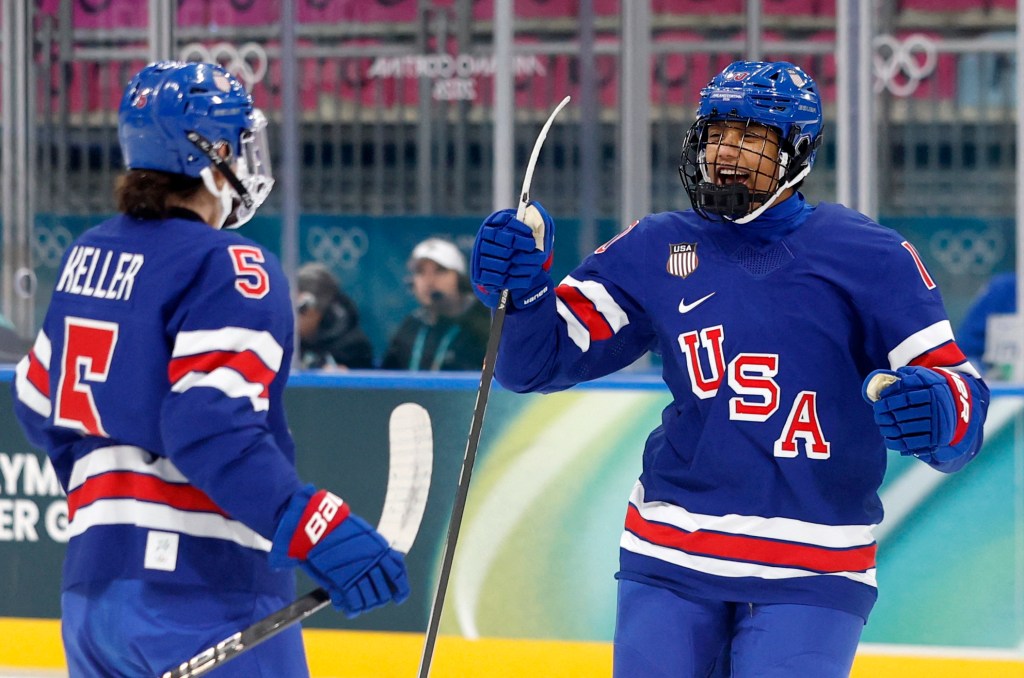
It’s been discussed ad nauseam, but you can’t recap Team USA’s tournament without talking about their youth movement. After all, they brought 12 Olympic rookies to Milan and 13 players aged 25 and younger. However, outside of a nervous first period of the gold medal game, the moment never looked too big. The youth movement has brought Team USA a good deal of success at the World Championships over the past few years, but the Olympics are a different ballgame. As such, much of the pre-tournament discussion concerned the U.S.’s bet on youth versus Canada’s on experience. Most felt the U.S.’s youth movement was the better move, and that was proven without a shred of doubt.
A mobile defense was key to their domination.
Team USA has made an effort in recent years to add more slick-skating, puck-moving defenders to their roster. That move paid off at the Olympics, as the team was arguably the best in transition of the 10-team field. That played a significant role in their possessing the puck in the offensive zone for the majority of their games. A mobile defense also tends to translate to more offense from the blueline, and it did just that at the Olympics. Their top three scorers were all defenders, with Caroline Harvey and Megan Keller leading the way with nine points each, and Laila Edwards close behind at eight. In total, nine of the team’s 33 goals came from the blueline (27%), as did 33 of the team’s 90 points (37%). It’s hard to lose with a blueline that puts up points like that while still excelling in their own end.
History made.
Team USA made a lot of history during their dominant tournament. Edwards put her name in the record books first, becoming the first Black woman to play and score for the U.S. women’s national team at the Olympics. She later became the first Black American hockey player to win an Olympic gold medal. The U.S. goaltenders also etched their names in history, combining for a record-shattering 352:17 shutout streak that spanned from the second period of their first game to the middle frame of the gold medal match versus Canada. Harvey and Keller got in on the record-breaking fun as well, co-setting the record for most points by a U.S. women’s hockey defender in a single Olympic tournament with nine. The previous record was co-held by Tara Mounsey (2002), Savannah Harmon (2022), and Molly Engstrom (2010), who each tallied seven.
Last but not least, five-time Olympian and the all-time leading point scorer at the IIHF Women’s World Championships, Hilary Knight, became the all-time leading U.S. women’s hockey goal and point leader at the Olympics. Her late gold medal game-tying tally gave her 14 career goals and 33 points, one ahead of Natalie Darwitz and Jenny Potter, respectively. Knight also became the first U.S. hockey player, men’s or women’s, to win five Olympic medals. Finally, she and Canadian Marie-Philip Poulin became just the third and fourth hockey players to win five medals, joining former Canadian players Jayna Hefford and Hayley Wickenheiser.
Honorable mention: the team’s perfect 14-for-14 penalty kill
Top Player at Each Position
Defense: Caroline Harvey
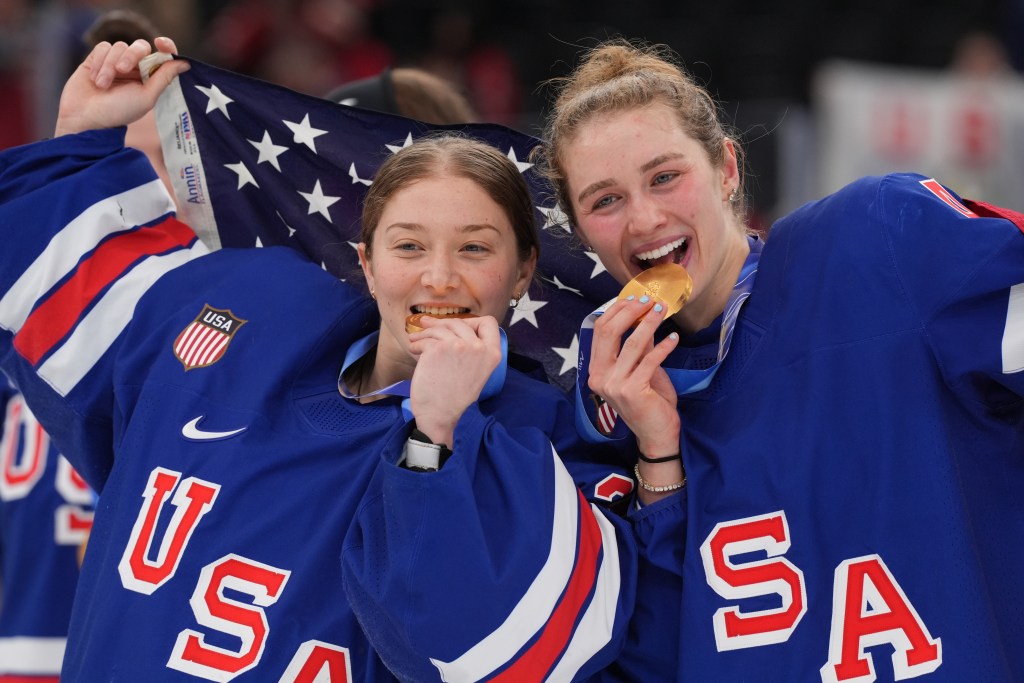
Simply put, Harvey was sensational for Team USA. The 23-year-old two-time Olympian inexplicably played very little in Beijing, but it gave her something to prove in Milan. Not only did she co-lead Team USA in points and set a new record for points by a U.S. defender, but she and Keller co-led the entire tournament in points. Harvey’s seven preliminary round points were also good for the co-tournament lead, this time with Germany’s Laura Kluge. Finally, Harvey led Team USA in ice time (22:43 ATOI per game), shots (28), and the (flawed) +/- stat (+14). Not only is she one of the best young defenders in the game, but she’s quickly establishing herself as one of the best defenders overall.
Honorable mentions: Laila Edwards, Megan Keller
Forward: Hannah Bilka
Thanks to a knee injury suffered in the February 2025 Rivalry Series, Bilka was one of two players on the Olympic roster who did not play in the 2025 World Championships. However, Bilka didn’t waste any time reminding everyone why she’s one of the sport’s most exciting young players. Her speed, shiftiness, and skill with the puck make her extremely difficult to contain, and that leads to points. She co-led the tournament in goals (4) alongside Switzerland’s Alina Müller and Sweden’s Thea Johansson. Bilka also co-led U.S. forwards in points (7) with Abbey Murphy. Plus, her 23 shots on goal were good for second on the team, behind only Harvey. Simply put, Bilka was as dynamic as she’s ever been. At 24 years old, she’ll continue to be a big part of the U.S. offense for years to come.
Honorable mentions: Hilary Knight, Abbey Murphy
Goaltender: Aerin Frankel
It’s getting difficult to find words to describe Aerin Frankel. After all, she’s been in the as “best goaltender in the world” conversation for a few years now. However, she seems to have found yet another level this season. She has been dominant in the PWHL, and while she was not as busy on the world stage, she kept that dominance up at the Olympics. There’s no other word for a goaltender who allows just two goals in five games, even if they only faced 99 total shots (19.8 average per game). Walking out of an Olympic tournament with a perfect 5-0 record, 0.39 GAA, 0.980 SV%, and 232:17 shutout streak is just plain silly.
Honorable mention: Gwyneth Phillips
Where to Watch Team USA Now
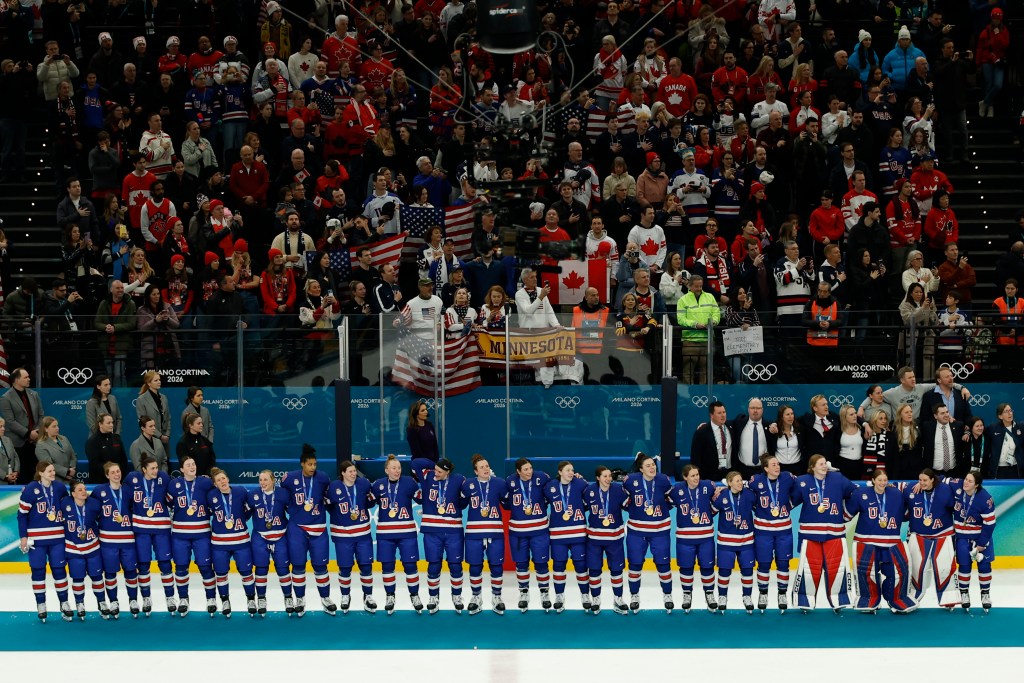
16 U.S. players have now returned to their PWHL teams. The other seven are back in the NCAA just in time for the playoffs. Here’s where to follow each of them for the rest of the season.
PWHL
- Boston Fleet: Aerin Frankel, Megan Keller, Haley Winn
- Minnesota Frost: Britta Curl-Salemme, Kendall Coyne Schofield, Taylor Heise, Kelly Pannek, Lee Stecklein, Grace Zumwinkle
- Montréal Victoire: Hayley Scamurra
- Ottawa Charge: Rory Guilday, Gwyneth Phillips
- Seattle Torrent: Cayla Barnes, Hannah Bilka, Alex Carpenter, Hilary Knight
NCAA
- Ohio State University: Joy Dunne
- Penn State University: Tessa Janecke*
- University of Minnesota: Abbey Murphy*
- University of Wisconsin: Laila Edwards*, Caroline Harvey*, Ava McNaughton, Kirsten Simms*
*denotes projected 2026 PWHL Entry Draft pick.