

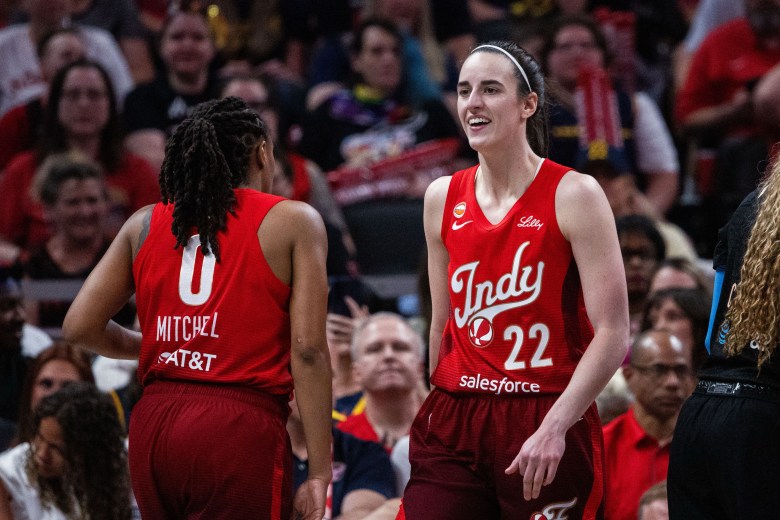
INDIANAPOLIS — The Indiana Fever were tested over the past week. Mentally and tactically, they had work to do. On May 30, they played their eighth game of the season and were thumped by the Portland Fire. In a 16-point loss, the Fever gave up 100 points and shot the ball horribly from deep.
They strayed from their identity and lost by more than 3 points for the first time this season. The Fever were clearly frustrated. After taking an 8-2 lead early, they were down 14 points at the end of the first quarter.
Defensively, they were disconnected. Their execution was poor when they deployed more complicated coverages. In response, they turned to simple schemes. Those were too predictable.
Star guard Caitlin Clark shot 1-for-7, her second-fewest shot attempts in one game as a WNBA player. She and head coach Stephanie White went viral for a bench interaction. Rookie Raven Johnson fouled out quickly. Two starters, Lexie Hull and Monique Billings, both failed to make a single shot.
It was a mess. Over the course of a season, every team will have bad nights. For the Fever, this one was particularly maddening. From top to bottom, they felt off as a team.
“Rotations were a little bit slow in every coverage that we really tried,” Clark told reporters after the loss. “When we switched, they did a great job of exploiting it.”
That loss dropped Indiana to 4-4. The Fever have lofty goals for this season, and being at .500 after eight games was below where they hoped to be. They felt it, and they had four days before their next game to find solutions.
Listen now to The IX Sports Podcast and Women’s Sports Daily
We are excited to announce the launch of TWO new podcasts for all the women’s sports fans out there looking for a daily dose of women’s sports news and analysis. Stream on Spotify, Apple Podcasts or anywhere you listen to podcasts, and make sure to subscribe!
Most of those answers had to come on the defensive end. Wing Sophie Cunningham admitted on Tuesday that the Fever had many defensive schemes installed, but few of them were actually able to be used thanks to failures in execution.
“We have them,” Cunningham said of her team’s defensive ideas. “We have a ton of them. We try to do them; they just break down because we can’t execute.”
White said a few days later that most of those breakdowns, in her view, came from inattention to detail. There wasn’t enough trust on the less glamorous end of the court. Both Cunningham and White explained that on any given possession, it felt like two or three players were connected on defense, not five.
To increase their trust and connection, the Fever needed to communicate — ironically, something they weren’t doing on the defensive end. And on Monday, they did exactly that thanks to a long team meeting that was designed to get everyone on the same page.
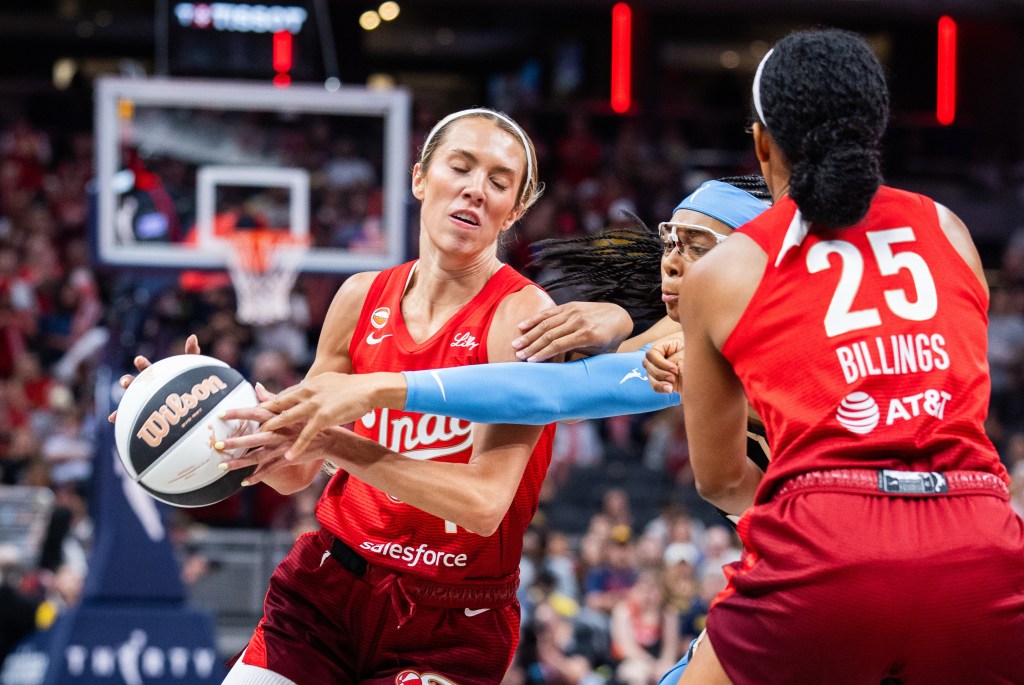
They aired out their feelings, discussed their identity and peeled back the layers of their defensive struggles for about 90 minutes. They didn’t watch film from the Portland game; that was an individual exercise. Instead, they talked through their problems.
“We needed that meeting,” Cunningham said. “No one wants to have these meetings. But every team has them.”
Veteran guard Kelsey Mitchell said the Fever’s culture was being tested. But they were honest with each other in the much-needed meeting, one that the coaching staff initiated but became player-led along the way.
White wants the Indiana Fever to be a player-led team and had challenged the team’s stars to be leaders before the season started. In this instance, the coaching staff initiated the meeting and led with questions. That helped some of the younger players, in particular, speak up. Then it was about having important discourse.
“Any time you get an opportunity to have authentic, real conversation, it’s good,” White said. “This is collaborative stuff with us. Some of it’s execution. Some of it’s learning one another.”

“Becoming Caitlin Clark” is out now!
Howard Megdal’s newest book is here! “Becoming Caitlin Clark: The Unknown Origin Story of a Modern Basketball Superstar” captures both the historic nature of Clark’s rise and the critical context over the previous century that helped make it possible, including interviews with Clark, Lisa Bluder (who also wrote the foreword), C. Vivian Stringer, Jan Jensen, Molly Kazmer and many others.
Multiple Fever players shared another similar thought: At least this was happening now instead of much later in the season. In September or in the postseason, there’s less time to fix mistakes. The Fever had 36 games left in the regular season after their loss in Portland.
They have 35 left now after battling the Atlanta Dream on Thursday. Huddling between games can help, and so can practice. But the real test of the Fever’s week came on the court in Gainbridge Fieldhouse as the Commissioner’s Cup began.
Almost immediately, the hard work and harder conversations appeared to pay off. In the first quarter, the Fever forced five turnovers, limited the Dream to 5-for-14 shooting and held Atlanta to 15 points. In the second frame, they were even better, limiting their 2025 first-round playoff foe to 14 points on 5-for-15 shooting.
At halftime, the Dream had just 29 points. That’s as many as the Fire had scored in the first quarter during the Fever’s ugly loss. It was just one half, but it was exactly what the Fever needed. Connection. Communication. Covering for each other. It was all happening.
Their attention to detail was obvious. Indiana’s frontcourt players were up higher on ball screens but sagged off of weaker shooters. Behind the play, there was help. Rotations continued after one breakdown. Atlanta had few openings and had 10 turnovers at halftime.
In the second half, the Dream took care of the ball much better. But their shooting continued to be a struggle as the Fever protected the paint and won battles at the point of attack. In the third and fourth quarters, the Dream shot 13-for-38 and weren’t able to keep up with a Fever team that was having a just-OK offensive night.
Three practices and one meeting led to a massive step forward for Indiana defensively. “We felt it and we saw it,” star center Aliyah Boston said of her team’s defensive growth. “I think our presence, they felt us from the jump.”
Added White, “It feels great. There are a lot of ups and downs in this league. When you see some of the work you put in physically, mentally, emotionally, a lot of things, and to come out and play the way we did, that’s the standard. That’s what it looks like.”
The Fever won 83-71, marking perhaps their best win of the season. It’s the fewest points they’ve allowed in a game all year, and they got 61 points from their star trio of Mitchell, Boston and Clark.
Rep The IX Sports at your next game!

Shop the logo collection or special “Women’s Sports are Front Page News” collection now on Shopify.
The next challenge for the Fever is sustaining this level of defense. That end of the floor will define their ceiling, yet they’ve been inconsistent there at best so far this season. In the coming weeks, they’ll be tested against strong opponents.
If their defense holds, it will be in large part thanks to the work they put in both on the practice court and behind the scenes this week. The team poured into each other, but it can’t be a one-time event that only came from a humiliating loss. It must be a continuous effort.
They all understood the urgency this week. It was a week of being “honest and transparent, and not shying away from difficult situations and difficult conversations,” White said. “Hitting things head on.”
Beating Atlanta is just one win. The Indiana Fever will hope for many, many more — and they know now what level of connection is required.
“I think it’s a part of being a family,” Mitchell said of the team meeting. “Losing is important. I think you find out a lot about yourself and where you need to be.”

Appreciate your article. I have only been watching the WNBA since Caitlin Clark came into the league. My concern is how much freedom beat reporters like yourself have in asking hard questions considering what has happened to Scott Agness. That said, I would be interested in a report on the Fever’s poor recruting to date and lack of oversees talented players who are thriving in the W. Cheers.
Good point Patrick