A chaotic Phase 2 of the PWHL expansion process has come to a close. There’s now a day break before Phase 3 kicks off on Wednesday, which means it’s a perfect time to reflect on how things went. Despite losing a bona fide superstar and leader in Alina Müller, the Boston Fleet fared better than most teams. Müller was their only loss, while everyone else except the Vancouver Goldeneyes (0 losses) bid farewell to multiple players. That puts them in a solid position heading into Phase 3, during which they’ll get to protect an additional three players.
What the Loss of Alina Müller Means for the Fleet
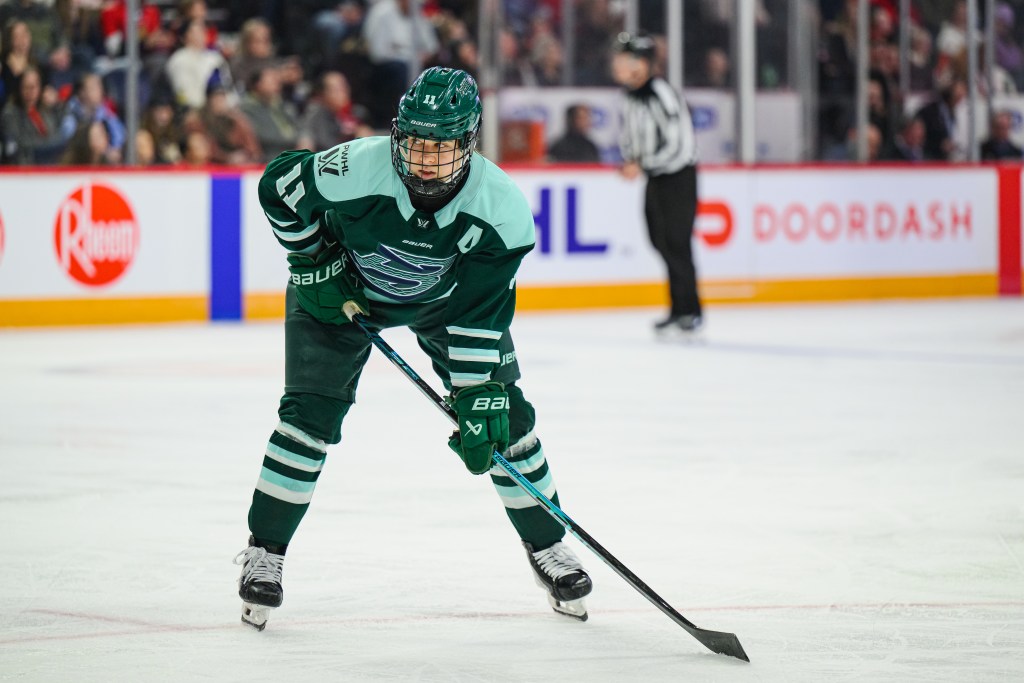
It’s hard to see how exactly the Fleet plan to fill the void left by Müller. Boston’s all-time leading scorer is one of the most dynamic centers (and players, for that matter) in the PWHL. Her playmaking abilities elevate anyone she lines up alongside. Additionally, Müller was an alternate captain for the Fleet, helping set the team’s strong culture. She also has deep roots in the city, having spent all eight of her North American seasons in it. Boston’s offense has had a hard enough time these past three seasons, and things look significantly scarier next season with one of the game’s best gone and no true forward stars currently signed.
Phases 3 and 4 Rundown
Phase 3 of the PWHL’s expansion process kicks off on June 10 at 12 p.m. ET. This phase is significantly simpler than Phase 2. It is just an open signing window for all 12 teams, which will run until June 12 at 3 p.m. ET. During this phase, existing teams will protect an additional three players ahead of Phase 4. These new protected lists are due by 5 p.m. ET on June 12. The protection process is identical to Phase 1’s, with teams either protecting players under contract/whose rights they hold, or signing and protecting free agents. Meanwhile, the expansion teams will sign up to three players on expiring contracts.
The only major contract restriction in Phase 3 is that any player who was offered but did not sign an FPO in Phase 2 must sign a contract with any team in Phase 3 with an AAV of at least $73,125 (90% of the FPO’s minimum). In addition, the expansion franchises have until the end of Phase 3 to sign any players on their Exclusive Negotiation Target List (ENTL), as they will be ineligible to do so in Phases 4-6.
Looking ahead to Phase 4, it’s another expansion team signing window. Expansion teams will sign players until they reach a total of 10 rostered players. It will unfold largely the same as Phase 2, except there are no Expansion Franchise Offers or Foundational Player Offers. All players left unprotected will be eligible to sign, regardless of their current contract status. However, contracted players will still need to sign for an AAV equal to or greater than their existing contract’s AAV. There are no restrictions on contract length or salary for players on expiring contracts.
Phase 4 will kick off at 12 p.m. ET on June 14 and close at 3 p.m. ET on June 15. Should an expansion team fail to reach 10 players by then, there will be a selection process identical to the one that would’ve happened in Phase 2. If necessary, it will begin at 4 p.m. ET on June 15 and conclude no later than 6 p.m. ET the same day. Only players currently under contract will be eligible for selection.
Top Three Fleet Phase 3 Protection Candidates

With two elite defenders and one of the best goaltenders in the world already protected, Boston’s priority now needs to be offense. They’d be wisest to use all three protection slots on forwards to guarantee themselves a full starting lineup through the rest of this process. For simplicity’s sake, only players who played for Boston last season were considered for this exercise.
Jessie Eldridge (F)
In a bit of good fortune for the Fleet, Eldridge remains unsigned ahead of Phase 3. It’s an open signing window, so there are no guarantees that she will not sign with another team. However, the Fleet have a decent chance to keep her. She almost certainly had offers on the table from the expansion teams, but she did not take them. That could be because she has her eye on another existing team, but Eldridge genuinely appeared to enjoy her time in Boston. It’s not a stretch to believe she truly wants to stay.
Eldridge sits tied for fourth all-time in PWHL goals (30) and seventh all-time in points (61). She’ll likely be looking for a raise from last season’s $84,872 salary as a result. However, with Müller’s $95,000+ salary off the books, the Fleet suddenly have a lot of extra money to play with, making them able to field as competitive an offer as anyone. Boston likely wasn’t expecting to have a strong chance at retaining Eldridge, but now that they do, they need to take advantage of it.
Susanna Tapani (F)
With Müller off to Hamilton, re-signing Tapani becomes the most important piece of business for the Fleet in Phase 3. Elite centers are at a premium in the PWHL, and Tapani is a genuine 1C. She’s third all-time on the Fleet in points (49, although five were with Minnesota), behind only Müller and defender Megan Keller. In addition, Boston simply cannot lose their top two centers to this expansion process and hope to be competitive next season. Luckily for them, Tapani seems to really like Boston, and she almost certainly had offers on the table in Phase 2 that she turned down. She could have her eye elsewhere, but it doesn’t feel likely. Given that and Boston’s cap flexibility, it shouldn’t be a huge hurdle for them to re-sign and protect Tapani.
Abby Newhook (F)
Last but not least, Newhook far outperformed her fifth-round draft selection with an excellent rookie campaign last season. She finished tied for second in rookie goals last season (7) and held sole possession of fifth in points (14). In addition, Newhook’s nose for the net and tenacity make her a pest to play against, and give her significant value even if she isn’t scoring.
Newhook has also developed strong ties to Massachusetts that likely make her want to stay long-term. The St. John’s, Newfoundland native went to Tabor Academy in Marion, MA, before her collegiate career at Boston College. She’ll be looking for a sizable raise from her $40,000 salary last season, but she should still come at a fair price. In addition, as an RFA, the Fleet have a little more leverage with her. It’s hard to imagine they won’t be able to re-sign her, and they would do very well to do so ahead of Phase 4.
All things considered, the Fleet are in a strong position heading into Phase 3. They’ve lost just one player, and they have three excellent candidates from last year’s team still available for protection. It cannot be overstated how big a loss Müller is for them, but if they can keep the three players discussed above, they’ll go a long way to keeping the Fleet competitive in season 4.