Cheyney State College belonged.
“I want people to know that we existed, were relevant and we could beat any Division I school at the time,” said Cheyney’s Valerie Walker, a two-time All-American. “We beat the powerhouses, like Penn State, Maryland and Rutgers. We did it because we had an excellent coaching staff, practiced with the men and had selfless players.”
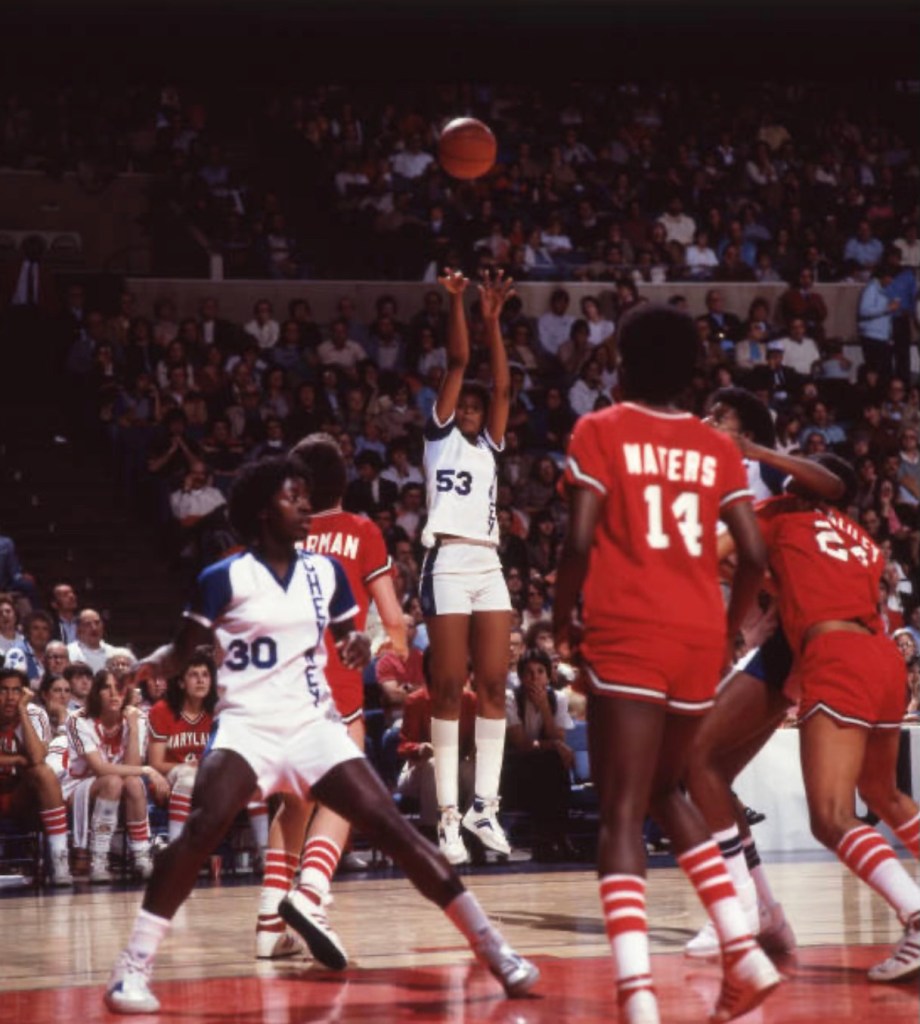
Cheyney State, now Cheyney University, reached the pinnacle of women’s college basketball in 1982, 10 years after the passage of Title IX. Competing in the first NCAA Division I championship game at the venerable Norfolk Scope Arena, those at Cheyney never thought about the historical significance of the opportunity.
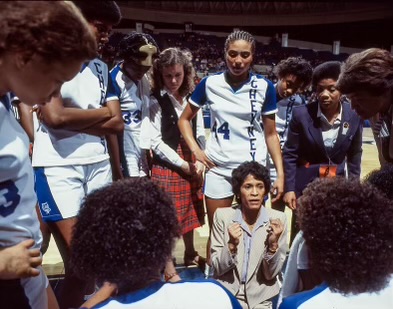
The players thought about all the intense practices that prepared them for this moment. They remembered the fun bus rides where they laughed and blasted music from Deb Walker’s boom box. More importantly, a shared purpose forged by the steely resolve of their legendary coach, C. Vivian Stringer, united them.
“We never thought about history when we were playing,” said Yolanda Laney, who enjoyed a decorated college career for Cheyney. “Our only thought was we will leave with a national championship. People counted us out before we even got to the championship. I never thought once we were going to lose until the final buzzer sounded.”
Unfortunately, the ending wasn’t perfect, as Cheyney State lost 76-62 to Louisiana Tech.
That’s just one part of the story. The accomplishment of playing in the first NCAA women’s basketball national championship game and being the only historically black college and university (HBCU) to do so is finally being properly acknowledged. Cheyney State is getting its flowers: The Women’s Basketball Hall of Fame will recognize it as this year’s Trailblazer of the Game on April 27 in Knoxville, Tennessee.
Everybody should know Cheyney State’s story because it’s more than just Black history.
Even though it was a Division II school competing as a Division I independent, Cheyney pursued dreams that required uncommon courage, passion, resilience and dedication. They treasured each practice, game and shared moment, shaping the rich tapestry of women’s basketball hoops history.
“I cried like a baby,” Val Walker recalled of the loss to Louisiana Tech. “I remember Coach Stringer came into the locker room and spoke to us with tears in her eyes. She told us that she was so proud of us. The loss hurt because it was my last game. My college career was over. I didn’t want to hear at the time, but you got there because what athlete wants to hear that? Years later, with perspective, I fully understand and appreciate what we did as a program.”
Cheyney State was also the first to have an all-Black coaching staff, led by Stringer, that included assistant coaches Carlotta Schaffer and Ann Hill.
“Our history is important for the future, not so much for us because we lived it,” said Deb Walker, a forward from Detroit on the ’82 team. “We realize what we did now was more valuable than when we played. It’s exciting for people to find out about our story and journey. We were chosen 40 years ago for that moment. At the time and still to this day, we never wanted any credit for what we accomplished, but the credit is due.”
Cheyney is ’special’
Cheyney is America’s oldest HBCU, founded Feb. 25, 1837. The school was established through the bequest of Richard Humphreys, a Quaker philanthropist who bequeathed $10,000 — one-tenth of his estate — to design and develop a school to educate people of African descent and prepare them as teachers. First known as the African Institute, the school was soon renamed the Institute for Colored Youth. Cheyney State College became Cheyney University of Pennsylvania in 1983.
HBCUs are special. In addition to playing a critical role in leveling the playing field for students and families of color from marginalized communities, they have nurtured some of the country’s most outstanding leaders and been nerve centers of major social movements.
“I am amongst my people,” Deb Walker said. “There’s nothing like it. Campus life and basketball were great. We had some speed bumps that we faced, like racism, when we competed against schools on their campuses. People would say to us, ‘What gives you the right to be here, and how dare you come in here and compete?’
“So, we always had a chip on our shoulder. We are Cheyney State, and our mindset was that we were never a small HBCU. We may have been broke but were never poor because we had love. The love on a Black campus from the cafeteria workers to the faculty to our classmates and from the president was something we cherished because we were the same people.”
The communal strength of Black culture and heritage builds upon the legacy of excellence of distinguished Cheyney giants like Ed Bradley (legendary “60 Minutes” anchor), Robert Bogle (Philadelphia Tribune CEO), Jim Ellis (founder of the nation’s first Black swimming program and the inspiration behind the movie “Pride”), Joyce Abbott (the inspiration behind the popular television show “Abbott Elementary”) and Bayard Rustin (renowned civil rights activist), who have paved the way for generations of Cheyney students.
While they aren’t Cheyney alums, legendary coaches Stringer and John Chaney are just as synonymous with the history of the institution. Enshrined in the Basketball Hall of Fame, Stringer and Chaney — as the Cheyney men’s head coach — roamed the sidelines together before deepening their impact after they left. Chaney had led Cheyney State to the 1978 NCAA Division II national championship before taking Temple to four Elite Eights.
That shared experience made a difference.
“Coach Chaney could run practice one day,” Deb Walker said. “He got on us just as hard as Coach Stringer when we went through our drills. We practiced with the guys, and they helped us break down our next opponents. They didn’t let up on us because they knew they would get in trouble if they did. We beat them sometimes, and they beat us, but at the end of the day, I always believed that there wasn’t a better 24-person squad on this Earth better than Cheyney’s men and women.”

Home-court advantage
The Cheyney players felt support from their campus whenever they played a home game. There was nothing like Alfred Cope Hall, a facility that opened in 1962. Cope was a Quaker supporter for Cheyney and served on the Board of Managers from 1842 to 1875.
Deb Walker enjoyed the beautiful sight of people waiting in long lines to get inside the cozy environment of Cope Hall outside of her Sojourner Truth Hall dorm window. Cheyney players dressed in its residence halls and walked the short distance to Cope Hall — past the throngs of its enthusiastic classmates — for each home game. Cope Hall didn’t have locker rooms at the time.
A gym, ball and classroom were all it needed.
Cope Hall growled thanks to the fans, stuffed into every nook and cranny — an invisible sixth man that consistently crackled with electricity. The headache meter reached migraine-like levels from the explosions of applause and chorus of whoops each time Cheyney scored or made a great play.
“We never lost in that gym, and it was amazing,” Val Walker said. “The gym was always packed and hot. The entire football team was at the far end of Cope Hall cheering. It was tight and loud. You had to be ready. It’s almost indescribable. The adrenaline would flow, and the fans would not let us lose. I will always treasure the opportunity I had to play in Cope Hall. It was an amazing gym. We were among family, and it was one big party.”
Unfortunately, today Cope Hall is empty and surrounded by a fence. Banners, plaques and trophies commemorating Cheyney State’s achievements have been removed. The facility is being razed soon and replaced by a newer one as part of a capital project.
Cope Hall was a shrine to Cheyney’s greatness — all that history.
It was where Laney fell in love with Cheyney and decided to attend the hidden gem located in Delaware County, 23 miles southwest of Philadelphia. She was on campus watching a game while she was in high school. The crowd was hyped as usual. Cheyney was winning. Laney knew this was where she was supposed to go.
There was just one obstacle: Mom.
Laney’s mom, Betty, attended South Carolina State, an HBCU in Orangeburg, South Carolina, where in 1968, three students were killed and police wounded 28 during a peaceful civil rights protest. She got pregnant and left after a year. Betty was slightly fearful that the same thing could happen to Laney. She needed her mom’s blessing.
“I had scholarship offers to attend so many bigger schools,” Laney said. “I dreamed in eighth grade that I was going to Cheyney even though didn’t have athletic scholarships. They had a great team and a family atmosphere, which was more than enough for me. My mom had the best experience at that game. Before the game was over, I was talking in the hallway; she came over and said, ‘You can go here.’ I gave her the biggest hug.
“It means the world attending an HBCU. I would never make a different decision. When I arrived here, I recalled that dream and said this is where I was supposed to go. When I arrived on Cheyney’s campus, it was quiet and peaceful, but more importantly I saw all the Black people there. You’re in the majority here, and I never experienced racism at Cheyney.”
United by adversity
Not only did Cheyney have to compete against bigger schools with more resources, but players were also called the n-word during games, had food thrown at them in opposing school cafeterias, and had their school name mispronounced often. Cheyney continued to persevere and win.
The Lady Wolves entered the 1981-82 season with a chip on their shoulder from how their previous season had ended, in the AIAW quarterfinals at the University of Southern California. Cheyney’s bus got lost on the way to the arena. Once it arrived, the players were given five minutes to dress and warm up, and its season ended with a 67-58 setback to the Trojans.
Early during the 1981-82 season, Stringer’s daughter, Nina, was diagnosed with spinal meningitis, and that provided an extra boost for Cheyney’s squad during that season. Stringer missed some games. During the day off between the semifinals and championship of the Final Four, Val Walker remembers Stringer’s flying to Philadelphia to be by her daughter’s bedside.
Your business can reach over 3 million women’s sports fans every single month!
Here at The IX Basketball and The IX Sports, our audience is a collection of the smartest, most passionate women’s sports fans in the world. If your business has a mission to serve these fans, reach out to our team at BAlarie@theixsports.com to discuss ways to work together.
“It was extra motivation for us because of what coach was going through with her daughter,” Val Walker said. “We were determined to go as far as we could as a team. We were on a roll then, and learning that news devastated us. We played at Madison Square Garden and lost those two games immediately after hearing the news. We were crushed. We were able to get ourselves together. It brought us closer because we wanted to do this for Coach Stringer. There was no stopping us after that, and we went on an unbelievable run.”
During the 1981-82 season, the Associated Press ranked Cheyney State No. 2 in the nation. They were in the top five in offense and defense and enjoyed a 23-game winning streak during that magical campaign.
Once the 32-team NCAA Tournament started, Cheyney hosted Auburn and rallied from a seven-point halftime deficit to claim a 75-64 victory. The team then traveled to the regionals, which North Carolina State hosted. The Wolves were ready, and N.C. State star Linda Page, a Philadelphia legend like Laney, provided some bulletin-board material that Cheyney used as lighter fluid to claim a 74-61 victory.
Before Cheyney’s national quarterfinal contest against Kansas State, Stringer noticed people high in the bleachers spying on her closed practice. She immediately stopped practice and had her team just shoot. They didn’t discuss strategy or practice plays. When Cheyney played Kansas State, it was a bludgeoning. Kansas State opened in a man-to-man defense because Cheyney had a reputation for crushing zone defenses. Laney started strong by punishing her smaller defender, which forced Kansas State to abandon its man-to-man strategy. It didn’t matter. Cheyney rolled to a 93-71 victory — marking three double-digit victories.
“We felt like the odds were stacked against us in each game,” Laney said. “Linda put a statement out there that they were looking past Cheyney. It was like ‘Cheyney, who?’ We were offended and shut them down. We were determined that they weren’t beating us. When we realized we were in the Final Four, it was exciting even though we expected to be there. It was a feat because we pushed past the obstacles to get to the championship.”
Final Four organizers didn’t expect Cheyney to get there, as the official Final Four T-shirt had images of just three women depicted on the front of it. Feeling slighted by the omission, Cheyney took its wrath out on Maryland in the national semifinals in the form of a 76-66 victory.
“It was the best of times with some bad moments here and there,” Deb Walker said. “We knew what we represented, but it wasn’t just about being an HBCU for us. We knew who we were as a team. We just played ball against whoever showed up.”
Enduring legacy
Stringer, who retired in 2022, won her 1,000th career game as a head coach in 2018. She became the first Division I basketball coach for men or women to take three separate programs to the Final Four, and she has coached in two NCAA championship games. It’s a bond that connects Cheyney to Iowa to Rutgers.
“Those Iowa and Rutgers teams always knew about us,” Val Walker said. “Coach Stringer always used us as examples to her current teams wherever she coached. Those players on the Iowa and Rutgers teams were like our little sisters, and our bond with them was like family. I remember they had a roast for Coach Stringer, and we were all there. That was special.”
Long before Instagram and Snapchat, Deb Walker’s boombox provided entertainment on long bus rides. However, Laney remembers the night when the music stopped for most of the bus.
“We played fast music going to games, and coming home, we always listened to soft, smooth and mellow music. On one trip, we won the game but didn’t play up to our standard, and Deb put on Luther Vandross’s ‘She Loves Me Back.’ The first lyric was ‘Oh yeah,’ and Stringer turned around and said ‘Oh no’ on beat, and it was funny. She made us turn the music off. Fortunately for me, I sat in the back with Deb and a couple of other teammates, and we still listened to the music with the volume turned down super low.”
Even though the ride home from the national championship game didn’t feature celebratory music, Cheyney was greeted by a raucous atmosphere when it arrived at its sacred campus in the middle of the night. A disc jockey played loud music, and most of the student body was there to salute what Cheyney State had accomplished.
“When coach Stringer spoke to us after that Louisiana Tech game, we felt like winners and didn’t hold our heads down,” Laney said. “The celebration on campus gave us chills. They came out for us even after we lost. Coach Stringer read each letter to us, making us feel good. It hit me what we did when Coach Stringer went to her second Final Four as coach at Iowa and then again to her third Final Four with Rutgers. We made history over 40 years ago, and it’s special to know we are still the only HBCU that has played in a Division I national championship game.”
Valerie Walker and Laney were named the 1982 Final Four All-Tournament team. Named the Most Outstanding Player in the 1982 East Regional, Valerie Walker is a two-time Division I Kodak/State Farm All-American. She finished her career with 2,289 points, the second most in PSAC history heading into the 2022-23 season.
Meanwhile, Laney, who was inducted into the Philadelphia Sports Hall of Fame in 2021, finished her Cheyney career with 2,173 points. She was named to the 1982 East Regional All-Tournament team and chosen as the Most Outstanding Player in the East Region in 1984 as Cheyney returned to the NCAA Division I Final Four in Los Angeles.
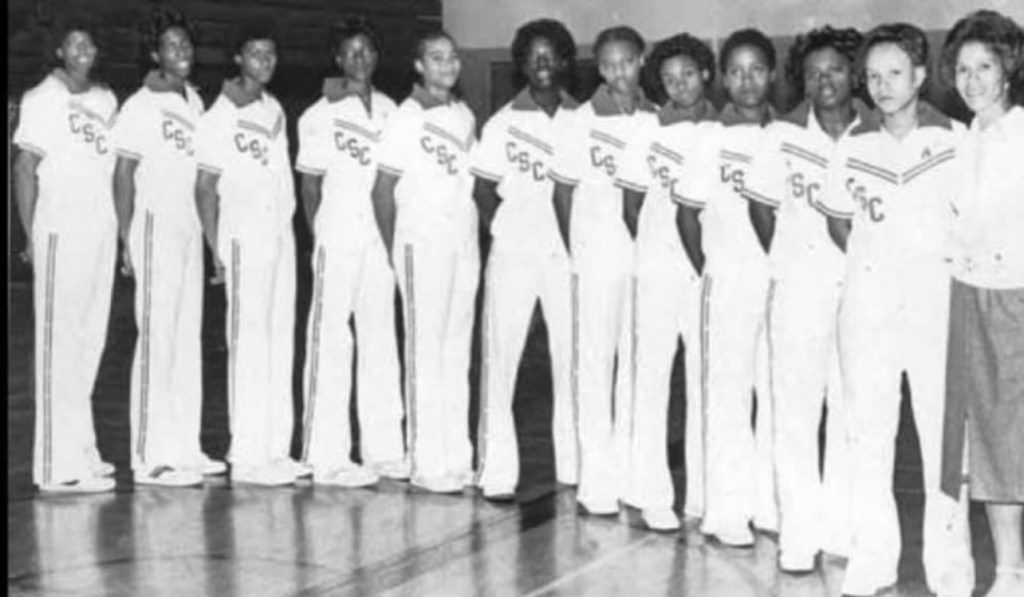
Additional members of Cheyney’s 1982 team included Eileen Dabney, Karen Draughn, Sandra Giddins, Rosetta Guilford, Ann Strong, Sharon Taylor and Faith Wilds. Draughn, Giddins, Laney, Strong, and Taylor were members of the 1982 and 1984 Cheyney Final Four teams.
The future
Cheyney’s men’s and women’s basketball programs are being restored after some financial issues, and COVID-19 forced the administration into the painful decision to temporarily suspend athletics and cease operating as an NCAA Division II program. Both programs were dormant for two years until restarting during the 2022-23 season.
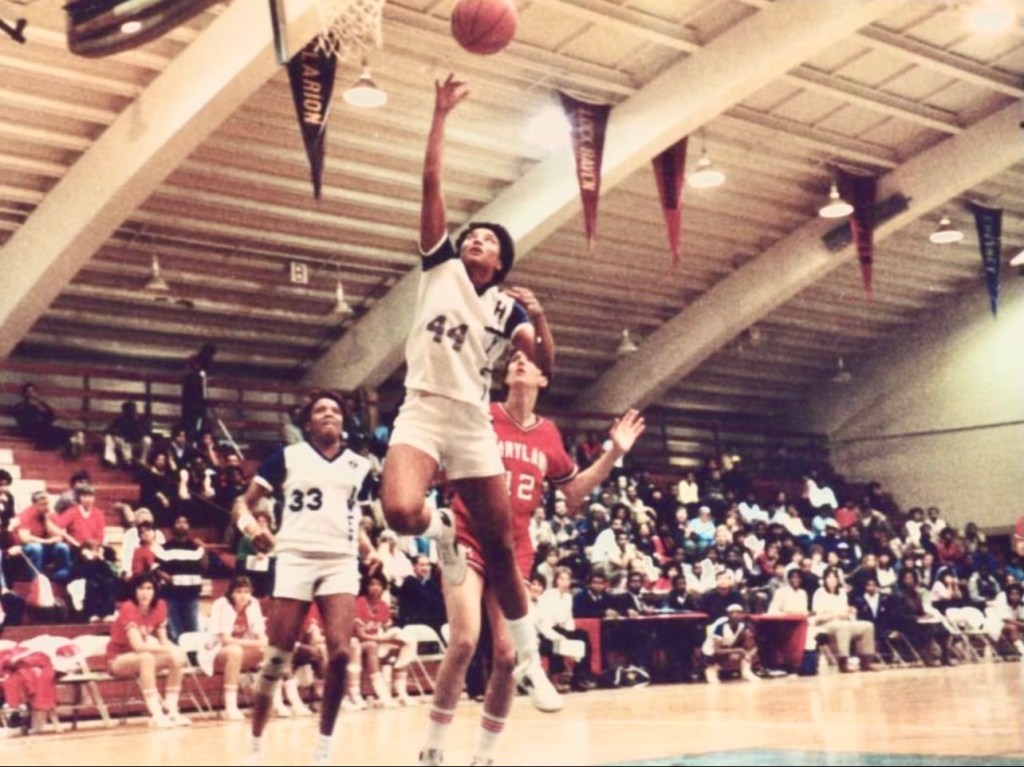
Laney, whose daughter, Betnijah, plays for the New York Liberty, is an assistant coach with the men’s basketball program under Keith Johnson. Laney has used her platform to start women’s basketball leagues in Philadelphia that benefited current South Carolina head coach Dawn Staley. Last year, during a nationally televised contest, Staley wore Laney’s vintage, white Cheyney No. 44 jersey while coaching.
“Cheyney changed my life,” said Laney, a four-time Academic All-American. “I was accepted into Temple Law School with a Commonwealth scholarship. I couldn’t have asked for a better experience at Cheyney in fulfilling my dreams. Now, I am witnessing my kids do the same thing. Cheyney instilled in me the desire to dream and dream big. I still have the same friendships. I love Cheyney and am excited for the chance to rebuild the men’s program; I believe Cheyney can thrive again.”
Val Walker has spent most of her career as an educator in New Jersey, transforming lives and dispensing wisdom and a dose of toughness to her students.
When asked whether another HBCU could reach a national championship game on the Division I level, Val Walker acknowledged the challenges of that task but didn’t dismiss the idea that one day, a school from the Mid-Eastern Athletic Conference or Southwestern Athletic Conference could join Cheyney State as a title finalist.
On the Division II level, Central Intercollegiate Athletic Association (CIAA) HBCUs Virginia Union (1983) and Shaw (2012) have won national championships. Virginia Union was also a national runner-up in 2017.
“You can attend an HBCU and be just as successful in all areas of life, including basketball,” Val Walker said. “Saying another HBCU won’t make it to a national championship game belittles our schools. It is hard but can be accomplished. So you can’t say that. We don’t know. You need the right coach, the right players and the right belief. You may have to take a six-hour bus ride instead of a two-hour flight, but anything is possible.”
Cheyney’s players aren’t bitter about this long-overdue recognition. They had fun. They had each other. That’s all that mattered. Memories last forever.
“We know the game has grown with many great programs, but you’re forgetting about Cheyney,” Deb Walker said. “Part of that, I believe, is we were an HBCU, and nobody expected us to be there. How dare you want to talk about women’s basketball history and not talk about Cheyney State? You can’t erase it. We are honored and humbled to be inducted into the Women’s Basketball Hall of Fame, but in the same breath, it’s about time.”