

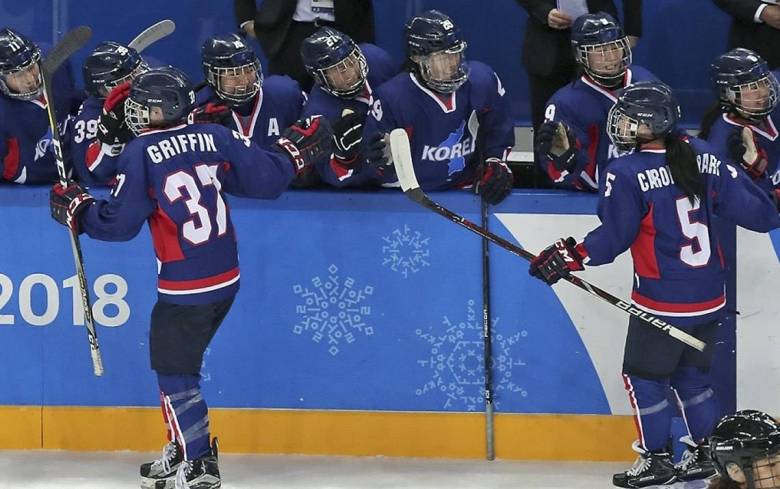
The next time someone opines “sports aren’t political,” please direct them to forward Randi Griffin. Griffin, 34, played hockey for the Unified Korea team at the 2018 Winter Olympics in Pyeongchang and scored the first Olympic goal in Korean ice hockey history.
Griffin recently recounted her experiences to the BBC’s The Lazarus Heist podcast. Currently airing its second season, the show delves into the shadowy and dangerous world of the Lazarus Group, an elite computer hacking collective who are alleged to be trained, funded, dispatched, and controlled by the North Korean government. North Korea denies all allegations related to cyber crime, hacking, and the Lazarus Group.
The Lazarus Heist makes for an enthralling listen; it’s packed with the kind of history, intrigue, and technology that mystery writers can only dream of. It’s a great podcast, one of my favorites, but it’s not the kind of show that I — or probably anybody else, for that matter — would expect to cross over into the world of women’s hockey. I was beyond shocked when I tuned into season two and heard Griffin introduce herself.
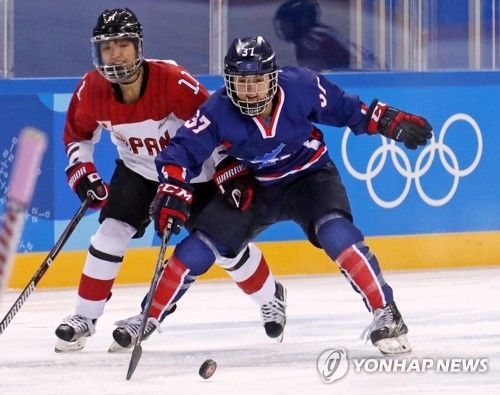
On the show, she recounts her childhood dream of being a US Olympian and how it waned as she got older. Griffin played college hockey at Harvard from 2006 to 2010 and, even though she’d ended her playing career after graduating, her skill as a hockey player and her Korean-American heritage (Griffin’s mother is Korean and her father is American) was enough to get the Korean Ice Hockey Association’s attention. In 2015 she got an email inviting her to come try out for the 2018 South Korean Olympic team.
“I ignored the first round of emails, actually, just thinking it wasn’t real,” she told hosts Jean Lee and Geoff White. “It wasn’t until they went as far as to find my dad’s phone number, call him, ask him why I wasn’t answering my email [that I] realized, okay, they’re actually serious about this.”
In preparation for Pyeongchang, the Korean Ice Hockey Association called up players from South Korea like former Riveters goaltender So-Jung Shin as well as players from across the diaspora like Griffin. The South Korean team trained for three years during the lead-up to the Games, working hard to gel both on the ice and off. They bridged gaps in language, culture, skill level, and personality to form a cohesive unit ready to show their efforts to the world.
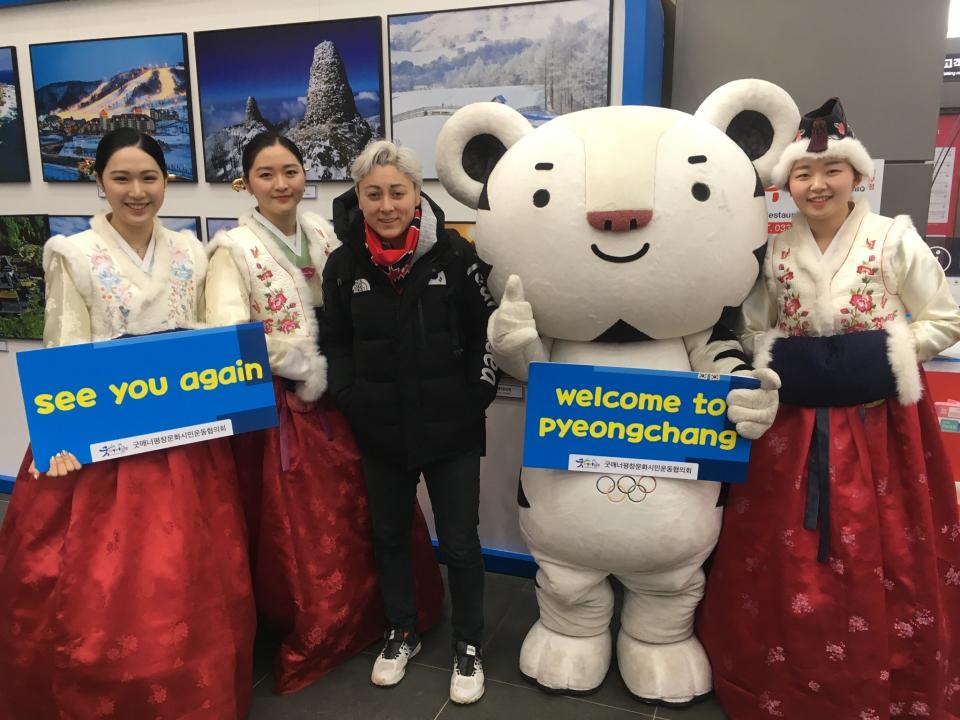
And then, in January 2018, just two weeks before the Opening Ceremony, the team received some bombshell news: North Korea had decided at the last minute to send athletes to the Olympics, and a group of North Korean hockey players would be joining the South Korean women to form a unified Korean team.
As Griffin recalls, “It was a really difficult situation. Two weeks before the Olympics, you really want to be gelling as a team. You don’t want people freaking out … we were completely unprepared.”
The team’s mere existence generated plenty of attention and controversy, which she saw firsthand at Unified Korea’s first and only practice match, a loss against Sweden. “At that game, I remember we were driving through protests, essentially, outside the rink. And I think that was the first moment where we just saw how many people there were and how much of a divide there was … people who felt really strongly that this was a great thing. People who felt really strongly that it was a terrible thing.”
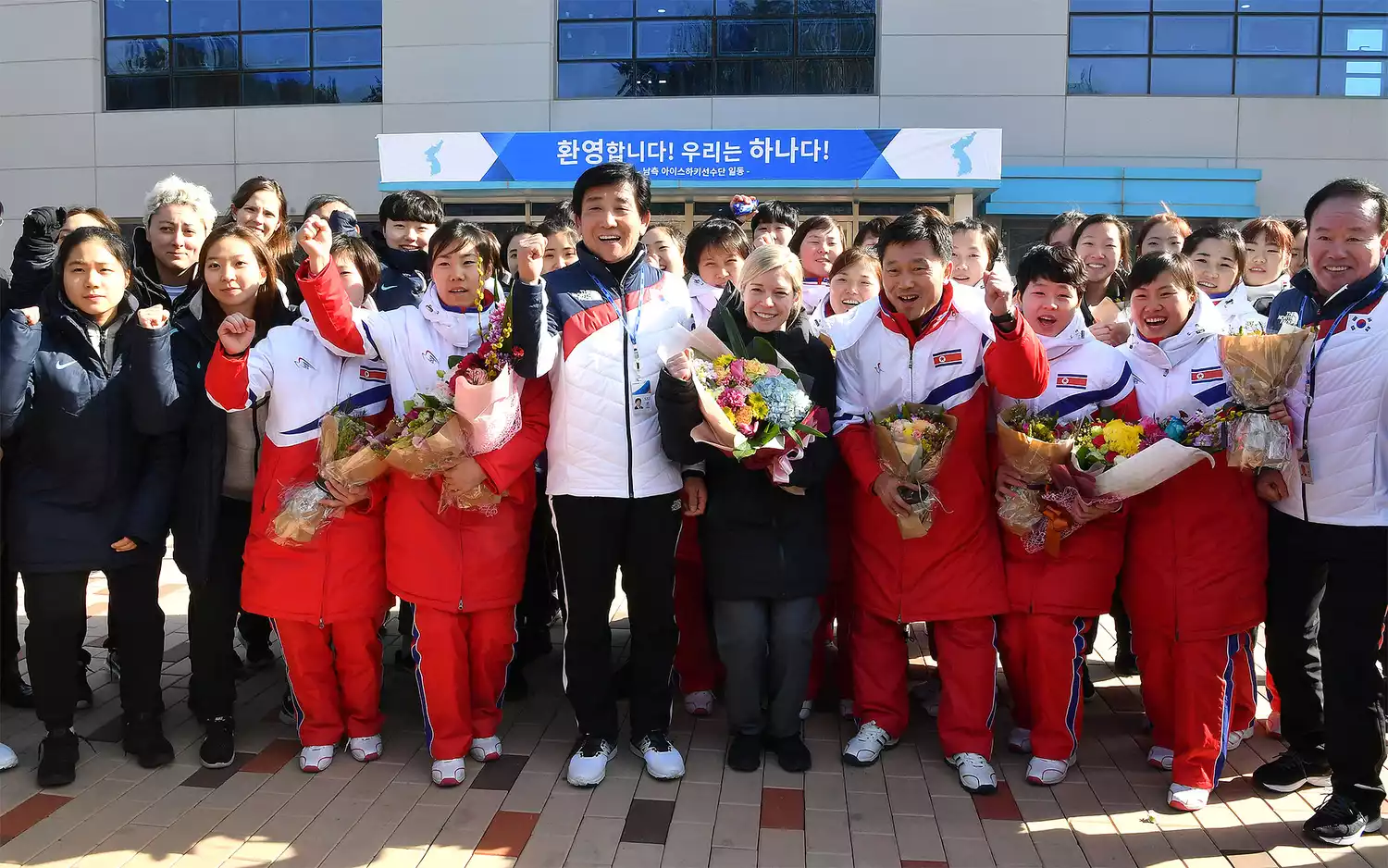
The facial expressions in the photo above encapsulate the myriad emotions perfectly. The North Koreans, wearing red and white and holding flowers gifted to them by their new teammates, look thrilled. The South Koreans, in navy blue, look skeptical and resigned. Coach Sarah Murray, front and center, smiles through a situation that’s totally out of her hands.
On the ice, tension was high and the two teams at times struggled to mesh. According to Griffin, after making a pass to a North Korean player in front of the opposition’s goal, she was confronted by a South Korean teammate:
“She just tapped me and said, ‘hey, don’t pass to them in front of the net. We don’t want them to score, because we don’t want people to think that they helped us and that they should keep unifying us in the future.’ That was a very real tension throughout the games.”
Listening to Griffin talk about the North Korean athletes is nothing short of surreal. She says they were heavily monitored, housed in different accommodations from their southern teammates, and cut off from all wi-fi and television — to the point that TVs in their shared training facilities would be turned off as soon as the North Koreans arrived. At the same time, Griffin also says the team struck up some tentative friendships. The North Koreans were fascinated by things most people outside of North Korea consider commonplace, like photos on mobile phones.
In the end, Unified Korea went winless in their five games. After the Closing Ceremony, Griffin and her South Korean teammates returned to their version of normal, while the North Koreans went back across the demilitarized zone to a homeland reporters said was totally unaware their country even iced a team.
Randi Griffin returned to the US and signed with the then-NWHL’s Connecticut Whale for the 2018–19 season. She played just one game with the Whale; she’s now retired from hockey and working as a data scientist.
As for Griffin’s North Korean teammates? With the flow of information both in and out of the country so limited, there’s no way of knowing where they are, what they’re doing, or if they’re still playing hockey. The team is currently ranked 31st in the world.