I was lucky enough to be able to attend the semifinal and medal games for top division Worlds this year, something I prioritized because I had several players in the SDHL last season that I didn’t get to see live.
I think Utica is an interesting place to have the tournament, but it worked out pretty well. My chief complaint is that it’s really pretty hard to get to Utica from most places (Denver only has one or two direct flights to Syracuse or Albany each day, and that still requires you to drive a minimum of 50 minutes to Utica). Additionally, the city itself is pretty small, and as a result the athlete village was at least 40 minutes from the rink, which is kind of a drag. But the crowds and the vibes were pretty good anyway.
Being at the tournament served a lot of different purposes for me. The most major one is that I wanted to support my athletes while they were on US soil at a major tournament. Getting to see them after their games and saying hello, checking in on them to see how they were feeling, updating them on things we had discussed, all of those things were important to me. As the PWHL Draft approaches, scheduled for late June, watching them play also helps me prepare to talk to GMs and team scouts about their skills and what they can bring to the table. Selfishly I also just really wanted to see them play live.
In the future I think it would be better for the players to have the tournament somewhere their village is within about 20 minutes of the rink. Nobody wants to sit on a bus for too much longer than they have to, and with all the games played at one rink, it’s not like the Olympics where it makes sense for them to travel between venues. One venue, one player village in the near vicinity, is the best setup.
I thought the officiating was pretty good, but you can see the way the PWHL has changed how Team USA and Team Canada play, especially. I don’t love the idea of allowing PWHL- and SDHL-level hitting in IIHF play though, partially because there has not been enough done to teach players how to lay and absorb safe hits, and partially because I just fundamentally like the idea of international play rules being slightly different. For example you won’t see an NHL player lay the kind of hit he’d lay in the NHL at the Olympics, and I don’t think that should be different at women’s tournaments. Additionally, there’s already plenty of great physicality in these games without that rule change.
–
For all three games, one of my athletes left tickets for me at will-call. I did not apply for a credential. I’m not anyone’s staff except my own, and I don’t really need–nor should I have–the kind of access that media and staff credentials allow you to have. I shouldn’t be in the mixed zone or anything like that. Everything I need to do is something I can do from the stands or outside the rink (although the weather was pretty miserable), so I had the same access level as any fan would have. In fact, when I was waiting to talk to my athletes after their games, there often were fans around waiting for autographs between the rink and the team buses.
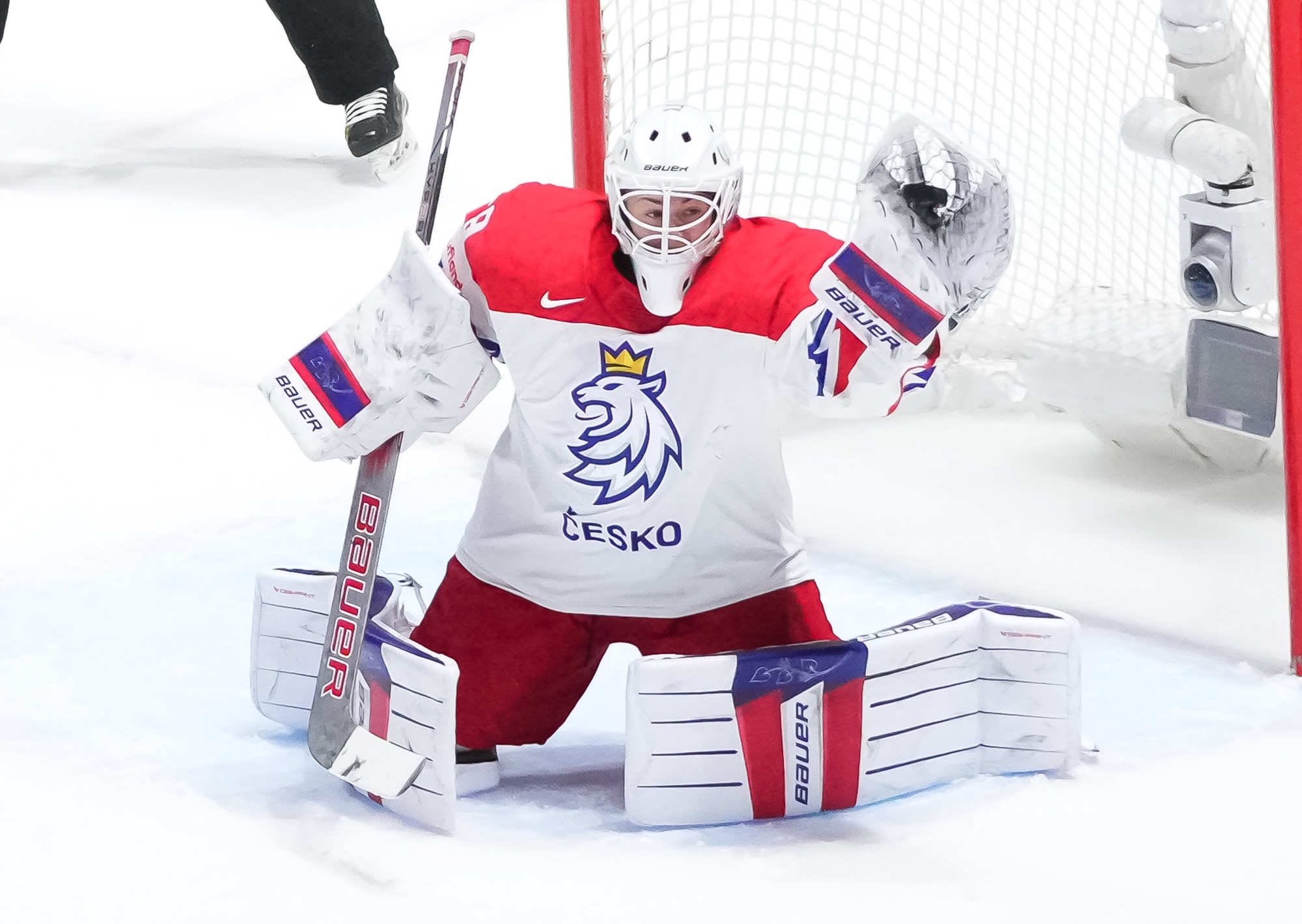
I knew going into the tournament that Klára Peslarová was going to be the presumptive starter for the Czech team. She missed last year’s Worlds due to injury but had a dominant SDHL season, and she ended up starting (and playing all the way through) every one of Czechia’s games at this tournament. The other player I represent on the team is Noemi Neubauerová, who is primarily a winger, although I’ve seen her deployed as a center before in smaller tournaments. Unlike Klára, her role for her SDHL team last season and her role on the national team are pretty different. In the SDHL she was primarily the top-line or second line right winger for Brynäs IF, and for the national team she’s the third-line right winger. She was on the powerplay in the SDHL, but she’s on Czechia’s penalty kill.
Klára was already known as one of the best goalies in the world long before I was introduced to her, so my job is mostly to keep track of her various successes. If you were curious:
- Voted one of Czechia’s three best players of the tournament
- Selected as Czechia’s player of the game in the bronze medal game
- Set a new record for number of minutes played at the top division tournament, eclipsing Nana Fujimoto’s 389:21 record
With Noemi, who is only 24, watching her play live was important for me to get a really strong sense for what she brings in a middle-six role. I want to be prepared to make both cases for her because she can be effective in both kinds of roles. She’s not a household name so I get to start from scratch helping her build the identity she wants to have. With Noora Tulus, I felt that after an SDHL season where the discussion was primarily about her point total (which was completely deserved), I wanted to be paying close attention to other parts of her game that I knew were valuable, and amplifying those skills.
This may seem counterintuitive, but the actual outcome of the games was not super relevant to me professionally. What I wanted more than anything was for all three of them to get through the tournament healthy, and to see them play some good hockey. I was lucky, too, to have an athlete on either side of the bronze medal game matchup.
When you watch a game on TV, everything that happens behind the play is lost to you. A lot of really important skills and attributes of any player are things that they do off the puck, which sometimes means away from the play. For example, Noora is a very vocal leader (she is an alternate for Finland for a reason) and in person I could see and hear her directing her teammates, especially when their opponents had the puck in transition. Her defensive awareness is really special and she uses it to organize her teammates. A stream might capture a little of that, but it’s much more apparent in person. Similarly, Noemi is very smart about her defensive positioning. She is rarely the player chasing an opponent behind her own net due to her position, so her defensive positioning would usually not be captured on the screen. When the opposing team was setting up in Czechia’s defensive zone, I was able to watch her identify their structure, the player she was marking, and communicate to her teammates where the gaps were that they needed to close.
There were PWHL teams with GMs, coaches, and scouts at these games, too (and not just the GMs and coaches who also work with a national team). It was interesting, and useful, to see what they were seeing, and to have some idea of where I’d be starting from in the lead-up to the PWHL draft.
A note on stats: I wish that faceoffs were discussed more. I think the faceoff win percentage is a really illuminating statistic that doesn’t get mentioned enough. I know there are plenty of people who think that winning faceoffs isn’t super important to winning games, but I disagree, especially with respect to faceoffs taken in a team’s defensive zone. The ability of a center to win a faceoff in front of their own goalie, particularly on the penalty kill, is critical. This is something Noora really excels at but I don’t think it gets talked about very much.
–
For fun, here are a few of my favorite plays I got to see in person:
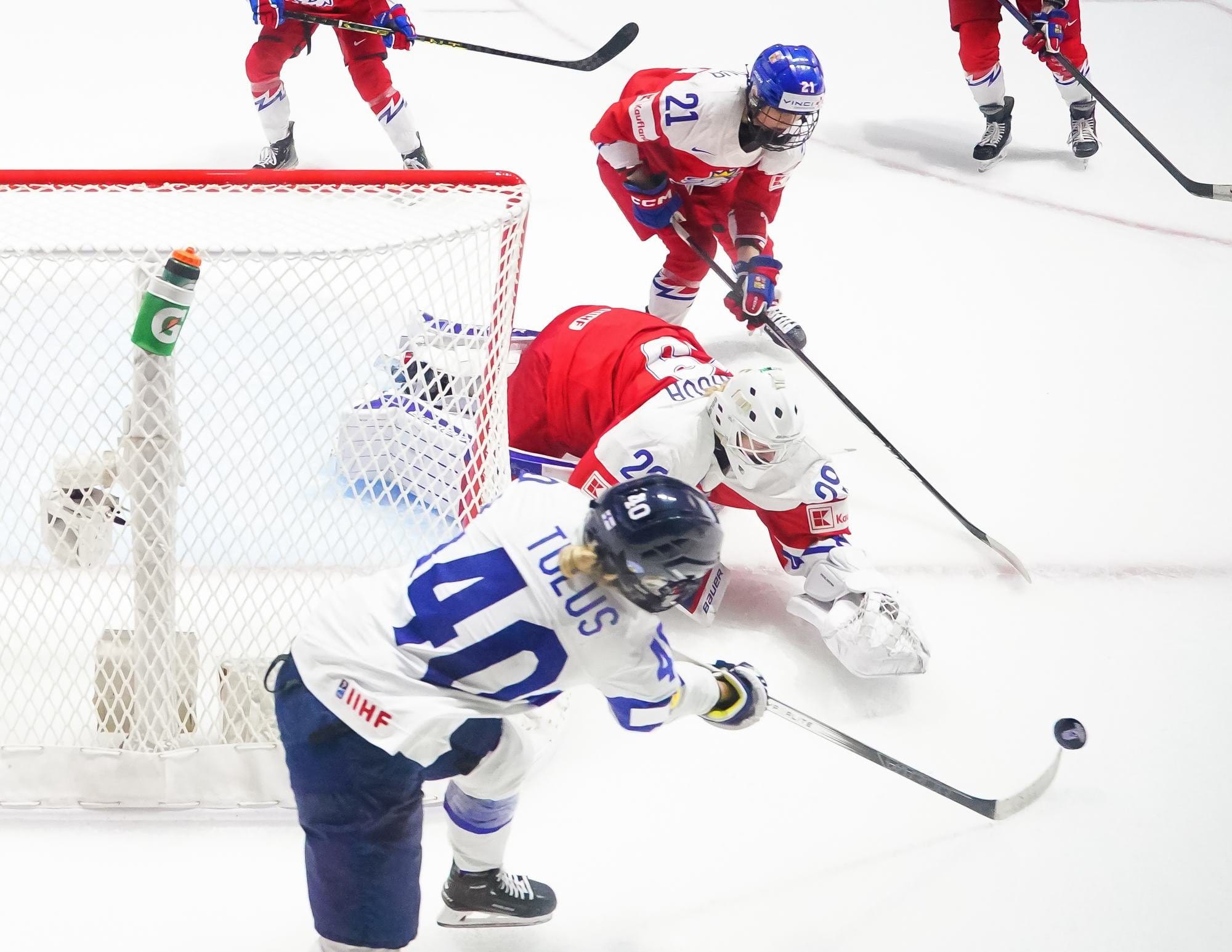
Noora in Czechia’s slot with a spin move (and the corresponding save from Klára).
That spin move 🤯 #CZEFIN #womenworlds pic.twitter.com/HRCW0Vmunk
— IIHF (@IIHFHockey) April 14, 2024
There was a faceoff late in the bronze medal game that Noora took against Noemi, which was fun for me.
Noemi had a few great, clutch shot-blocks late in the third period of the bronze medal game.
Against Team USA, Noora drew an important penalty on Keller that changed the momentum of that period; play was starting to get loose in a way that favored Team USA, and her poise made a difference there.
With bronze on the line, Klára had a ridiculous poke-check save in the shootout.
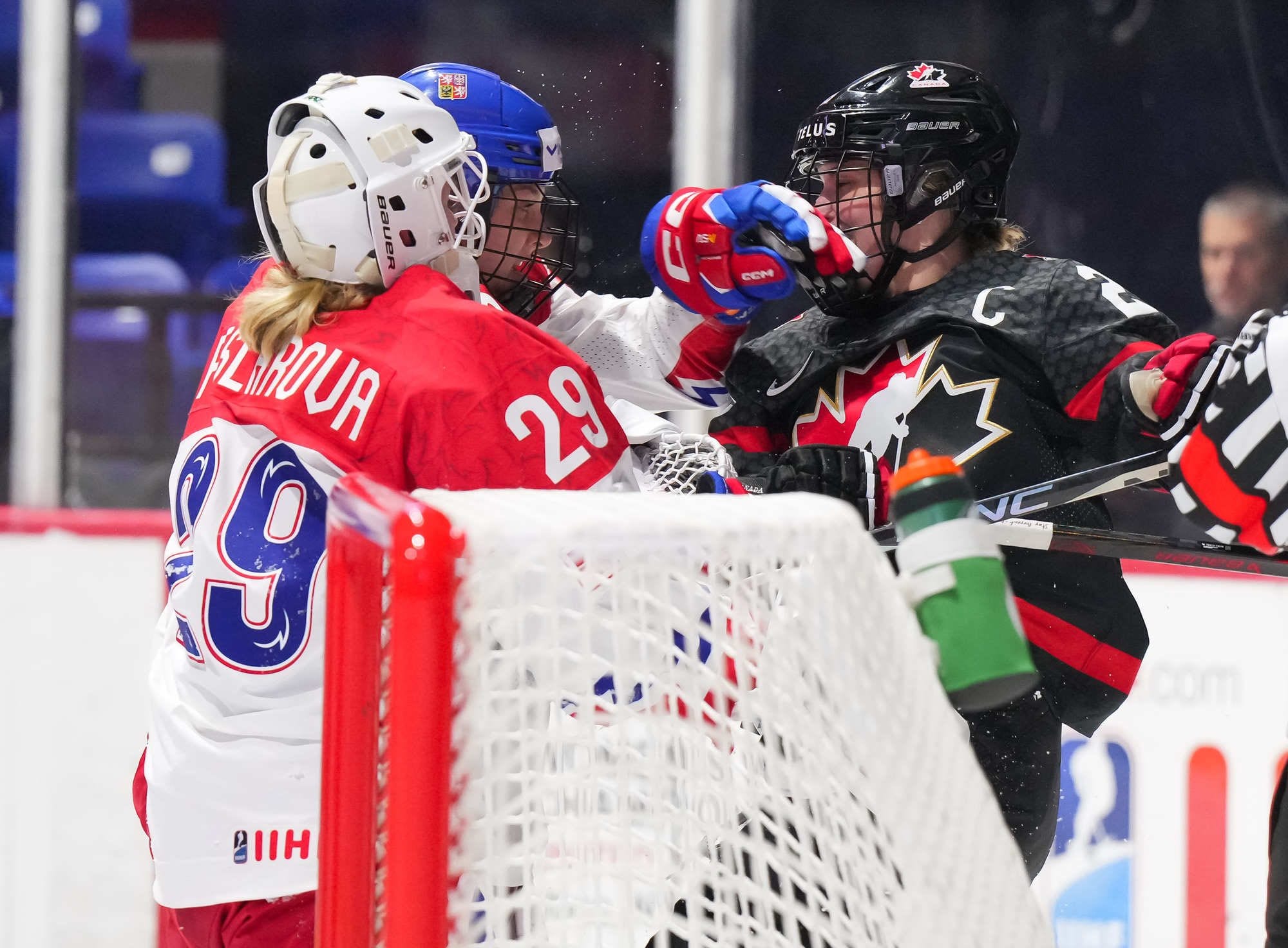
And finally, the complete chaos that was Noemi sticking up for Klára towards the end of their semifinal against Canada: