

It’s a tale as old as time: attendance is again a hot topic in women’s hockey.
The success of the PWHL kept things quieter than usual this year, but the conversation ramped back up during the first round of the inaugural PWHL playoffs, with the Canadian markets far outdrawing the American ones. Many have called into question the viability of the Boston and New York markets given the lower attendance numbers.
However, raw numbers don’t tell the whole story of a fanbase.
Since Boston is a frequent target of jabs as the second-lowest average draw in the PWHL, I decided to talk to some fans before Games 1 and 2 of the PWHL Finals. Here are some of their thoughts and stories.
At every game, the seat to the right of the penalty box was occupied by one passionate fan. Come to find out, Katie Spoo’s boisterous cheering was just the tip of the iceberg. For Game 1, she was clad in a PWHL Boston jersey emblazoned with #11 and a #47 Boston sweatshirt (her local custom shop back in Maine would not add names for copyright reasons). She also brought a sign asking Amanda Pelkey to trade a puck for a cat collar since Spoo has a kitten named “Pelkey.”
However, Spoo’s passion goes deeper than what is visible. A veterinarian from Camden, Maine, she drives three hours each way and has been at every game. She even traded two 15-hour shifts to attend Games 1 and 2. Asked how she started following this league, she saw a Facebook ad, and as a decades-long women’s hockey fan, it was a no-brainer.
“I just randomly saw a Facebook post about the league starting, and then there was a team in Boston and I love hockey so I was all over it,” said Spoo. “[I’ve been following women’s hockey] since Nagano in 1998. I was a big Cammi Granato fan, and so it’s been amazing to see how it’s grown from that team kind of lighting things up in the Olympics to now where we’re at.”
Kerry Jenness is also a lifelong hockey fan and season ticket holder. However, women’s hockey wasn’t on her radar as much until the PWHL launched, but as downtown Lowell residents, they wanted to support their local team. Now, she and her husband, Wayne, are all-in.
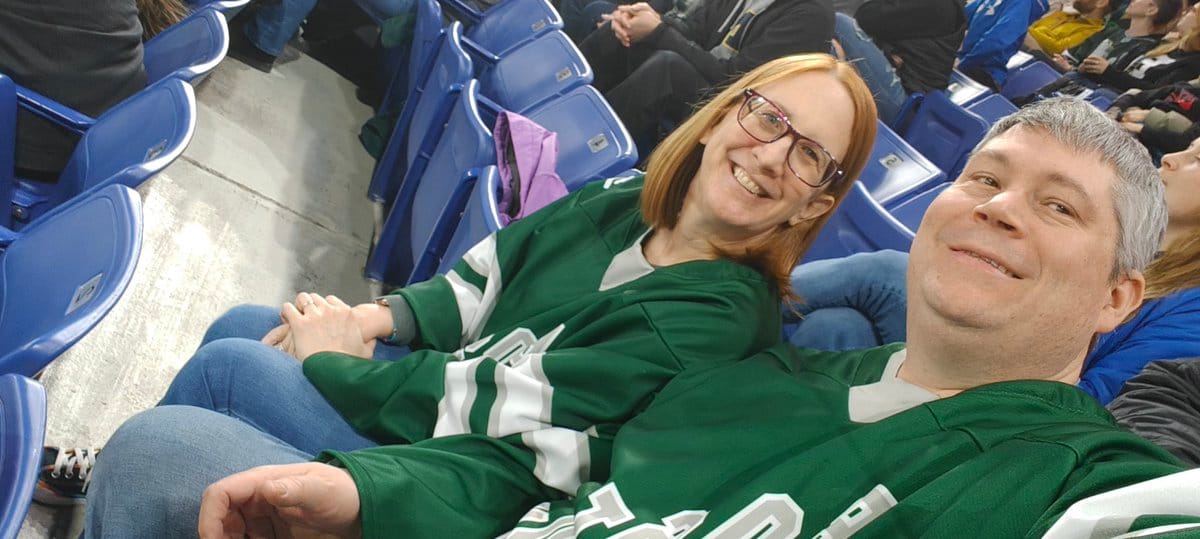
“I’ve been a hockey fan my whole life, since I was a little kid,” said Jenness. “My grandfather’s best friend was the coach of the UNH men’s hockey team, so I grew up watching hockey. I can’t say I was so knowledgeable about women’s hockey, but when we heard that this team was coming here, my husband and I were like we’re getting season tickets. If we can’t use them, we’ll give them to friends, we want to support this amazing professional team coming to Lowell. Five minutes into the first game, we were like we’re going to every game, and we have.”
She says the atmosphere in the arena is “fantastic” and the quality of the hockey is some of the best she’s ever seen. She and her husband have made it their mission to introduce the league to as many people as possible, and everyone they’ve told has returned for multiple games.
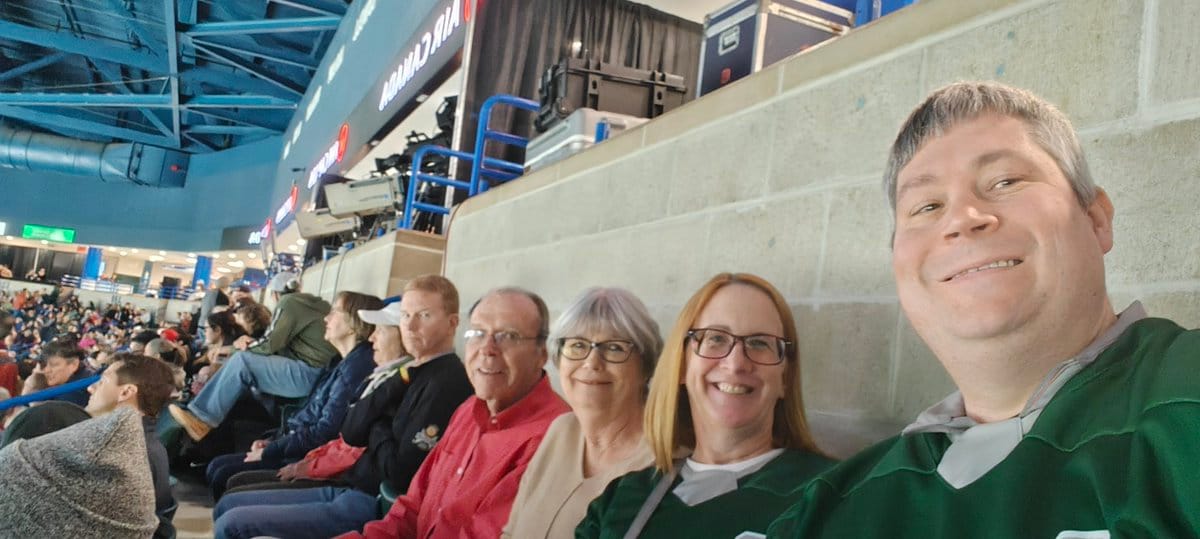
In addition to their observations, Wayne has tracked data on a public spreadsheet for all teams this season. The spreadsheet can be found here, with tabs breaking down each primary home venue and even a specific weekday Tsongas Center tab. The data shows that except for a stretch of four games in eight days in February that featured games on Valentine’s Day and President’s Day, there has been a positive trend in both weeknight and weekend attendance, to the delight of the Jenness’.
That said, while attendance is growing, the Tsongas Center has only sold out once this season. Paul Baker, the former PA announcer for the PHF’s Boston Pride, shared how a league like this was always the goal and that he’s glad it’s being supported so well. However, he believes that the Lowell, MA location is a huge barrier to attending games, especially on weekdays- which is a common complaint. He and his wife, Pam, hail from Dartmouth, MA, and as a result, he’s only made it to two games and this was Pam’s first.
“For us living on the South Coast, it’s why we haven’t been able to make it up here,” said Paul, who has attended two games to Pam’s one. “It’s a long ride and the games haven’t exactly been in primetime. There’s been a lot of weekday games and oddly timed games, so it’s hard to make it up.”
Anthony Grato echoed the Bakers’ pain of driving up from the South Coast. He has been at nearly every game in spite of a long commute from Cape Cod.
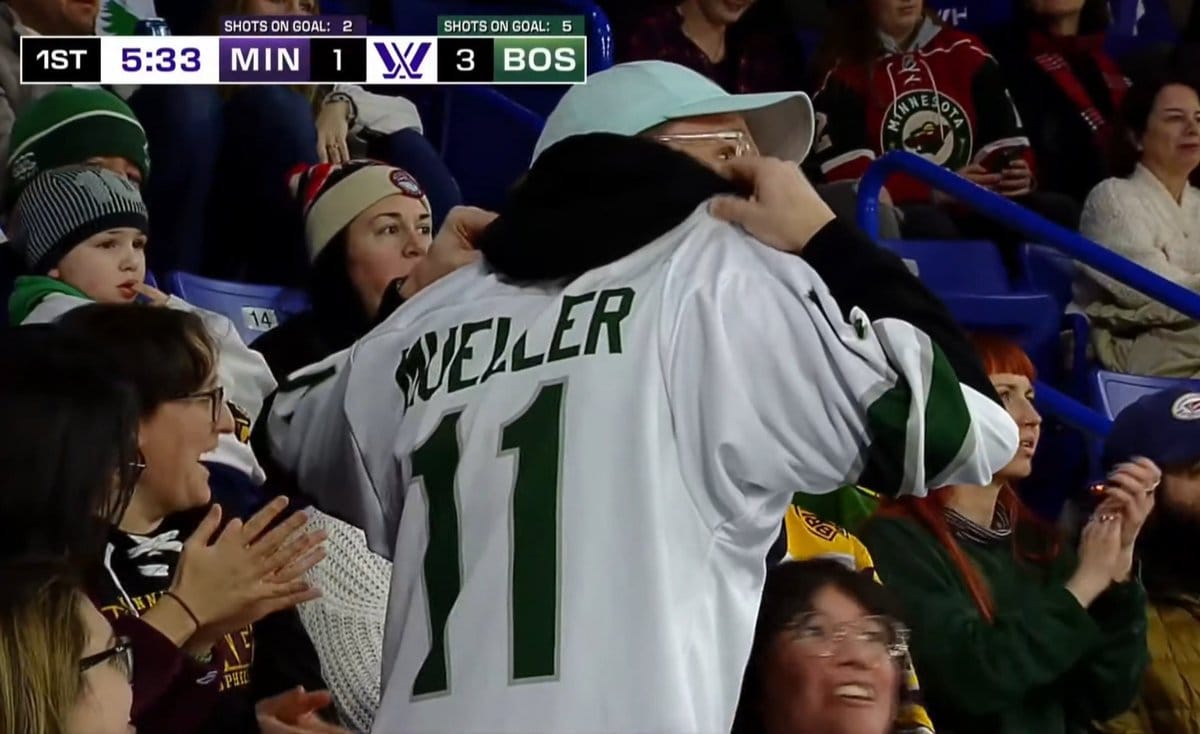
“I wish they were anywhere else, to be fair,” said Grato. “I’m originally from East Boston, but I come up here from the Cape. It’s like an hour and a half, but today it was two hours because of traffic, but it’s about 75 miles up 495.”
Traveling to Lowell is undeniably difficult. It’s a 31-mile drive from Boston, which takes about 40 minutes without traffic. However, that stretch of highway is often extremely congested, especially on weekdays. As a result, the drive often takes at least double that time heading into games (the return trip is easier).
Public transportation is not much better. The only option is an MBTA commuter rail train that runs from Boston’s North Station. However, it’s a 50-minute trip each way, with a sometimes iffy return schedule, plus a 1.1-mile walk featuring some not overly pedestrian-friendly areas.
This is a location issue. Lowell is not easily accessible, especially during the week. It took me almost an hour and forty minutes to get to Lowell from Boston yesterday. The commuter rail station is a 28 minute walk from Tsongas. This team needs to be in the city. https://t.co/TJlcVb4Wnj
— Goon Squad (@carpenterr33) May 15, 2024
While the overwhelming sentiment from those I spoke with was they wished the team was in a more accessible location, others disagreed.
Jenness lives just a few blocks from the Tsongas Center. In addition to being easy for her, she says many of the people she spoke with also like it in Lowell since they’re coming from north of the city. She brought up one family from Portland, Maine that drives down for every game their daughter (a goaltender for a local youth team) doesn’t have a conflict with. Without traffic, Portland is about an hour and a half from Lowell, and two hours from Boston.
“It’s not [easy to get here], but the thing is, a lot of people from here are coming in from Maine, New Hampshire, and the north short of Massachusetts that wouldn’t necessarily make it to Boston,” said Jenness. “I think they [the location critics] are ignoring that the crowd that comes here, likes having it in Lowell.”
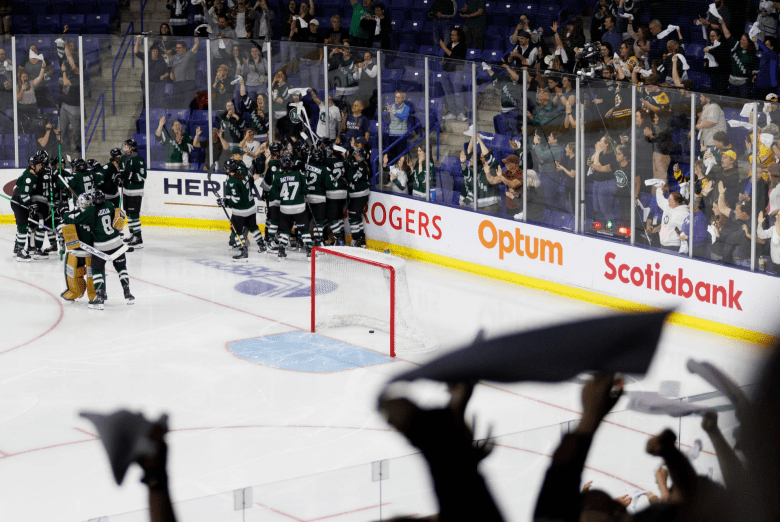
Further, while higher attendance is obviously better from a financial standpoint, the claims that it makes for an inherently poorer atmosphere are simply not true. During Game 1 of the Finals, I measured decibel levels in the arena during big moments via my Apple Watch. Attendance was announced as 4,508, but they managed to hit 101 decibels while showering their team with love as the final horn sounded. For context, the 21,105 fans at the Bell Centre clocked in at an unofficial 114 decibels when they brought out a device and asked fans to give it their all during a break in action.
Fans cheering following Boston’s Finals Game 1 win.
“It reminded me a lot of like a Bruins game, [and] there’s only 6,000 seats or whatever here whereas the Garden has 18,000 or so,” said Grato. “I mean, people from Boston are not quiet, so maybe it’s not coming through on the broadcast… last game, I don’t know if it sold out, but it certainly felt like it did. And the last game of the season was Montréal and I know that sold out, and the first game [of the playoffs] was way louder than that game…I think it’s probably a bit exaggerated how quiet it is because I would never call this quiet.”
At the end of the day, while it is reasonable to bring up attendance concerns from things like a financial perspective, it’s important to look at the wider context before making sweeping judgments on the viability of a market. Boston fans may be fewer in number at games, but they are mighty. If the team ends up in a more widely accessible location, there’s no reason to believe they won’t draw just as well as the others.