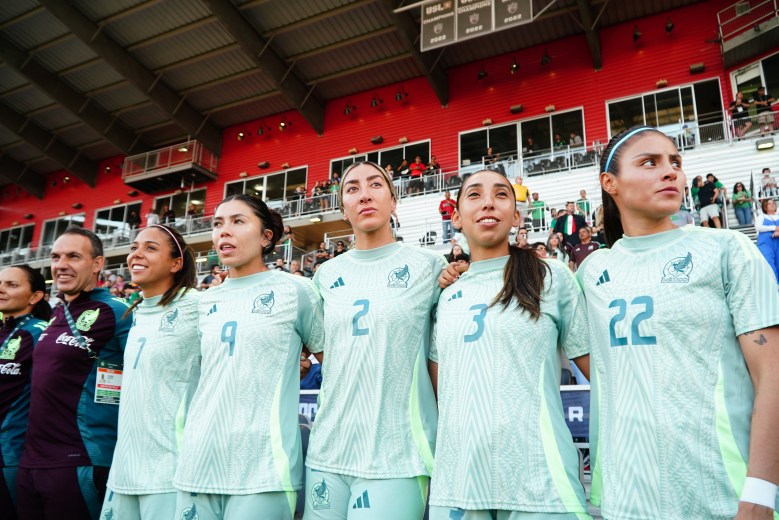
Last Monday, FIFA confirmed Mexico as one of the four hosts for the 2031 Women’s World Cup. But before they focus on welcoming the world’s best nations, they have unfinished business.
After twelve years of absence from the biggest international soccer stage, Mexico has the opportunity to put an end to its World Cup drought and turn the growth of its domestic league and four years of rebuilding into international success.
Mexico have a date with destiny on Saturday when they compete in the Concacaf W Championship quarterfinals. A win will secure their ticket for Brazil 2027, sealing their first Women’s World Cup berth since 2015.
Standing between them and their World Cup ticket is one of the nations that contributed to their failure in their last qualification campaign: Haiti.
Heartbreaking campaigns and a dozen years of waiting
Mexico made their World Cup debut in 1999, and then participated in the 2011 and 2015 editions. However, they haven’t managed to record a win, with three draws and six losses across their three appearances.
Their next two qualifying campaigns ended in heartbreak. In 2018, they won only one game in the Concacaf Women’s Championship group stage, failing to go to the knockout round and ending their hopes for the 2019 World Cup.
Four years later, their expectations were different. With an established domestic league and home advantage for the qualifiers, they felt more confident. But their campaign was even more disappointing.
Mexico finished at the bottom of the group and without scoring a single goal. They fell to Jamaica, the USWNT, and, in an especially appalling match in which one of their defenders was sent off, Haiti. While their three group opponents qualified for Australia/New Zealand 2023, they were left behind on home soil, staring down the barrel of four long years of rebuilding.
Following that failure, a new era began. The Mexican Football Federation appointed coach Pedro López in September 2022, who had guided Spain to the U-20 Women’s World Cup title just weeks earlier. He had one job: end the World Cup drought and qualify Mexico for Brazil 2027.
“We’ve been through previous campaigns that have hurt us, but I also believe those experiences have shaped us as people and as soccer players,” midfielder Alexia Delgado said ahead of Saturday’s pivotal match.
Listen now to The IX Sports Podcast and Women’s Sports Daily
We are excited to announce the launch of TWO new podcasts for all the women’s sports fans out there looking for a daily dose of women’s sports news and analysis. Stream on Spotify, Apple Podcasts or anywhere you listen to podcasts, and make sure to subscribe!
The evolution of domestic soccer
Veterans Kenti Robles and Charlyn Corral, two players called up for this international break, have seen it all. For instance, when they represented Mexico on soccer’s biggest stage in 2015, Liga Femenil BBVA didn’t exist.
Only two years later, they witnessed their league’s birth, providing something they lacked: a professional domestic platform to develop. Moreover, the league’s growth and the development of competitions at a youth level provided younger players the pathways needed to reach the senior game better prepared.
That youth development has already translated into international success. At the 2018 U-17 Women’s World Cup, El Tri Femenil finished as runner-up. In 2025, they came up in third.
The league has resulted in club and individual recognition at the international level. For instance, in 2025, Lizbeth Ovalle’s move from Tigres to Orlando Pride broke the transfer fee record, demonstrating the increased value of the Mexican league’s emerging talent.
Most recently, Ballon d’Or nominations for Scarlett Camberos and Club América, and a recognition for Charlyn Corral’s goalscoring highlighted the domestic game’s evolution.
The squad chosen for the Concacaf W Championship reflects how the Liga Femenil BBVA is feeding the national team. Of the 23 players included on the roster, 17 compete in the domestic league, while the remaining six play in either the NWSL or the WSL. And the pressure players face in decisive games while competing for their clubs has also prepared them for what’s to come.
After their achievements at club, individual, and youth levels, the next step is to take that success to the senior national team. The opportunity is just in front of them.
Four years of hard work reduced to one match
Since López took over as coach, El Tri Femenil has climbed from 35th to 28th in the FIFA ranking. The fact that they won gold medals at the Central American and Caribbean Games and the Pan American Games in 2023 contributed to that climb. Moreover, they reached the Concacaf W Gold Cup semifinals the following year after a historic win against the USWNT in the group stage.
Most recently, they have demonstrated they can compete with higher-ranked teams after beating Brazil and Australia. And the fact that they passed the Concacaf W qualifying campaign with flying colors—winning all four group stage matches and scoring 36 goals in the process while getting four clean sheets—makes Mexico a team that has reasons to believe.
The Spanish coach has assembled a roster that combines the veteran presence of players such as Corral and Robles with established internationals like Ovalle and Rebeca Bernal while adding emerging talent such as Montse Saldívar.
“What I can highlight about this group is that we’ve managed to become a family, where we all fight and move in the same direction,” Robles said.
That unity has also been reflected in the collaboration between the federation, the clubs, and the league that allowed the coach to start the camp to prepare for Saturday’s match earlier. That extra time, coach López explained, has been crucial in helping players recover and prepare themselves physically, mentally, and tactically to face Haiti.
Individually, players have also made sacrifices and shown their commitment to the national team. Reyna Reyes turned down her participation in the NWSL Skills Challenge. Saldívar had two teeth extracted but decided to join her teammates nonetheless. Kiana Palacios had a medical procedure involving pins in her fingers but was already making arrangements to join the camp.
That commitment didn’t go unnoticed by the head coach, who praised the players’ willingness to pull together and put Mexico first and mentioned it as the most memorable aspect of his time in Mexico.
Now, four years later and after the failure the 2022 qualifiers represented, this team will be put to the test against an opponent with considerable individual talent and ambitions of their own. Haiti is led by the two-time Olympic gold-medal-winning coach Pia Sundhage, who guided them through the group stage, unbeaten.
Sitting 48th in the FIFA rankings won’t deter Haiti, because they know players like Melchie Dumornay and Nérilia Mondésir can cause serious trouble for Pedro López’s team. Moreover, Mondésir already knows what it’s like to score against Mexico, after doing so in the 2022 qualifiers.
Saturday’s game won’t only be a test for the players but also for coach López. “I came here because I was hired to qualify this national team for the World Cup after two failed qualification campaigns,” he said. “If I don’t achieve that, perhaps I wouldn’t deserve to stay here.”
A new chapter on the line
A win against Haiti would not only qualify Mexico for the World Cup but also keep their Olympic hopes alive. Reaching the Concacaf W Championship semifinal will guarantee Mexico a spot at LA 2028, since the USWNT won on Friday against El Salvador.
Should Mexico lose, their Olympic hopes would be dashed, but they would have another chance to qualify for Brazil 2027 through the intercontinental playoff pathway. However, experiencing another setback would mean having to spend extra energy recovering emotionally. If that happens, the group would have only a few days to regroup and refocus, knowing their World Cup hopes hang by a thread.
Direct qualification would represent the culmination of a successful process after four years of intense work. It would also lift the psychological burden that has weighed so heavily on the women’s senior team for more than ten years.
Their qualification would also start a new cycle that begins with Brazil 2027, goes through LA 2028, and culminates in 2031, giving Mexico the chance to establish themselves as a regular presence at the highest level of international women’s soccer.
That would also give the players international exposure, which could translate into bigger media coverage, inspire younger generations, and deepen the country’s talent pool for years to come.
But the other side of the coin is also true. As López very well acknowledges, another failed campaign could overshadow all the progress made within the federation and domestic clubs.
Mexico’s participation in the tournament on home soil in 2031 is already secured. But qualifying for Brazil 2027 would allow the younger generation to experience the tournament before they host. For veterans such as Corral or Robles, who represented the country in 2015 and who will be in their forties by 2031, the opportunity carries a different meaning, since it could be their last chance to represent Mexico on the biggest stage.
El Tri Femenil’s place at the 2031 World Cup is a given. But next Saturday, they’ll have the chance to earn what eluded them for more than a decade: a place among the world’s best on their own merits, against the very opponent that helped derail their last World Cup dream.
Rep The IX Sports at your next game!

Shop the logo collection or special “Women’s Sports are Front Page News” collection now on Shopify.