


Welcome to The Next: A basketball newsroom brought to you by The IX. 24/7/365 women’s basketball coverage, written, edited and photographed by our young, diverse staff, dedicated to breaking news, analysis, historical deep dives and projections about the game we love.
Subscribe to make sure this vital work, creating a pipeline of young, diverse media professionals to write, edit and photograph the great game, continues and grows. Subscriptions include some exclusive content, but the reason for subscriptions is a simple one: making sure our writers and editors creating 24/7/365 women’s basketball coverage get paid to do it.
In 2019-20, the Ivy League ranked seventh out of 32 women’s basketball conferences—right behind the Power 5 conferences and the Big East—in the Ratings Percentage Index (RPI), which measures teams’ or conferences’ strength. Ivy League teams won an impressive 67% of their nonconference games, the same as the Atlantic Coast Conference. And the Ivy’s top team, the Princeton Tigers, ended the season on a 22-game winning streak and 26-1 overall.
Despite the graduation of three-time Ivy League Player of the Year Bella Alarie, the conference should be strong again in 2020-21—if it decides to play. As I detailed in Part 1 of this preview, the soonest the conference season can start is January 1, and some men’s teams are rumored to be considering not playing, which would have ripple effects for the women.
Even if their teams play this season, some players may opt out individually. For example, Yale’s Camilla Emsbo, whom her coach believes could have succeeded Alarie as Player of the Year, took a year off from school and is playing in Denmark. At least two would-be freshmen deferred their admission until fall 2021. And several other players—including Lola Mullaney, Harvard’s leading scorer last season—have taken leaves of absence for the fall semester and will decide soon whether to reenroll and play this spring.
With so much of the logistics still undecided, here are answers to five big questions about what the basketball could look like in the 2020-21 season.
How many teams will be shorthanded?
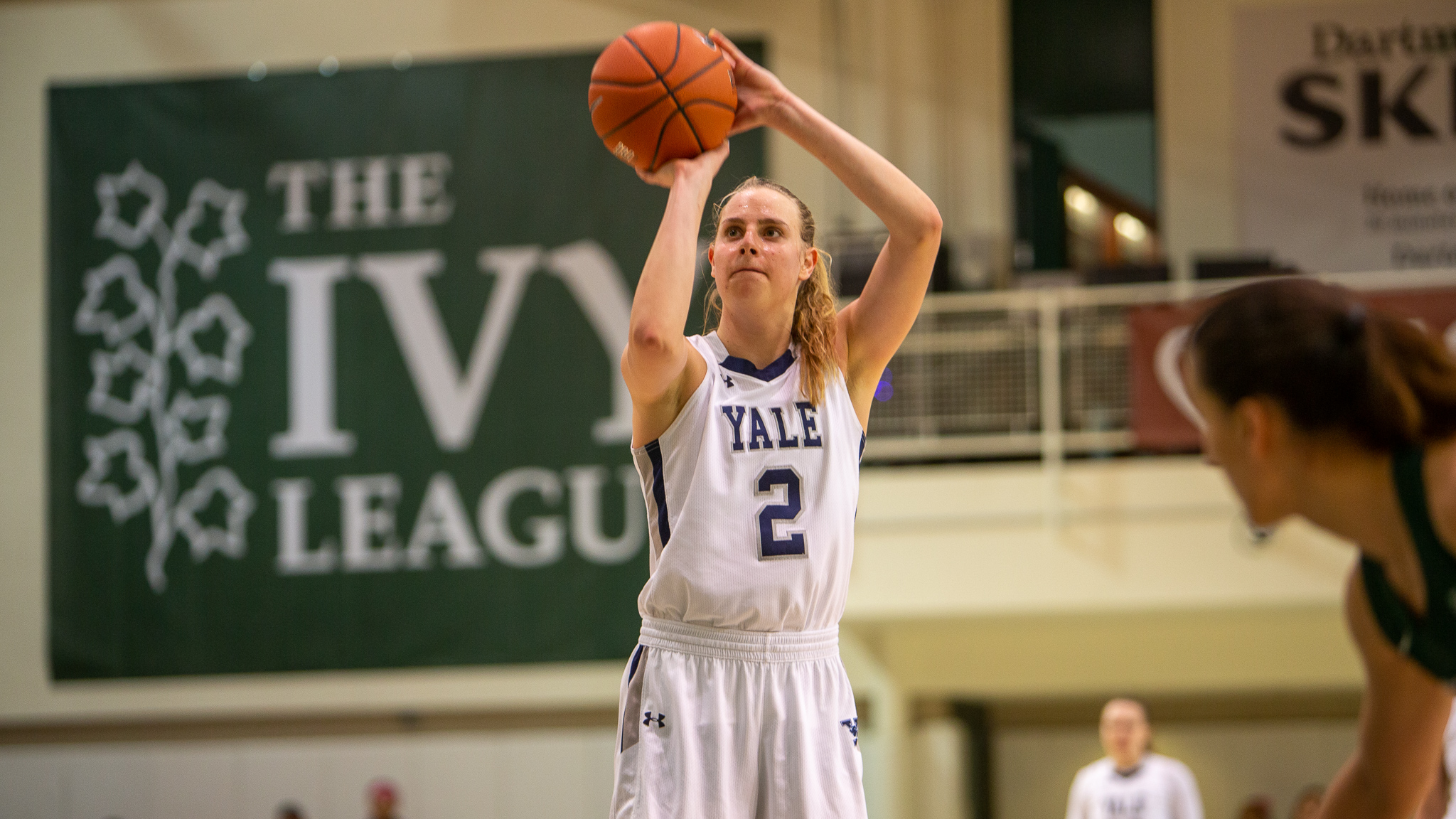
As things currently stand, Yale, Dartmouth, and Harvard will definitely not be at full strength. Yale has five players on full-year leaves of absence, while Dartmouth’s freshmen were not approved to live on campus for the winter quarter and will not play this season. Would-be Harvard freshmen Harmoni Turner—the No. 42 prospect in the 2020 HoopGurlz Recruiting Rankings—and Elle Stauffer deferred their admission and will join the Harvard class of 2025.
Columbia may or may not be shorthanded, as the Lions have several players taking leaves of absence for the fall semester. (Harvard also has four more players in this situation.) These players may re-enroll for the spring semester or extend their leaves for the full year. Yale head coach Allison Guth indicated that Princeton has several players on leaves of absence, too, but the Princeton athletic communications department declined to provide any information on the 2020-21 roster until the league and Princeton University announce their plans for the season.
Brown also declined to provide details on players taking leave, while Cornell and Penn have zero players taking leave. For more details on what we know about rosters, check out Part 1 of this preview.
What will Princeton look like without Bella Alarie?
In 2020, Alarie became just the third Ivy League women’s basketball player to win Player of the Year honors three times, and she was drafted fifth overall into the WNBA. “There’s some really good talent in this league, but she stands out, by far, over the last five, six years as one of the best,” Penn coach Mike McLaughlin told The Next. Alarie’s skill set had “everything you want”: she averaged 17.5 points, 8.6 rebounds, and 2.3 blocks per game last season, all of which ranked in the top two in the league and the 97th percentile nationally.
Guth conceded that Alarie’s departure may “allow for some parity,” but both she and McLaughlin believe that Princeton will still be one of the most talented teams in the conference. That starts with senior guard Carlie Littlefield, who averaged 13.7 points, 3.1 assists, and 1.9 steals last season. “She’s a winner, she’s a tough competitor, and the way she leads her team is just tremendous,” Guth said. “I think she’s just a massive difference-maker.”
Princeton also returns two other starters, including third-leading scorer Julia Cunningham (8.2 points per game, a team-high 31 made 3-pointers), and the team’s most accurate 3-point shooter in reserve Maggie Connolly (44%). Freshman point guard Kaitlyn Chen, the No. 66 recruit in the country, could also contribute this season.
Is it Penn’s year?
Penn and Princeton have won all three Ivy League Tournament titles, and the last time that a team not named Penn or Princeton won the regular season title was Dartmouth in 2008-09. So if Princeton is vulnerable this season, history suggests that Penn may be the one to take advantage.
Penn’s roster looks prepared to do that, both in terms of depth and top-end talent. The roster has 19 players—14 returners and 5 returners—and the returners accounted for 74% of the team’s points, 72% of its rebounds, and 79% of its blocked shots last season despite playing just 64% of the team’s minutes. Penn also returns its top two scorers in sophomore guard Kayla Padilla (17.4 points per game) and senior forward Eleah Parker (12.0), who form an inside-outside presence that is daunting for any opponent.
However, McLaughlin is still adopting an underdog mentality. “I would put Princeton at the top regardless of if Bella’s there or not, just because of the resume and the talent that [they] have,” he said. The question is, how much of that Princeton talent will play this season? Given that Penn has fewer questions about its roster and two players in Parker and Padilla who match up favorably with anyone in the conference, let’s call them co-favorites, at the very least.
Who will win Ivy League Rookie of the Year?
At one point, it looked as if Turner and Chen might battle for Rookie of the Year much like Mullaney and Padilla did last season. Turner and Chen extended the conference’s streak of having at least one player on espnW’s list of the top 100 recruits to five years. But with Turner deferring admission, Chen is the early favorite for the award—if she’s available. Princeton would not confirm which of its players are available, so it’s possible that Chen has also deferred admission or taken a leave of absence.
The Rookie of the Year race might also look slightly different this year because this year’s freshmen face unique challenges in acclimating to the college game. Without the benefit of a regular preseason or non-conference games, it’s possible that none of the league’s freshmen will have nearly the impact of Padilla or Mullaney, who both finished in the top five in the league in scoring. Speaking specifically about his own freshmen, McLaughlin said, “Not having them be on campus the first semester is really going to impede, I think, any of them” from having an immediate impact.
Which team that did not make the Ivy Tournament last season could be a sleeper this season?
With Brown having a first-year head coach and Harvard potentially being very shorthanded, Cornell and Dartmouth look like the top candidates to be sleepers this season. Both teams return four of their top six players in minutes played last season, and both have been able to practice this fall, unlike most of their competition.
Those practices will likely be more of an advantage for Cornell because Dartmouth has just five players on campus this fall, four of whom are freshmen who will learn remotely in the winter quarter and therefore not play this season. But Dartmouth returns more players from last season (11, compared to 8 for Cornell) and more of its scoring (64% to 46%), giving the Big Green enviable experience to compensate for the loss of the freshman class.
“I kind of look at our league and I just see these tremendous coaches who I sit there and sometimes think about, ‘Wow, I wish I could pick their brain if we weren’t competitors about how they do what they do,’” Guth said. “Dayna [Smith]’s teams play so incredibly tough and physical and they compete. They’re resilient. I love what she does at Cornell. I look at Belle [Koclanes] and she’s a tremendous teacher of the game at Dartmouth. They’re just well coached, they’re skilled, they’re fundamental. …
“I think those two [teams] would be the ones that would really make a run at [the Ivy Tournament] this year.”
Unless otherwise hyperlinked, all statistics were calculated by the author using data from teams’ websites.
