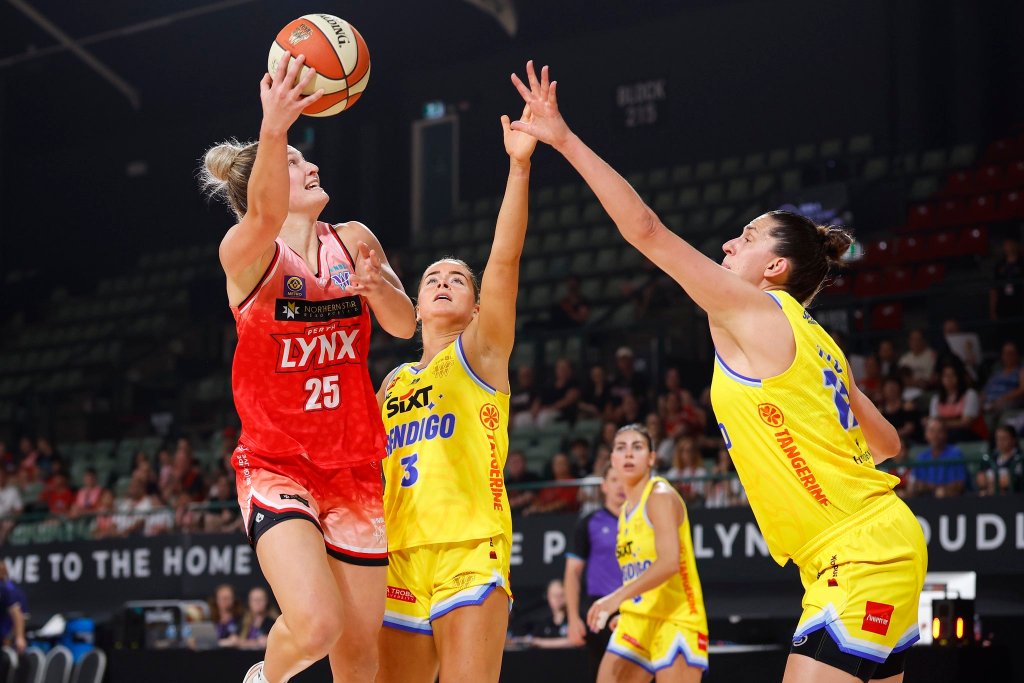
Defender Erica Rieder is preparing for fifth professional season in the SDHL and second season and with Luleå/MSSK. Looking at her Elite Prospects profile, though, there’s a large two-year gap between 2022 and 2024 with no team listed. What was she doing?
The answer might surprise you.
Rieder had always dreamed her hockey career would included lacing up for Team Canada at the Olympics. After a USports Championship and finishing her collegiate career as captain of University of Manitoba, she pursued professional hockey overseas in Sweden’s SDHL to stay in the game she loved. She joined MoDo Hockey’s defensive core and played 95 games across three seasons, earning the “A” in her season season. Despite that, her dream of a Team Canada call never materialized.

Rieder understood that her chances of representing Team Canada were likely dwindling, so if it wasn’t with hockey, she decided to another way to get to the Olympics. Between 2018 and 2022, she participated in several testing events with RBC Training Ground, an athlete identification program that seeks out potential Canadian Olympians in various sports. In 2021, she broke the testing records for her age group. In her final testing event before the age cut-off at 26, she cracked the Top 30, which earned her funding and a spot on the national team.
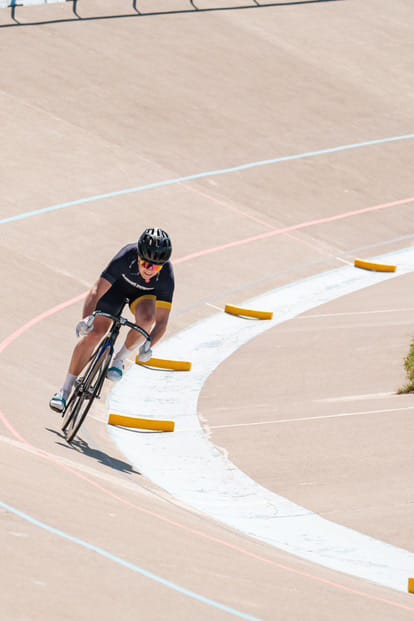
Her options were indoor track cycling or rowing. Rieder opted for the former, as cycling had always been and still is a big part of her and her family’s lifestyle. But, in order to achieve the high performance and adaptions required for Olympic-level cycling, Rieder had to lock away the skates completely for the next two years.
And that means completely!
No pick-up skates on the weekend, no stick and puck, no shooting in the driveway net. For someone who likes to stay active, biking everywhere, going from workout to practice to outdoor activities, the intensity of recovery needed for track cycling would challenge her like nothing else thus far. Not only that, but the high-intensity interval conditioning she built for hockey had zero translation to the brutal max-out efforts of cycle sprints.
She could keep her grit, will to train, and determination to be an Olympic-level athlete, but outside of that Rieder was essentially starting over.
“I thought I knew how to ride a bike.”
“I was in kindergarten of a new sport,” Rieder explains. “I didn’t know anything. I thought I knew how to ride a bike. I’ll admit I think I looked at this sport, like track cycling, and was like, how hard could it be, really?”
With a smile she adds, “I’ll own that. I was naive going into it and then I got there and it was wildly hard.”
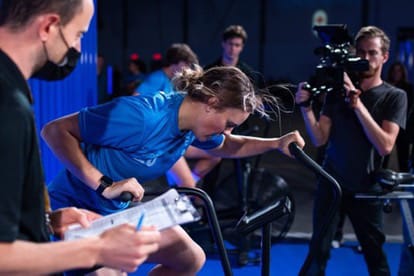
‘I could do that’ is a common sentiment from people when watching Olympic or professional sports, especially those that resemble a hobby or are precision based. While it’s true that perhaps more people could train for these sports, the level and years of commitment training for these sports is the real work. It’s thousands of hours training, recovering, practicing, eating, sleeping, and more training. As Rieder learned – if you don’t love the work, you won’t make it.
“I think I learned that a good work ethic will take you a long way, but the love of what you’re doing–if that’s your job, your sport, whatever it is–the love of it will take you the farthest,” she said. Rieder overheard her coach once tell a new athlete in the center: “You need to love it because the training is way too hard to keep this up and to really commit to it.”
“You train for weeks and weeks and weeks just to get like maybe half a second faster–and half a second is a lot!”
So, what is it that makes track cycling so uniquely unforgiving? Rieder outlines four elements that were particularly difficult for her coming from a team sport: training to shave milliseconds, recovery is as intense as training, one competition, and the results are all on you.
TRAINING FOR SPEED
“This was a big conversation I would have with my coach,” Rieder begins, “‘you have to understand where you’re at in the sport, and the effort you can put in to get to that next level. But also like, let’s look at the timeline here and be realistic.’” She continues, “We’re talking speed… we’re talking like milliseconds. You train for weeks and weeks and weeks just to get like maybe half a second faster–and half a second is a lot!”
When it comes to hockey, there’s a matrix of skills and physical adaptations that can make a player better. It’s also different for every player: where some favor their stick handling, others are built for strength and a more defensive game, while yet others have the flexibility and athleticism required for goaltending, and so on. On top of that, one players’ matrix needs to fit in with their overall team and may be suited for one team over another team. Even more, if one player has an “off-day,” often their teammates can pick up the slack.
But cycling is much different and much less forgiving. Either you got faster or you didn’t.
Half a second or less can be the difference between gold and silver, podium or no podium, qualifying or missing out all together. To increase cycling speed, some of Rieder’s training would consist of three, 30-second all out cycling sprints followed up with up to 10 minutes of rest between each sprint. You might be thinking, ‘that doesn’t seem like a lot,’ Rieder describes physiological stress these sprints put on the body.
“The hurt that you endure,” Rieder says, thinking back on it, “every training session is not like hockey [where] you’ll go into practice and like it’s an hour, hour and twenty…You go through your highs and lows but it’s pretty consistent. Your heart rate is elevated and you feel like you’re getting a good workout for the most part.
But with the type of track cycling I was doing, so much of my training was: You warm up. You do your thing. You go out there, and you go as hard as you possibly can, for whatever the effort is, let’s say 30 seconds, and then you rest for 10 minutes, because you need to recover your legs because you just absolutely destroyed yourself, and you feel like puking. And then let’s do that 3 more times, and let’s cool down, and that’s the end of the workout.”
She adds gracefully, “the hurt is next level. I have so much respect, one for individual athletes, but also cyclists. Cyclists are like a different breed of athlete, I will stand by that.”
Track cyclists max out their entire body in a single session, followed by an equally if not more challenging element of training: recovery.

TRAIN HARD, RECOVER HARDER
Recovery for ice hockey varies from person to person. Some athletes enjoy going for walks, playing video games or reading. Others go the treatment route with compression boots, cupping, saunas or ice baths. Some even do a short lifting or mobility session. Recovery is really anything that makes the athlete feel good, refreshed and “loose” for the next game or practice.
But cycling is a different story.
“I came from hockey…I love the fitness side of hockey, like love it and so the more the better! Like go from this workout, to this practice, to this, to this–more!” She says with excitement, “the cardio is good, the strength is there like you got everything…and then I got into cycling, and I would leave training and be like we did 3 efforts…?” Rieder says with a questioning tone at the end. But she said her coach made a good point when he told her, “‘you need to go 100% every single time. Because if you’re not going 100%, you’re not getting faster–you’re just getting fitter.'”
Increasing one’s repeat-sprint ability, fitness level and game decisions while fatigued are beneficial for a team sport like hockey–but in a sport like cycling, where metrics are all that matters, training under fatigue is useless. If an athlete doesn’t recover in time for their next speed day, they can’t breaking any plateaus and the damage to their body from the workouts start compounding.
Rieder says she told her coach, “I want to be fit like, that’s my thing, like I want to feel fit,” but her coach simply replied to her, “’that’s not the sport. The sport is speed.’”
She had to take recovery process even more seriously than in hockey, which was a particularly difficult task for Rieder, who would bike to and from places in her daily life. “The recovery side of things really just caught me off guard. I was not ready for that,” she says, “I would not even go to the mall or the grocery store and walk around because then I’m on my legs, I’m on my feet and much of the recovery they talk about is like, ‘Go home and get off your feet like, lay on the couch!’”
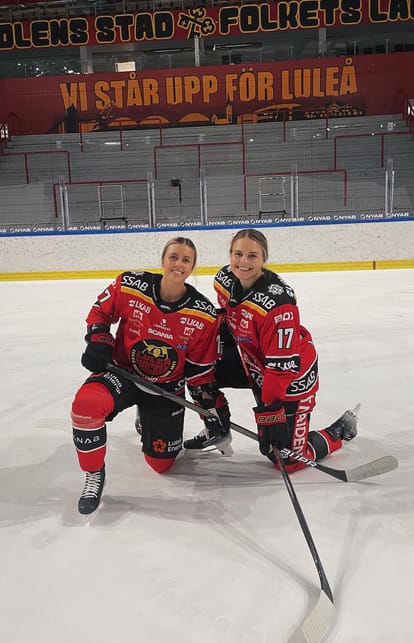
She continues, “and so that was a hard transition for the mental side, too, because working out, for the mental health was very beneficial for me—But then, now you’re telling me that I can’t do more.” Even though she would return home “feeling absolutely broken,” Rieder says it was one of the larger adjustments she had to make in her lifestyle. Becoming an elite cyclist directly opposed her innate desire to be busy and do lots of physical activity constantly. As of this interview, she is working at a landscaping company, trains for hockey and picks up other hobbies like sewing, most recently.
“…You need to go 100% every single time. Because if you’re not going 100%, you’re not getting faster–you’re just getting fitter.”
Working hard for an elite athlete doesn’t mean the athlete’s foot is on the gas all the time. For many, getting them to stop doing things is the real challenge. But with her determination and focus, she learned to adapt which kept her in the game.
These physical challenges rule out a hefty amount of amateur cyclists from reaching the next level, but in part two, Rieder discusses what’s potentially the greater gatekeeper to achieving success in track cycling. She also provides her reflections on the gains and losses she felt during this journey and how that impacted her return to professional hockey in Sweden.