Welcome back to Sunday Notes, your weekly journey into trends and analysis around the WNBA. Today we’re looking at preseason worries for Atlanta and Dallas, something subtle to monitor in Indiana, and more.
For reference, since this notebook comes out on Sundays, I define “this week” as the prior Sunday through Saturday night.
Atlanta Dream
As someone who has been watching way too many early 2010s WNBA games recently, I feel highly qualified to say that the 2024 Dream are lifted straight out of that mid-transition era1 style of play. They are cut from the same cloth as the 2010-11 New York Liberty, and their shot profiles are probably going to be similar, too.
Is that a bad thing? Not necessarily, but in a league with contenders operating at modern levels of offensive efficiency, it’s not particularly good. Especially when Atlanta is starting two centers who are subpar 3-point shooters and poor rim protectors (Cheyenne Parker and Tina Charles).
One easy fix would be moving Nia Coffey back into the starting lineup at her actual position of power forward. Unfortunately, the Dream have been playing Coffey at the three and training her with the guards. This is despite the fact that Coffey is one of the best backline defenders in the league, from protecting the rim to guarding post-ups, and does not have the athletic profile to score from the small forward position.
Dallas Wings
If nothing else, playing guard Arike Ogunbowale, center Teaira McCowan and forward Natasha Howard a combined 100 minutes every night should guarantee a baseline level of decent play for Dallas. But the Wings’ (on-court) organization and flow in their preseason game against the Indiana Fever was well below what you’d expect of a team returning 86.7% of its scoring and 77.5% of its minutes from last year. That issue might persist until All-Star forward Satou Sabally returns from injury, likely after the Olympic break.
When Dallas firmly established itself as the No. 4 team in the WNBA last year, it came after the All-Star break. Its offense started leveraging the scoring gravity of that quartet to create the spacing and pressure on help defenders that most teams would get from shooting and having a point guard, things that the Wings do not have. That might not be sustainable without Sabally.
Without Sabally, they’re down their top playmaker, 3-point shooter and shot creator, per Synergy. This has downstream effects beyond just downgrading from her to (likely) second-year forward Maddy Siegrist. It means that defenses will not respect Siegrist’s cuts or her spacing as much as they would Sabally’s. That means Howard isn’t as open on her interior cuts, Ogunbowale has to finish through tougher windows and more bodies can dig on McCowan’s post touches.
Without Sabally, there is a good chance that the Wings’ offense slows down, the looks get tougher, and there is a cascading effect that could hurt them even more than you would expect a team to be hurt by losing its top player.
The good news, beyond more touches for Siegrist and rookie guard Jacy Sheldon, is that Dallas has a back-loaded schedule. It plays Chicago, Los Angeles and Washington, three teams widely expected to end up in the lottery, seven times before Sabally is expected to return. And it plays Las Vegas, New York and Seattle, the consensus top three teams in the W, five times in that period. After the break, the Wings will play the lottery trio three times and the contending trio seven times.
Your business can reach over 3 million women’s sports fans every single month!
Here at The IX Basketball and The IX Sports, our audience is a collection of the smartest, most passionate women’s sports fans in the world. If your business has a mission to serve these fans, reach out to our team at BAlarie@theixsports.com to discuss ways to work together.
Indiana Fever
I wrote about Grace Berger’s midseason emergence, in part because of her good defense, for the Fever last year. She has flashed some point-of-attack footwork this preseason that suggests she could be one of the better guard defenders in the league in her second season. Nothing for certain yet, but something to monitor.
Minnesota Lynx
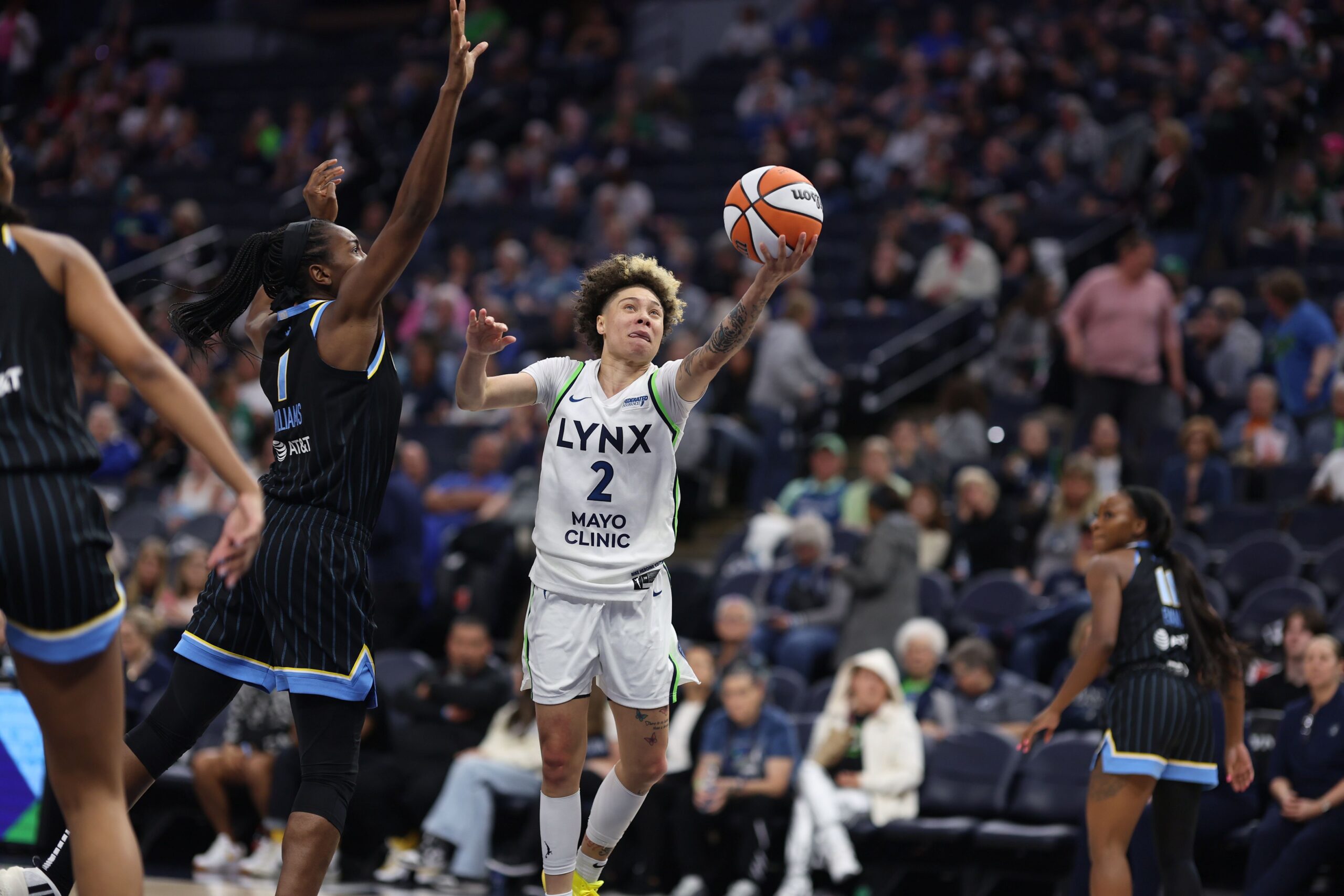
Recent should-have-been-shooting-guards who Minnesota has attempted to play at point guard:
Phoenix Mercury
I was extremely confident at the time that Natasha Mack was the best center in the 2021 WNBA Draft. Three years later, Mack is set to make Phoenix’s opening-day roster while the No. 1 overall pick that year, center Charli Collier, did not get a training camp contract. So that’s some proof of concept for my taking over our draft scouting operation.
The Next’s Hunter Cruse contributed reporting for this story.
- The WNBA is most easily broken down into three eras: the early era (1997-2005), the transition era or 24-second era (~2006-2015), and the League Pass era (~2016-2023). We might be at the beginning of a new era, but that won’t be clear for a few more years. ↩︎