PHOENIX — In an unprecedented time in WNBA history, the Phoenix Mercury are set to attack free agency in a condensed offseason with a new CBA agreed upon between the league and WNBPA two and a half weeks ago.
Following Friday’s expansion draft, official negotiations with free agents begin April 9 — with training camp opening on April 19, and Phoenix’s first preseason game to be played April 25. Saying it’s a short turnaround is an understatement, especially with nearly every player not on a rookie-scale deal being a free agent to some degree.
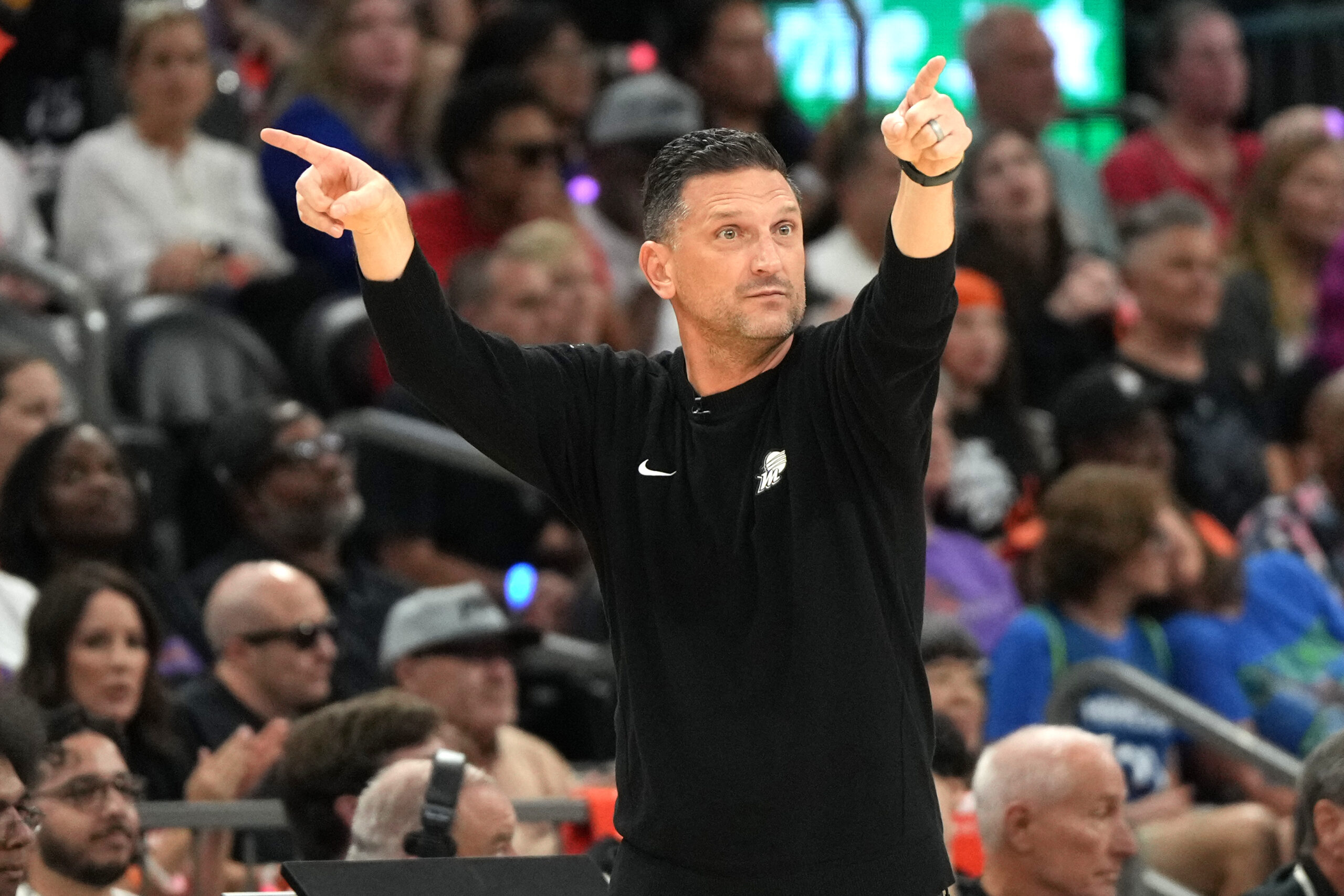
“It’s going to be a quick turnaround for all of us,” Mercury coach Nate Tibbetts said at Wednesday’s USA Basketball training camp in Phoenix. “It’s going to be a crazy 20 days, but we’ll make it through and I think we’re headed to better things as a league.”
Tack on the new provisions and contract terms included in the updated CBA, and all of a sudden, Mercury general manager Nick U’Ren has plenty to navigate.
The good news is that Phoenix is coming off an inspiring run to the WNBA Finals, currently has the most active cap space in the league and is one of the most well-run organizations with how much ownership has invested in player resources like new facilities. The Mercury are in a desirable position to retain their “big three” of Alyssa Thomas, Satou Sabally and Kahleah Copper.

Stay plugged in with women’s sports
Get smart, reliable coverage delivered straight to your inbox — with the context that makes every game matter.
Center Kalani Brown is the only current cap hit on the Mercury’s payroll, carrying an allocation of $277,500. That leaves Phoenix with $6,722,500 in cap space to fill at least 10 more roster spots.
Additionally, key players like point guard Monique Akoa Makani and forward Kathryn Westbeld are still on rookie-scale deals, meaning they are considered reserved free agents and that the Mercury will have exclusive negotiating rights with them. Forward/center Natasha Mack also falls under this distinction.
Two additional rookie guards from last season, Lexi Held and Kitija Laksa, were lost to the Toronto Tempo in Friday’s expansion draft. Those could’ve been two more players Phoenix could’ve easily retained, and both have versatile skillsets that would’ve helped the roster’s depth. However, it’s worth noting both played sparingly in Phoenix’s run to the WNBA Finals.
Phoenix also has its core player designation available, which can be used to tag one unrestricted free agent with exclusive negotiating rights to offer a one-year supermax contract. It’ll be interesting to see if U’Ren opts to use it on one of Thomas or Sabally, or if he will attempt to lock those players up with long-term deals. Copper, along with veteran DeWanna Bonner, cannot be cored because they both have received the designation more than once previously.
Listen now to The IX Sports Podcast and Women’s Sports Daily
We are excited to announce the launch of TWO new podcasts for all the women’s sports fans out there looking for a daily dose of women’s sports news and analysis. Stream on Spotify, Apple Podcasts or anywhere you listen to podcasts, and make sure to subscribe!
The core designation, along with qualifying offers for those reserved free agents, are able to be handed out beginning April 6.
Bringing back Thomas, Sabally and Copper seems to be the likely top priority for U’Ren, but doing so could limit the flexibility needed to build out the rest of the roster in a free agency period where depth may come at a premium. Of course, it’s a two-way street — those three would need to want to remain with the Mercury, as well; they could choose to sign elsewhere if they wanted to.
At this point, there are early indications that much of the league’s top-end talent could opt for continuity. Players like A’ja Wilson, Breanna Stewart and Sabrina Ionescu have publicly signaled a desire to remain with their current teams, a trend that could benefit Phoenix as it looks to keep its core intact. As mentioned previously, the Mercury present a situation that would appear favorable for their own stars to return.
But even in the nightmare scenario where one or more of those players departs, Phoenix would maintain significant flexibility, with enough cap space to remain aggressive in the market and recalibrate its roster around new additions. Since every other franchise is in the same boat, it will be a free-for-all, giving U’Ren pivot opportunities as needed.
“We’re not in a special situation,” Tibbetts said. “Every team is going through what we’re going through.”
It may help that the Mercury were in a similar situation just a year ago. A complete overhaul of the roster during the 2025 offseason saw franchise cornerstones Diana Taurasi and Brittney Griner depart, with only two players — Copper and Mack — returning from the previous season.
The new ragtag group that subsequently formed became immediate underdogs, which was the team’s rallying cry during its Finals run, but the lack of continuity may have been a contributing factor to why Phoenix fell short in a four-game sweep at the hands of the Las Vegas Aces.
“I think everybody hopes to have consistency throughout their teams, but we’ll see what happens…” Tibbetts said. “…Everyone’s going to be hopefully making the best decisions for them organizationally, for the players, there’s going to be a lot of twists and turns.”
While continuity can’t be guaranteed, there’s certain player prototypes the Mercury may want to pursue as additions, assuming at least some of last year’s structure remains intact. A shooting big, for example, may be an intriguing piece to bring in to stretch the floor alongside Thomas in the frontcourt. More point guard play may be helpful to take some of the load off the young Akoa Makani.
But of course, this is going to be a very unpredictable next few days, and until more concrete transactions unfold, there’s little fruit to bear by speculating in the world of “what-ifs.” All that’s certain is that Mercury fans, front office and players alike are in for a fast-moving ride — it’s time to buckle your seatbelts.
“There’s a lot of stuff that’s gonna happen fast,” Tibbetts said. “It’s going to put us in some uncomfortable situations, but I do feel like my experiences in the G-League help me prepare for this quick turnaround going into a season. I’m glad that I’ve got two years here to build culture and terminology and those type of things, and the hope is that you have some carryover.”
Even with the challenges ahead, the hope for Phoenix is that last season’s Finals run was not just a one-year breakthrough, but the foundation of something sustainable.