Howdy, y’all and welcome to Tennis Insider!
There’s a version of tennis that gets talked about a lot. Grand Slam finals, seven-figure prize checks, players with fashion house collaborations. And then there’s the version that most of us actually live: club nights, weekend round robins, beginner clinics where half the people are still learning not to shank their backhand volley into the adjacent court.
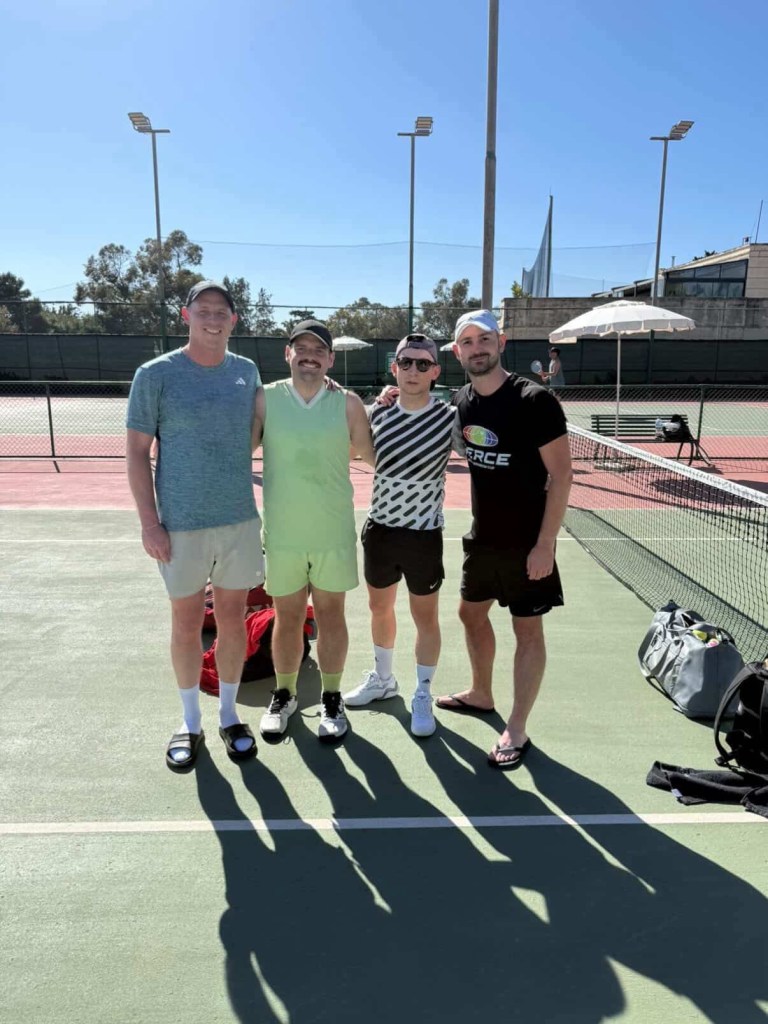
The Gay and Lesbian Tennis Alliance has always existed in that second world. And right now, it might be doing more for the sport than anything happening at the top. And I’m fortunate enough to be not only a player and tournament director but reporting from Malta where I wrapped up competition at the GLTA World Tour Championships.
The GLTA World Tour, now under the umbrella of Pride Tennis Worldwide, Inc., sanctions over 80 amateur tennis tournaments annually across the globe. From Melbourne to Gran Canaria to Columbus, Ohio, the tour runs on a rolling November-to-October season, with its top-ranked players earning invitations to the GLTA World Tour Championships. There are five divisions of play from beginner to open level, meaning someone picking up a racket for the first time has just as much of a seat at the table as a former collegiate player.
That structure matters more than it might seem on the surface.
Sport, for all of its culture-building power, has a long history of telling certain people they don’t quite fit. There are currently zero openly gay or bisexual men actively competing in America’s top professional sports leagues. At the grassroots level, LGBTQ+ people drop out of sports more frequently than their heterosexual and cisgender peers, and many who stay describe experiencing social isolation in toxic sporting environments. Tennis isn’t immune to that. It’s a sport with a lot of history around propriety, club culture, and an unspoken expectation to leave certain parts of yourself in the parking lot.
The GLTA was built precisely to push back on that.
The organization describes its tournaments as social sporting events. There’s competitive tennis for all abilities, but the main emphasis is always on socializing and having a good time. Doubles partners are found for those who show up without one. Friends and family are invited to play and many have a fun tradition where the winner buys the loser a drink after their match. It’s the kind of environment that doesn’t treat inclusion as a policy checkbox but as the actual point of showing up.
And the timing of all this is notable. The principle of inclusive sport is increasingly under threat. Lobbying groups are now pushing to tighten restrictions not just at the elite level but in recreational sports as well. Trans athletes in particular are navigating a landscape that’s becoming more hostile by the month, with governing bodies across multiple sports revising policies in ways that leave a lot of people without a competition they can call their own.
When mainstream sport narrows its doors, community-led organizations become more critical. Sure, it’s not as a consolation prize, but as proof that another model is possible. The GLTA has been running that model for decades. Its year-round commitment to inclusivity isn’t a Pride Month campaign; it’s the operational philosophy.
What’s worth appreciating about the GLTA World Tour specifically is how seriously it takes the actual tennis. This isn’t a “participation trophy” circuit. The World Tour Championships feature the top eight players per division battling through a round-robin format into semis and finals, with those invited earning rankings points accumulated across a full season. Players travel internationally to chase those points. There are Masters Series events that carry double points. It’s structured, competitive, and genuinely hard to win. The difference is that it’s also genuinely welcoming and the two things are not in conflict.
Tennis has always had LGBTQ+ icons at its core. Billie Jean King built much of what the modern game looks like. Martina Navratilova spent decades being one of the most visible out athletes on the planet (though she’s been an absolute disgrace in the conversation about trans people in sport). The sport has the lineage. What the GLTA World Tour does is make sure that lineage actually reaches the club level, the weekend player, the person who wasn’t sure there was a space for them.
The GLTA has given me a purpose and more of identity since coming out and the safe, inclusive space it gives me and others makes me so proud. This weekend in Malta, I just missed out on making the finals by three games in our round robin format. While devastating, I got to support friends (new and old) capture their first world titles and explore a new country I don’t think I’d ever visit in my lifetime.
On to links!
Listen now to The IX Sports Podcast and Women’s Sports Daily
We are excited to announce the launch of TWO new podcasts for all the women’s sports fans out there looking for a daily dose of women’s sports news and analysis. Stream on Spotify, Apple Podcasts or anywhere you listen to podcasts, and make sure to subscribe!
This Week in Women’s Tennis
Mirra Andreeva won her second title of the year, taking out Austrian Anastasia Potapova in three sets to win the Upper Austria Ladies Linz. The doubles title was captured by Zhang Shuai and Sorana Cirstea, who defeated Jesika Maleckova and Miriam Skoch.
The United States will miss the Billie Jean King Cup Finals for the first time since the tournament was restructured after being upset this weekend in the Finals qualifiers to Belguim.
Ben Rothenberg spoke with Jesse Levine, who’s been hitting with Serena Williams lately and the GOAT is traveling more than she needs to. The comeback watch is getting even more serious.
It’s great that players are getting more WTA 500 opportunities, but is the level of play getting better?:
Kazakh tennis is led by Russian imports Elena Rybakina and Yulia Putintseva, but they do have Zarina Diyas to thank helping pave the way. The native announced her retirement from tennis, peaking at No. 31 and winning one WTA singles title.
Alex Eala opened up about her level of stardom as she continues to navigate her explosion onto the tennis scene.
Does Petra Kvitova have the next set of tennis twins in her house? Only time will tell.
The tour moves to Stuttgart this week and one of the most shocking runs was Laura Siegemund taking the title in 2017. The German brought back that fighting spirit for a major comeback in the opening round to face off against Iga Swiatek in round two.
The conversation of tech in tennis continues with stats-based platforms and more giving players any advantage they can grab to one up their opponent.
According to former coaches, Peyton Stearns has always had the “it factor” when it comes to producing champions.
Tweet of the Week
Good on Coco Gauff on speaking her truth after a conversation of her hair in the advertisement of her Miu Miu campaign received a bit of criticism:
Order ‘Rare Gems’ and save 30%
Howard Megdal, founder and editor of The IX Basketball and The IX Sports, wrote this deeply reported book. “Rare Gems” follows four connected generations of women’s basketball pioneers, from Elvera “Peps” Neuman to Cheryl Reeve and from Lindsay Whalen to Sylvia Fowles and Paige Bueckers.
If you enjoy Megdal’s coverage of women’s basketball every Wednesday at The IX Sports, you will love “Rare Gems: How Four Generations of Women Paved the Way for the WNBA.” Click the link below to order and enter MEGDAL30 at checkout to save 30%!
Mondays: Soccer
By: Annie Peterson, @AnnieMPeterson, AP Women’s Soccer
Tuesdays: Tennis
By: Joey Dillon, @JoeyDillon, Freelance Tennis Writer
Wednesdays: Basketball
By: Howard Megdal, @HowardMegdal, The IX Sports
Thursdays: Golf
By: Marin Dremock, @MDremock, The IX Sports
Fridays: Hockey
By: @TheIceGarden, The Ice Garden
Saturdays: Gymnastics
By: Jessica Taylor Price, @jesstaylorprice, Freelance Writer