

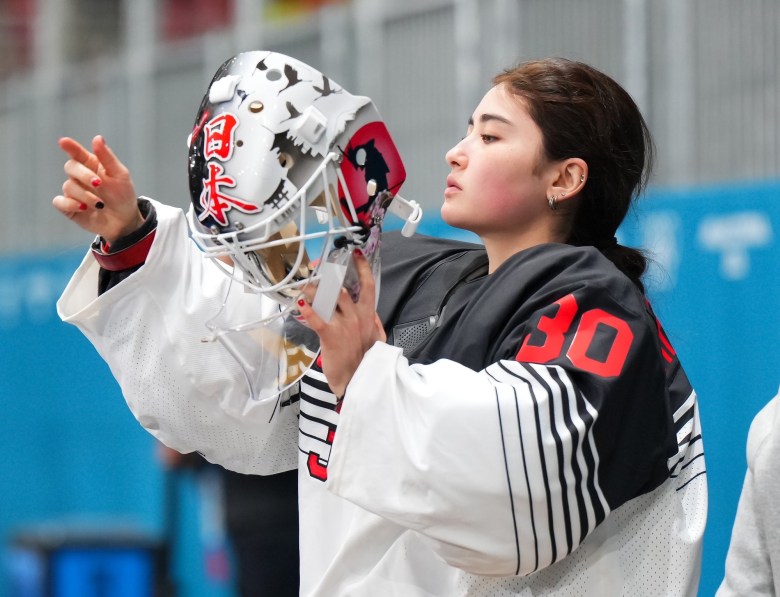
Goaltender Rei Halloran played her first post-collegiate season in 2024 for Vålerenga Ishockey (VIF) based in Oslo, Norway. As her teammate and roommate there, I watched her navigate her passion for the game and the slightly unforgiving atmosphere of playing hockey abroad.
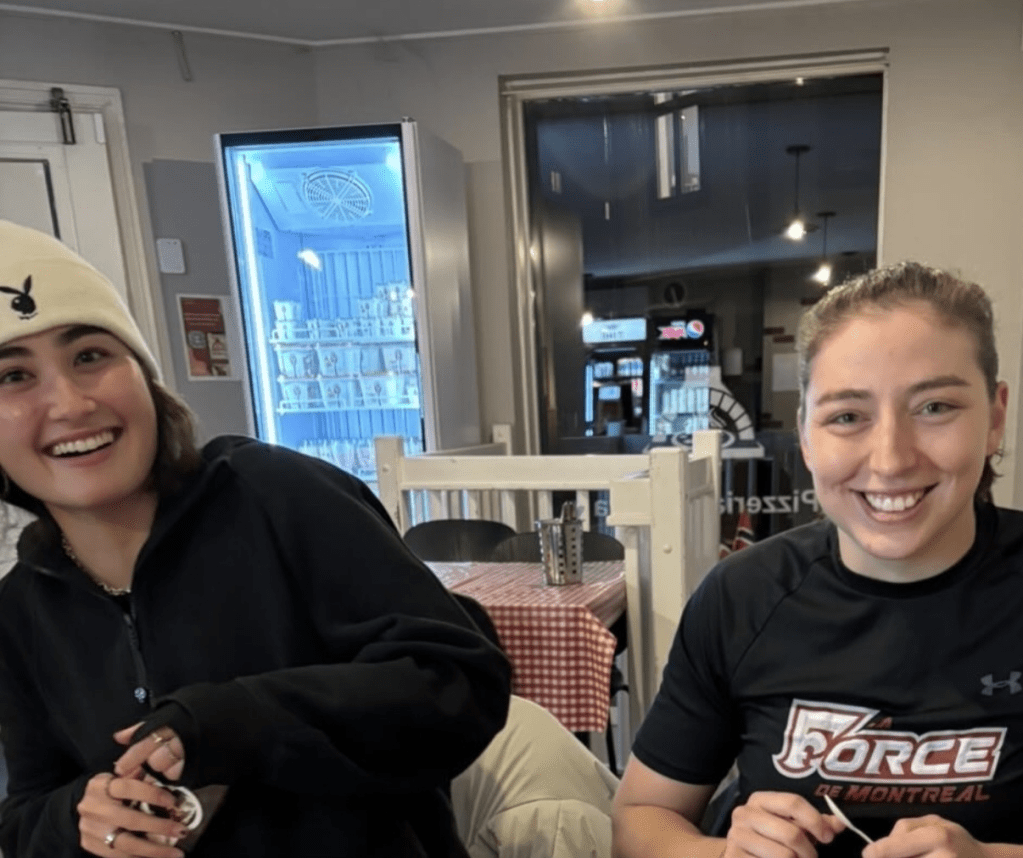
Most women’s programs overseas do not have enough resources for a dedicated goalie coach. Goalies are often a second thought when it comes to practice planning and overall in-season development. Whether that’s starting a practice with 5+ shot warm-up drill or battle game, significant amounts of head shots or not get adequate rest between drills. These types of practices after departing a structured NCAA DIII environment can be daunting. Add that to figuring out a complete new country, and it can cloud one’s enjoyment of the game.
“I think the [Olympic] experience allowed me to just love the sport again and really love what hockey brings for me and into my life,” Halloran said on her Asians in Hockey podcast appearance. She enjoyed “playing free” and “with no expectations” during her time with Team Japan. Halloran said she considered quitting hockey after this Olympic year. Her scrapbook illustrates how she was able to find meaning in hockey again.
Halloran is a dual citizen for Japan and the United States. She was born in Tokyo, Japan and moved with her family to the United States 12 years later. She played for Japan’s U18 team in 2019 when the tournament was hosted in Obihiro, Japan. Despite attending several camps since then, she never received the call to suit up for the senior team. Until the Olympics, that is!
In mid-2025, she left second-tier Swedish NDHL team Järnbrott HK to train full-time back in Tokyo. She joins The Ice Garden for the “Olympian’s Scrapbook” — a series that gives us a glimpse into moments first-time Olympians find memorable. Halloran shares four photos with us with a personal description of the photo.
Quotes have been lightly cleaned up for clarity and readability
Rei Halloran’s Olympic Scrapbook
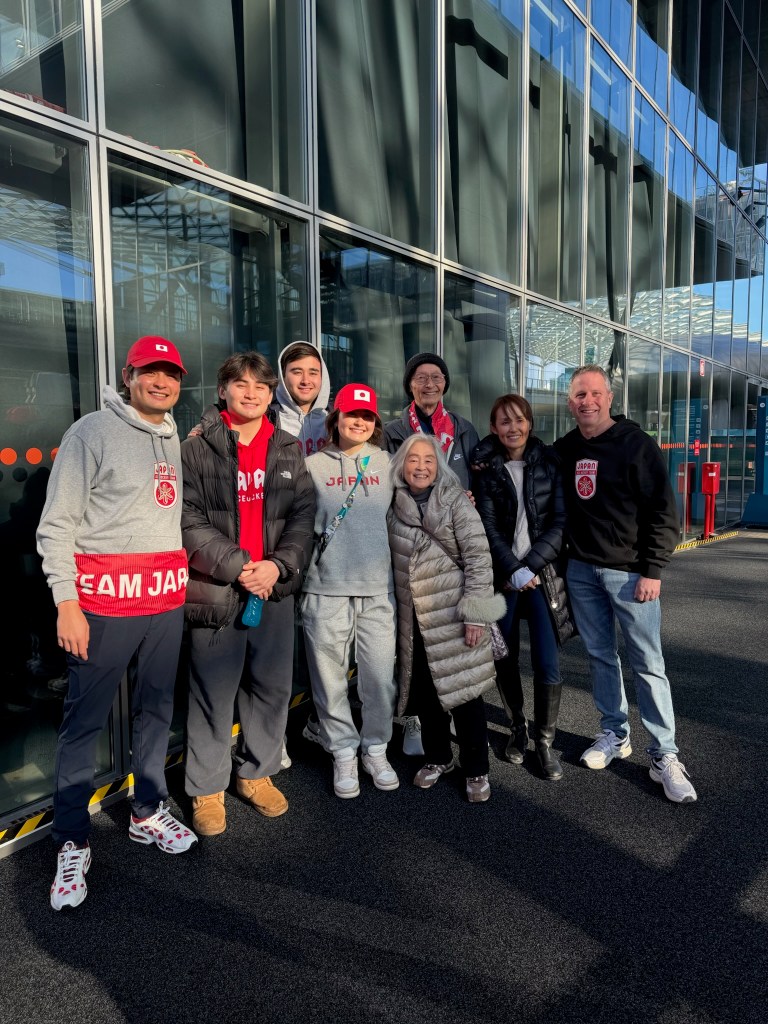
RH: The photo with my family represents the support system you need, and how important my family was in my process of getting to the Olympics. Without them, I wouldn’t have been able to really have an Olympic journey. They’ve been my number one supporters and motivators throughout my whole process. It’s just the importance as an athlete to have a really, really good and strong support system, or else you really can’t become an elite athlete, because it takes so many people and so many things and resources.

RH: The Olympic rings with me as a baby goalie…I think I was eight years old, maybe younger. I was at a tournament in Japan playing on Olympic ice at the Nagano Olympics Arena. It was an all girls tournament that happened once a year in Japan. My coach at the time was Hanae Kubo, who used to play for Team Japan, and she’s done so much for women’s hockey in Japan. It was the first taste of having that dream. I think especially playing on Olympic ice then as a little kid, and being in awe of the Olympic rings, and getting to go into the locker rooms that Olympians used. That was just a super surreal moment when I was really young. It was the start of this dream of wanting to play for Team Japan and wanting to represent my country. So, yeah, it was kind of the beginning of my Olympic journey.

RH: The picture of me with the rings with my teammate, Haruka Toko. That was our first day, and her sister actually took the photo to commemorate our first day at the village. This was my first Olympic games, but it was their third and fourth, I believe. Being able to be with veterans, and them embracing my first time as well, it was just a super amazing moment of everything actually feeling real. Like, I think, before that it’s like, “Oh yeah, I’m going to the Olympics.” It’s like, you know it’s gonna be real, but it’s not real until you actually get there. Feeling those moments of seeing the rings for the first time, and taking your pictures with the rings for the first time, is so emotional, and feeling like everything is really coming together. So yeah, that was, like, an amazing moment.
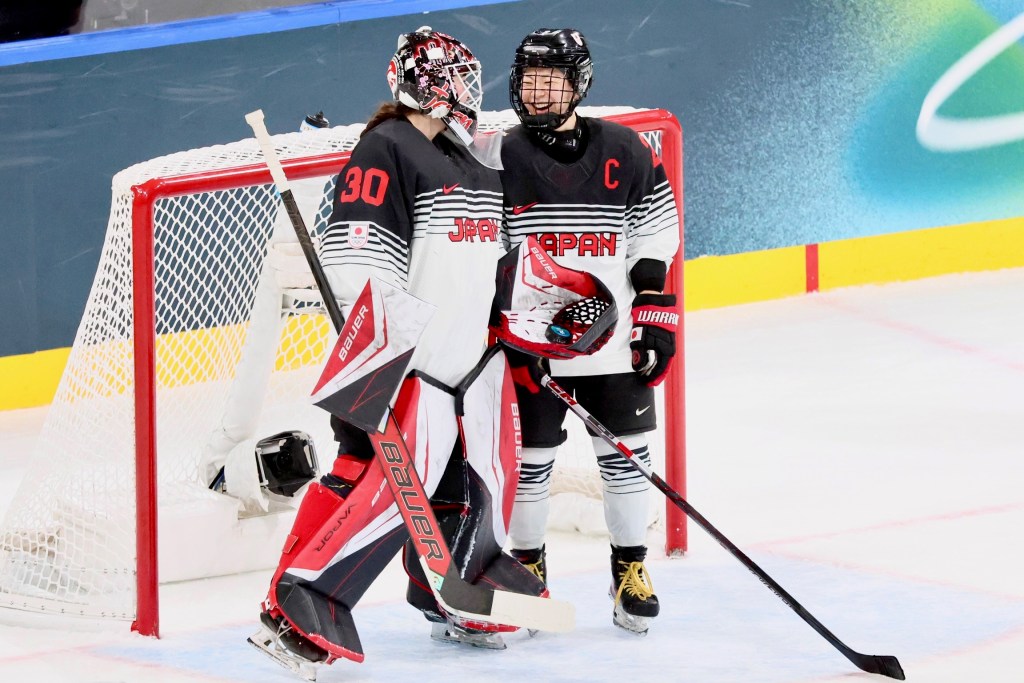
RH: That’s me on the ice with my teammate — that’s our captain, Shiori Koike and it’s her fifth Olympic Games. She’s seen the program grow from the ground up. I’ve been able to watch it on online and on television and stuff, but being a part of that team was so amazing. Actually being able to play with the team really was such a highlight of my career. Also embracing that idea of ‘Smile Japan’. We’re always called ‘Smile Japan’, because we always have smiles on our faces when we play. I think you just don’t see that too much, especially for me growing up. Playing in the US and playing college hockey, everyone’s so serious, it’s so competitive. I think being able to embrace that ‘Smile Japan’ and having so much fun playing on the Olympic stage was amazing, and made me fall back in love with the game. So that was just a really special moment in my career, and such a highlight.
A Milestone and a Look Ahead
Near the end of the third period of Japan’s final Olympic game, Halloran got the nod from head coach Yuji Iizuk, to take the crease. It allowed her to record official “Time on Ice” in an Olympic game. Nothing is better than watching someone who wasn’t sure of their path skate out to play in her first Olympic game.
Now with her passion refueled, Rei Halloran looks ahead to continue her dream of playing professional hockey.