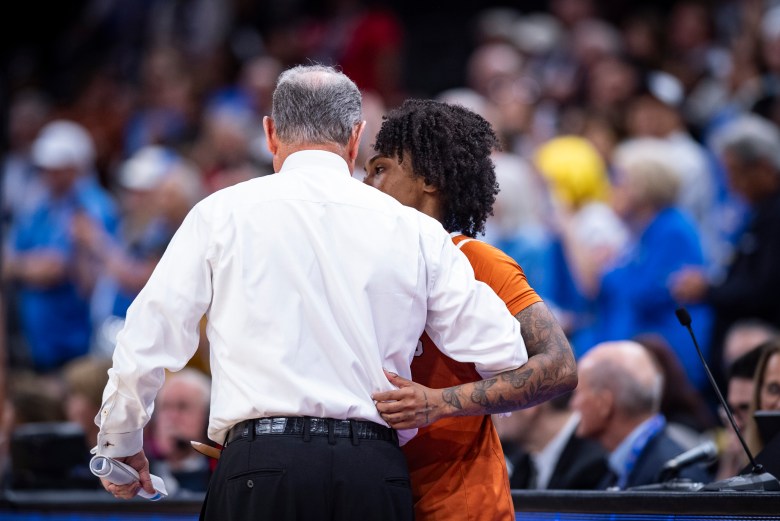
PHOENIX — In NCAA tournament play, losers go right home, so winning is everything. Throughout Final Four weekend, several players and coaches spoke about the agony of a season-ending loss, about how haunting those losses can be, not just for days or weeks, but months or even years. Only the most intense competitors make it to the final weekend of the tournament each year, but teams at the height of the sport can still admit that there’s more to basketball than winning.
When you love the game of basketball, “the return is tenfold,” according to South Carolina head coach Dawn Staley. For Staley, the reward of the job goes beyond wins and titles.
“I coach really from the love of what basketball can do for you, can do for your families, can do for creating young people who will go out in the world and understand through basketball there’s some incredible lessons and success stories that make you valuable to whatever situation you’re going to be in,” Staley said after her team won its semifinal game over UConn.
Coaches value personal growth, not just athletic improvement
Staley was far from the only coach considering the merits of the sport throughout the tournament.
“Why at the beginning of time did we think it was worthwhile to give full athletic scholarships?” UCLA head coach Cori Close asked rhetorically during her pre-game press availability heading into the semifinal round.
She didn’t wait around for an answer. “It’s because we knew it was so formidable in terms of leadership, self-esteem, character development, preparation for life.” Collegiate sports play a role in creating quality humans.
And of course, the experience includes a valuable education. On the men’s side, players are draft-eligible following their freshman year; on the women’s side, however, domestic players typically need four years in college before qualifying for the draft.
The extra time in school might feel like a drag for players impatient to get to the pros, but not Texas forward Madison Booker.
“My mother, she’s a teacher, she’s always harped on education, get your degree at college,” Booker said during a media availability on Thursday.
Texas guard Rori Harmon then expanded on Booker’s thought. “We think about what our future endeavors are going to encounter when the ball stops bouncing,” Harmon expressed. “Gratefully enough, I was able to graduate in three years and also get my master’s degree from the University of Texas.”
Order ‘Rare Gems’ and save 30%
Howard Megdal, founder and editor of The IX Basketball and The IX Sports, wrote this deeply reported book. “Rare Gems” follows four connected generations of women’s basketball pioneers, from Elvera “Peps” Neuman to Cheryl Reeve and from Lindsay Whalen to Sylvia Fowles and Paige Bueckers.
If you enjoy Megdal’s coverage of women’s basketball every Wednesday at The IX Sports, you will love “Rare Gems: How Four Generations of Women Paved the Way for the WNBA.” Click the link below to order and enter MEGDAL30 at checkout to save 30%!
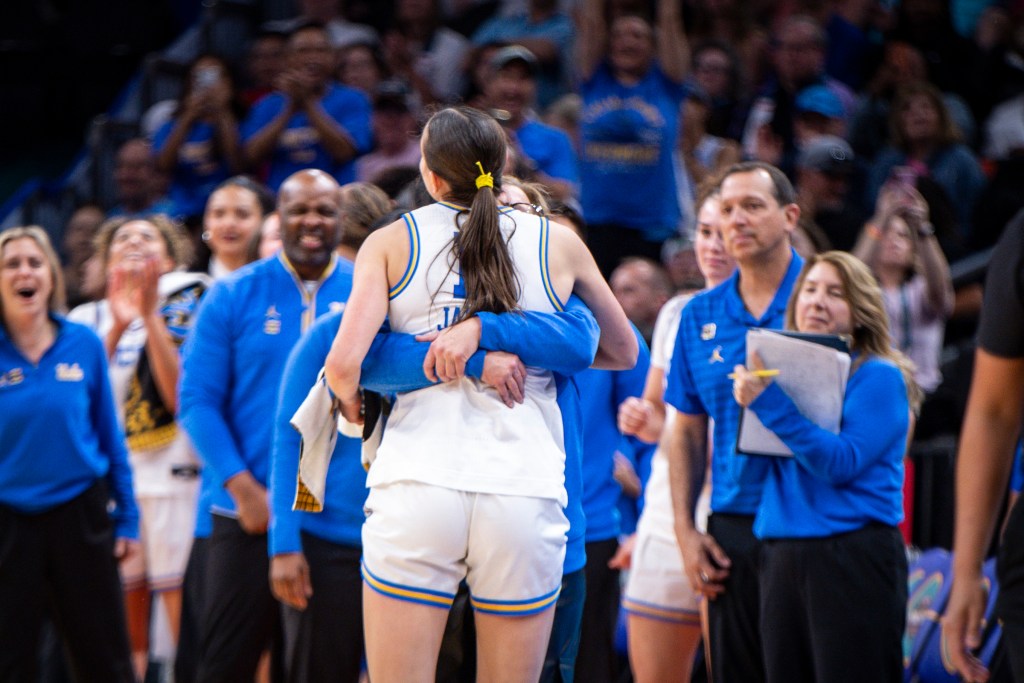
This sentiment — valuing education — is shared across the sport. Around an hour after Booker and Harmon spoke, UCLA guard Gabriela Jaquez sat at the microphone and said that, even if she could have declared for the draft earlier, “I think getting a degree from UCLA is something I wouldn’t want to pass up on.”
In addition to offering access to formal classroom education, basketball provides an environment for players and coaches alike to learn leadership and accountability.
When Aliyah Boston graduated from South Carolina, she formally passed the leadership torch to current guard Raven Johnson, but at first, she didn’t know what to do with it. “When she said that, I didn’t think of me being a leader because I’m such a goofy person. I think I lead in a different way than the usual leaders that came through here,” Johnson told reporters on Thursday.
“I honestly try to make others feel comfortable with who they are,” Johnson continued. “I’m definitely comfortable with who I am. I’m not changing for anybody. If you don’t like it, you just don’t like it.” Basketball, and the leaders in the sport, gave Johnson the opportunity to evolve into the figurehead she is today, someone who can give a voice to hard truths, even when it’s uncomfortable.
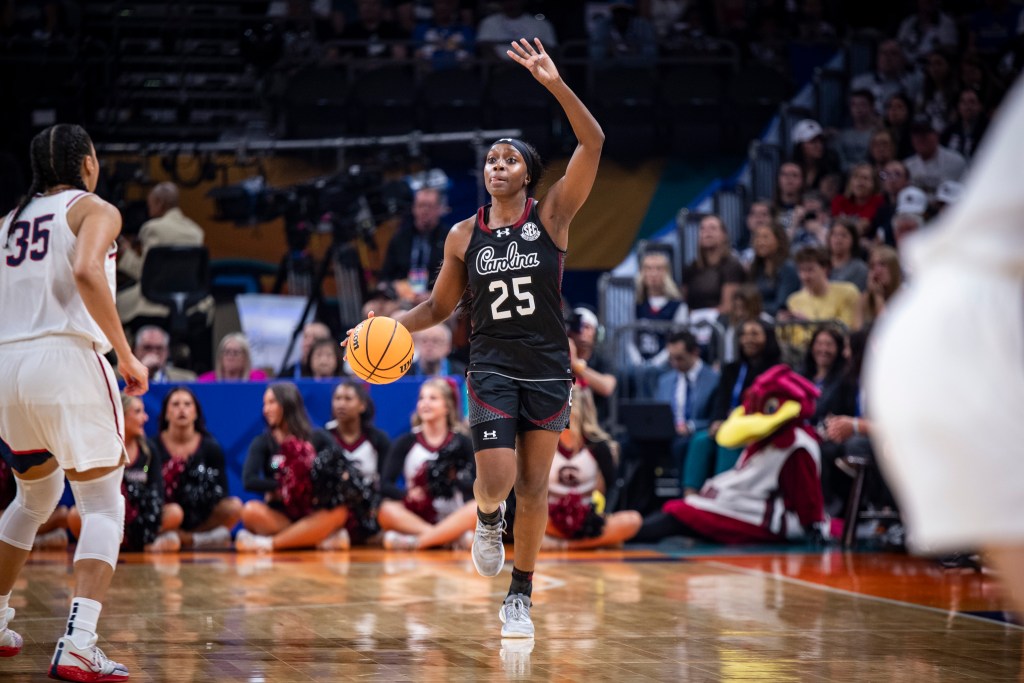
Later in that same media availability, Staley offered an example of Johnson’s newfound leadership tactics. During the regional rounds in Sacramento, “Joyce [Edwards] was shooting on the rims,” Staley explained. “They seemed tight. She had a negative comment about the rims.”
Then, Staley watched as Johnson delivered a gentle correction. “Raven is like, she tapped her. That’s what Raven does. Tilted her head. She was like, ‘The rims are great. You got to think positive; just say positive things about it.’” That interaction was noteworthy to Staley because the version of Johnson that initially arrived on campus wouldn’t have said anything; yet the Johnson of today stepped up to be a helpful leader.
Later that day, Texas head coach Vic Shaefer used part of his time with the media to share a similar story about Booker following a loss to Vanderbilt earlier in the season.
The day after the loss, “Madison Booker’s voice resonated in my practice gym,” Schaefer said. “To me that was the next step in her evolution as an All-American, to not only just be somebody that kids could see every day working, coming in early, spending time on her game, but stepping up and being that vocal leader, too.”
“From that day forward, she’s been that,” Schaefer continued. “In that semifinal game in the SEC tournament, if you’ll remember, Mississippi made a run at us to go into the fourth quarter. Before I could get in the huddle, Madison Booker was holding court. I didn’t have to get in that huddle. I let her have it.”
And as the players learn to lead during their college experiences, the best coaches know how to foster and encourage their growth. Some of that is taking accountability.
“I say this all the time — you’re either coaching it or allowing it,” Schaefer said. “I’m accountable. If I don’t like the way my team’s playing, it’s my job to fix that.”
Schaefer wasn’t the only coach preaching self-accountability that day. While reflecting on what happened with her team during last year’s Final Four loss, Close offered an honest evaluation of her own performance.
“Yeah, I guess talking transparently, I did a crappy job as a leader,” Close reflected, admitting that she let herself become too distracted by the transfer portal and her recruiting responsibilities instead of finishing the season strong.
But admitting fault is just one tool in her leadership bag. Close chooses to coach, “[H]earts first and from the inside-out.” It’s natural for coaches to want to prioritize basketball abilities above all else, but Close can point personality traits and personal growth in her players that have helped them on and off the court. “Their love for each other and their connectivity and how they’ve grown as young women is what makes them fight so hard to compete another day.”
Competition comes with loss, and losing teaches in its own excruciating way. After his team lost to South Carolina on Friday, UConn head coach Geno Auriemma joked to reporters post-game that maybe he no longer wanted to coach anymore. But once he got serious, he expressed an appreciation for losing.
“I was telling my players that up until last year, I had lost more times in the Final Four than I had won, that there’s no stigma, there’s no stain in losing,” Auriemma expressed. “Once you get here, you have to understand that there’s a high probability that you’re going to lose. You can’t be afraid of that.”
Just a few minutes removed from watching senior guard Azzi Fudd fight to swallow a lump in her throat before answering a question in the final post-game press conference of her college career, he pointed out that most people avoid putting themselves in situations where they might wind up feeling like Fudd. They’d rather not risk the pain of a career-ending loss, but by doing so, they also forgo the opportunity to win.
Instead, Auriemma declared that it should, ‘[N]ever feel like losing here is any kind of disaster or catastrophe.” Rather, he said, “it’s just another opportunity to go forward and work real hard to get back here and try to change the outcome.”
The game’s stars care about more than wins and losses
When a team loses a game, not only do they get the chance to learn from the mistakes made in the loss itself, but they also learn the type of confidence associated with tallying a win after enduring a loss. They learn that losses don’t have to be all consuming and eternal, and that frequently they’re just an annoying roadblock on the path to greatness.
Overall, getting too locked in on results is risky. Booker is wary of letting basketball feel too much like a job. “[W]e as a team, we have done a great job kind of just going back on that, kind of taking it back as a kids sport. We all played when we were younger. We all loved the sport when we were younger,” she said during a media availability before their semifinal game. In her eyes, reclaiming the childhood version of basketball strengthened the team’s sense of sisterhood and leveled up their chemistry.
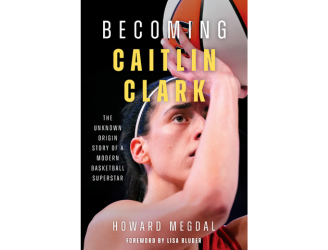
“Becoming Caitlin Clark” is out now!
Howard Megdal’s newest book is here! “Becoming Caitlin Clark: The Unknown Origin Story of a Modern Basketball Superstar” captures both the historic nature of Clark’s rise and the critical context over the previous century that helped make it possible, including interviews with Clark, Lisa Bluder (who also wrote the foreword), C. Vivian Stringer, Jan Jensen, Molly Kazmer and many others.
Newly crowned national champion Lauren Betts feels similarly. While speaking to the media the day before the title game, she declared that getting to perform with the UCLA dance team alongside Jaquez and Charlisse Leger-Walker was, “[T]he most enjoyable experience I’ve had. Ever.” The most fun Betts had wasn’t on the court; rather, it was in goofing around with her teammates.
And she doesn’t care that some people might find it bad optics to admit that. “We just really enjoy each other,” she said. “We just want to make it fun. Yes, we’re obviously very serious and we like to compete and win games. But you can also enjoy the journey as well.”
Teammates who genuinely care for one another carry themselves differently on the court. While speaking to the media after the last game of her college career, Fudd shared what she considered to be one of the more important revelations from her time at UConn.
“Being able to play with a team that really cares about you, cares for you,” Fudd said as she reflected on her Husky career. “You can push each other, motivate each other. I feel like it changes the game of basketball completely.”
In continuing to describe the childlike joy powering the Longhorns, Booker expressed that everyone on the team loves supporting one another.
“We love when everybody gets their buckets, get theirs,” Booker said. “I think we’re all a sisterhood. We all love each other. When we see our teammates thriving, … it’s a great thing to see.”
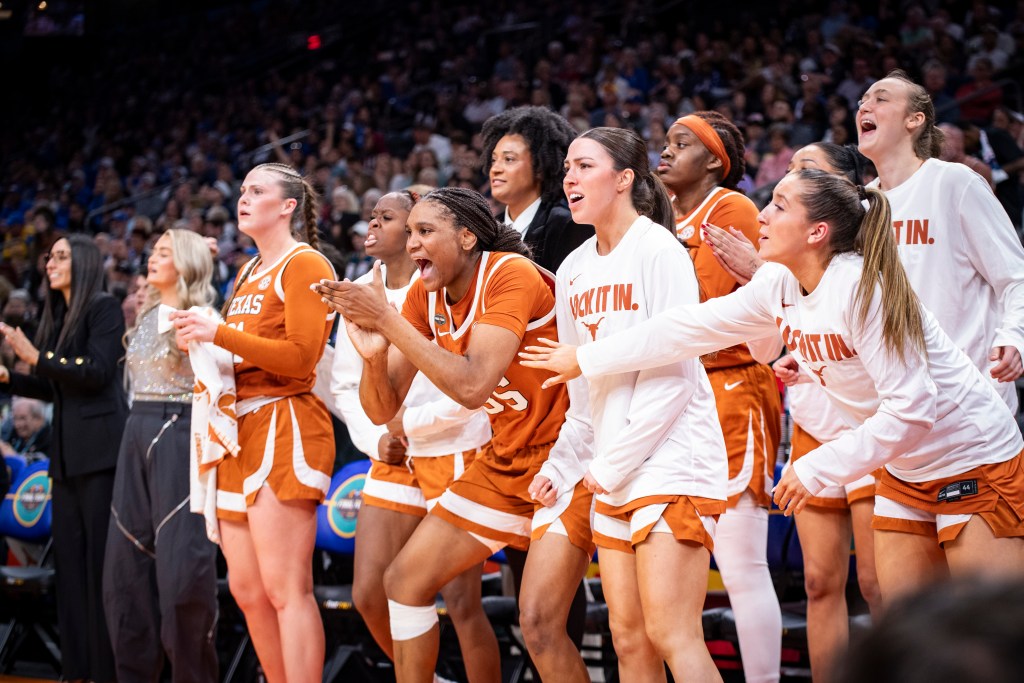
And Booker wasn’t the only one throwing around the word ‘sisterhood’ over the course of the weekend. South Carolina guard Ta’Niya Latson described watching Johnson and the 2025 Gamecocks lose to UConn in the title game.
“Around this time last year, I was packing up my house in Tallahassee, my apartment,” Latson reflected. “I was watching the game. Even though I wasn’t committed at the time, I was hurting for her. That was my sister. Just to see her sad and cry on TV, I carried that hurt with me through the season. It made me play for her and play for my teammates and my coaches. It’s like a sisterhood. Everything that they feel, I feel.”
And when Fudd gave an answer in her first media availability of the weekend, she called her teammates her “sisters forever.”
“I know even when I leave, I’m going to be rooting for them, coming back, visiting them,” Fudd said. “Even though this is my last weekend with them, last time playing with them, I know this isn’t the end of our relationship.
And she followed that sentiment up after UConn’s loss. As Fudd walked into the interview room with red, puffy eyes, first question she received asked her to sum up what sophomore Sarah Strong meant to the team this year. Instantly, she sat up a little taller; even at a low point, talking up her teammate sparked a brief moment of joy.
Harmon was also emotional yet eager to defended the Texas sisterhood after the Longhorns’ semifinal loss to UCLA. Following a down shooting night, Booker faced some tough questions from the media. As she struggled to find words, Harmon stepped in to advocate on her behalf.
“You got to realize, she’s human. She’s a basketball player. We want her to take those shots,” Harmon said about Booker. “… I truly told Maddy, I don’t care … what your statistics look like. There was plenty of other things that caused us to lose the game, not just because Madison missed her money midrange, ’cause I promise you we’ll continue to go back to her, we’ll continue to look for her, we’ll continue to tell her to take her shot.”
Moments like that show that these players are not simply crafting the answers to appease the public; they mean it when they say they love each other. And the love isn’t reserved exclusively for their teammates and coaches. As Jaquez explained why she would rather stay in school than declare for the draft early, she made it clear that that choice wasn’t just about finishing her degree.
“Playing four years at one school, you develop a community,” Jaquez said. “The fans. I think that’s what people connect with women’s basketball about is the players can usually stay in college for a really long time, so they kind of build connections that way.”
A few minutes later, Betts fielded a question from a reporter, who turned out to be a former classmate. The realization prompted her to briefly derail her own response. “Just so everyone here knows, I went to class with him. He was in my AP stats class. This is insane. I’m so happy you’re here (laughter). This is so awesome.”
Betts was so earnestly excited for the moment of connection, because she deeply understands the importance of getting support from one’s community. In recent months, she’s spoken publicly about her experience with depression and needing to take time away from the team to focus on her health.
When Betts returned to practice, she felt anxious because, in her mind, she had let her team down. But her return wasn’t met with anger or disappointment; rather, she was surrounded by unconditional love and support.
“These people love me for me, not because of what I produce on the court,” Betts reflected. “They don’t care about how many points I’m scoring. They care about me because I’m Lauren, and I’m their friend.”
In her Player’s Tribune piece, Betts wrote that embracing that feeling was like a miracle, one that she is intentionally choosing to share with others. Speaking to the media on Thursday, she said, “I just feel like for me, basketball and this platform that I’ve been given, I was put on this earth to do more than play basketball. I think the journey I’ve had, the hardships I’ve went through are to help other people.”
Betts also revealed that, after she first spoke publicly about her depression, Staley reached out to offer support as well. When asked about it before the semifinal round, Staley said that it was simply human nature.
“You don’t want young kids to have to go through some things, such dark times that she went through,” the South Carolina coach said. “Sometimes you just need to know that you’re supported.”
“When you are a competitor, obviously you want to win, but there’s always a human element to what you’re doing,” Staley continued. “I’m always looking out for the greater good of our sport ’cause our sport has been held down for so long that I do think the people that’s within our sport have to have a healthy balance of winning and knowing when it’s great for the game.”
Listen now to The IX Sports Podcast and Women’s Sports Daily
We are excited to announce the launch of TWO new podcasts for all the women’s sports fans out there looking for a daily dose of women’s sports news and analysis. Stream on Spotify, Apple Podcasts or anywhere you listen to podcasts, and make sure to subscribe!