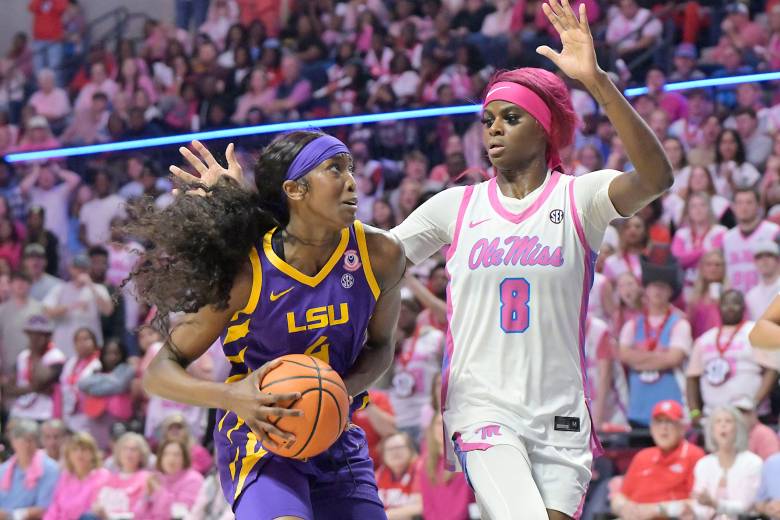
OXFORD, Miss. — With Mississippi fans dressed in white and members of the Divine Nine Greek-letter organizations standing throughout Sandy and John Black Pavilion, LSU faced the possibility of its second stretch of back-to-back Southeastern Conference (SEC) losses this season.
LSU (23-4) opened SEC play in January with losses to Vanderbilt and Kentucky and entered Thursday still feeling the sting of a Valentine’s Day defeat to South Carolina, a game defined by missed free throws, wasted opportunities and empty possessions.
Mississippi (21-7) sensed another opportunity. It led by seven entering the fourth quarter and had stretched the margin to 13 in the second half. MiLaysia Fulwiley, Flau’jae Johnson and their teammates walked toward the bench, where LSU assistant Bob Starkey delivered a familiar reminder.
“We’ve been here before,” Fulwiley said postgame.
The message demanded more than belief. LSU needed urgency on the glass and discipline on defense, exactly what head coach Kim Mulkey had demanded all night.
Then, it happened. After Mississippi’s Denim DeShields made two free throws to extend the lead to 69-59, LSU responded with a decisive 19-1 run that flipped the game and drained the energy from the building.
Fulwiley led the charge. The Tigers’ bench assassin unleashed her speed, slicing through Mississippi’s transition defense for layups and momentum-shifting plays. She scored 22 of her team-high 26 points in the second half, including 10 in the fourth quarter, erasing the deficit and sending Mississippi fans toward the exits before the final minute.
In its largest comeback of the season, LSU secured a 78-70 victory over Mississippi. Mulkey praised Fulwiley’s impact but pointed to something deeper in her team’s resilience.
“I thought we were getting a lot of transition baskets [and] it starts with Malaysia [Fulwiley],” Mulkey said after Thursday’s victory. “She’s just so quick, and she makes everybody else play quicker. … We had a lot of things that could have been excuses. …[But] we just kept chipping away.”
Mississippi controlled much of the night, even without sophomore guard Sira Thienou, who suffered a bone bruise in the win against Tennessee.
But in the fourth quarter, Mississippi’s offense collapsed. The Rebels scored just seven points and missed all 17 field goal attempts in the final frame. Head coach Yolett McPhee-McCuin saw the warning signs in missed layups and empty possessions, uncharacteristic mistakes from a team that had dictated the game for three quarters.
The SEC offers no recovery time. Each week demands physical and emotional endurance.
Mississippi entered Thursday fresh off a double-digit win against Tennessee, a game moved to Tuesday because of Winter Storm Fern. That victory came during a demanding stretch that included a ranked matchup against Kentucky and set up another Sunday test against league-leading South Carolina.
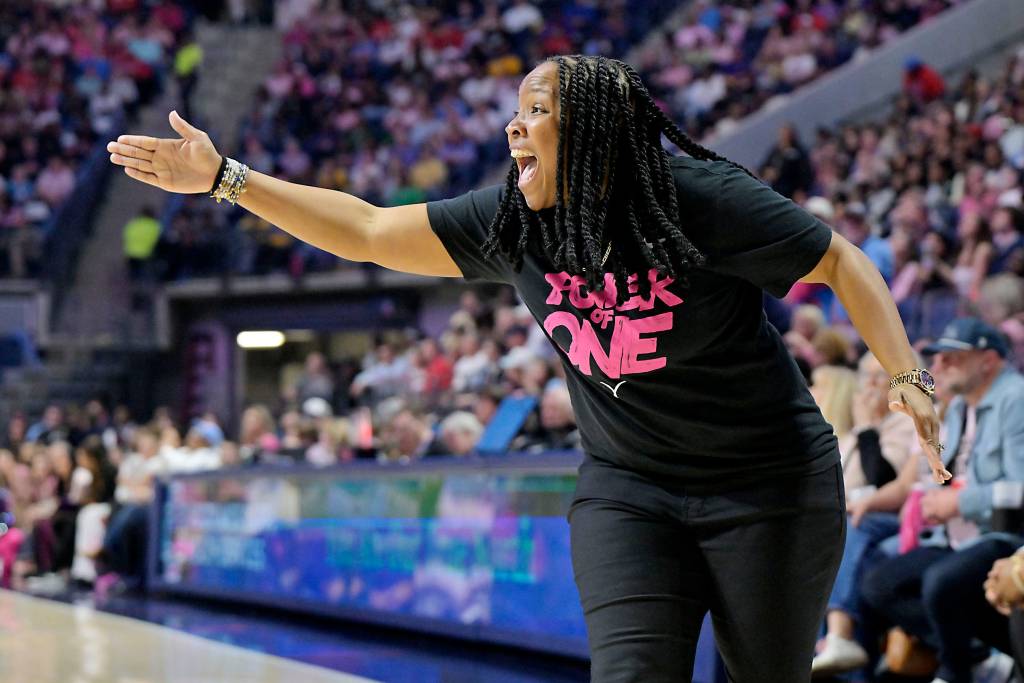
McPhee-McCuin refused to blame the schedule. Instead, she embraced its lessons.
“I don’t want to be a coach that has excuses,” Coach McPhee-McCuin said. “I’m not a sore loser, like it is what it is. … But when I saw my players missing bunnies around the basket, clutch free throws, we don’t miss those [shots]. But I am confident that this week is going to prepare us for something even greater in March and I’m not talking about the SEC tournament. I’m talking about March Madness when we go and hopefully Sira [Thienou] will be back. We’ll appreciate this [loss] and learn from it.”
Takeaways from Thursday’s showdown
When LSU needed a response, Fulwiley and Johnson delivered
Johnson made her intentions clear from the opening possession. Still carrying the weight of two missed free throws in LSU’s loss to South Carolina days earlier, she dictated the tempo early and powered LSU to a 26-21 lead after the first quarter.
Even after taking contact late in the opening frame and not playing in the second quarter, Johnson — who was recently named to the Naismith Player of the Year late-season team — never drifted from the moment. She finished with 18 points, five rebounds and three assists, scoring all nine of her first-half points in the opening quarter and adding nine more in the second half, including six in the fourth.

However, LSU’s comeback ultimately belonged to Fulwiley. The Tigers spent much of the first half working against themselves, committing 11 of their 14 turnovers before halftime and stringing together careless passes that stalled their offense and handed Mississippi extra possessions. LSU lacked rhythm, control and, at times, answers.
Fulwiley changed that. She imposed her will on the game with speed, defensive anticipation and fearlessness, fueling LSU’s second-half surge and overwhelming Mississippi on both ends of the floor.
She scored 22 of her career-high 26 points off the bench after halftime and added three steals, disrupting Mississippi’s rhythm and accelerating LSU’s momentum.
The Tigers, who averaged 39.7 bench points entering the game, relied on Fulwiley to deliver timely scoring when their comeback needed life. She also entered Thursday leading the SEC with 84 total steals and ranking 10th nationally, averaging 3.2 per game.
Despite Fulwiley’s strong individual performance, she credited the Tigers’ victory as a team win.
“I think we just came together and realized that whatever we got to do, we got to win this game,” Fulwiley said postgame. “I think we just kind of put that out there on the court, and we just had, like, a we can’t lose mindset.”
McMahon delivered star power, but LSU had the final answer
Mississippi forward Cotie McMahon never looked like a player carrying the weight of the previous week. She entered Thursday fresh off a career-high 39 points in 37 minutes against Tennessee and immediately picked up where she left off. McMahon scored 18 of her team-high 25 points in the first half, commanding the game and helping Mississippi build a six-point halftime lead. She showed the full range of her offensive arsenal, knocking down three 3-pointers, rising comfortably into midrange jumpers and finishing through traffic with acrobatic Eurostep layups at the rim.
But the fourth quarter demanded something Mississippi could not give, sustained energy. As LSU surged, McMahon’s efficiency disappeared. She went 0-for-7 from the field and 0-for-2 from 3-point range in the fourth quarter, part of a difficult second half in which she shot 1-for-12. Mississippi followed the same path. The Rebels missed every fourth-quarter field goal and finished with a season-low 20.6% shooting percentage in the second half, their lowest mark since shooting 28.6% against Memphis earlier this season.

The shots that had fallen all night suddenly refused to cooperate.
“I feel like we eventually did die out at the end,” McMahon said postgame. “We were just trying to find something to keep us going. … We had a lot of shots around the rim that we usually don’t miss, and we just couldn’t finish them.”
Still, McMahon never framed the moment as failure. Sitting beside coach Yolett McPhee-McCuin, she saw it as preparation.
“Fighting for 40 minutes no matter how tired we are,” McMahon said. “I feel like this was a little pre-run of what the tournament’s going to be like. So now we know what it feels like, and now we know what we need to give when this time does come again.”
Mississippi owned the paint early, but its offense collapsed at the worst possible time
Forwards Christeen Iwuala and Latasha Lattimore helped Mississippi build control early, but like McMahon, they could not sustain it when LSU made its push.
Mississippi’s frontcourt presence faded in the second half. Iwuala and Lattimore combined for just nine points after halftime and finished with 25 points and eight rebounds, production that reflected early effectiveness but late-game limitations.
Still, both players established Mississippi’s identity inside.
When McMahon carried the offense in the first half, Iwuala and Lattimore punished LSU in the paint. They scored around the rim, protected the basket and disrupted LSU’s post players with active help-side defense. Lattimore recorded three blocks, marking the 11th time this season she reached that total. She became the first Mississippi player to record at least 11 games with three or more blocks since Promise Taylor had 14 during the 2017-18 season.
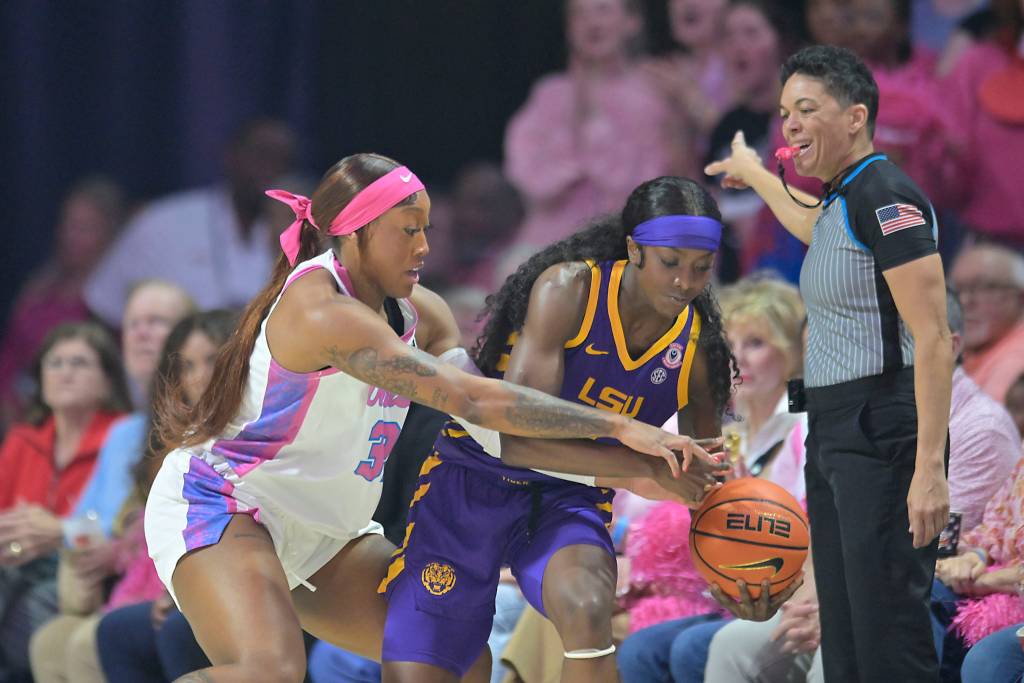
Mississippi entered halftime with advantages in nearly every effort category. They committed fewer turnovers (7-11), scored more second-chance points (12-5), produced more paint points (20-18) and added more fastbreak points (8-5). Mississippi dictated the physical tone and forced LSU to react. But LSU flipped that script in the second half.
The next stretch will shape LSU, Mississippi’s postseason reality
LSU’s comeback Thursday night did more than erase a deficit. It preserved its postseason leverage.
ESPN bracketologist Charlie Creme’s latest projections released Feb. 20, have LSU sitting on the No. 2 seed line, firmly in position to host NCAA Tournament opening-round games and within striking distance of a No. 1 seed. The Tigers protected that ground with their rally in Oxford. Now, they must defend it.
LSU closes the regular season with games against Missouri, Tennessee and Mississippi State, three contests that will shape SEC Tournament seeding and women’s NCAA Tournament positioning. Tennessee offers résumé strength, while the clash against Mississippi State presents road value. A strong finish could secure LSU a top-four SEC seed and a double bye in the conference tournament.
Mississippi remains safely in the NCAA Tournament field but hovers near the hosting cut line. Their remaining schedule — South Carolina, Arkansas and Alabama — offers both opportunity and risk. A win against South Carolina would elevate their résumé and potentially push them into hosting position. Additional losses, however, could force the Rebels to open the tournament on the road, where paths to the second weekend can become difficult.
Both teams have already built tournament résumés. What happens next will determine how far those résumés can carry them. Because in February, teams fight for position. In March, position determines everything.