

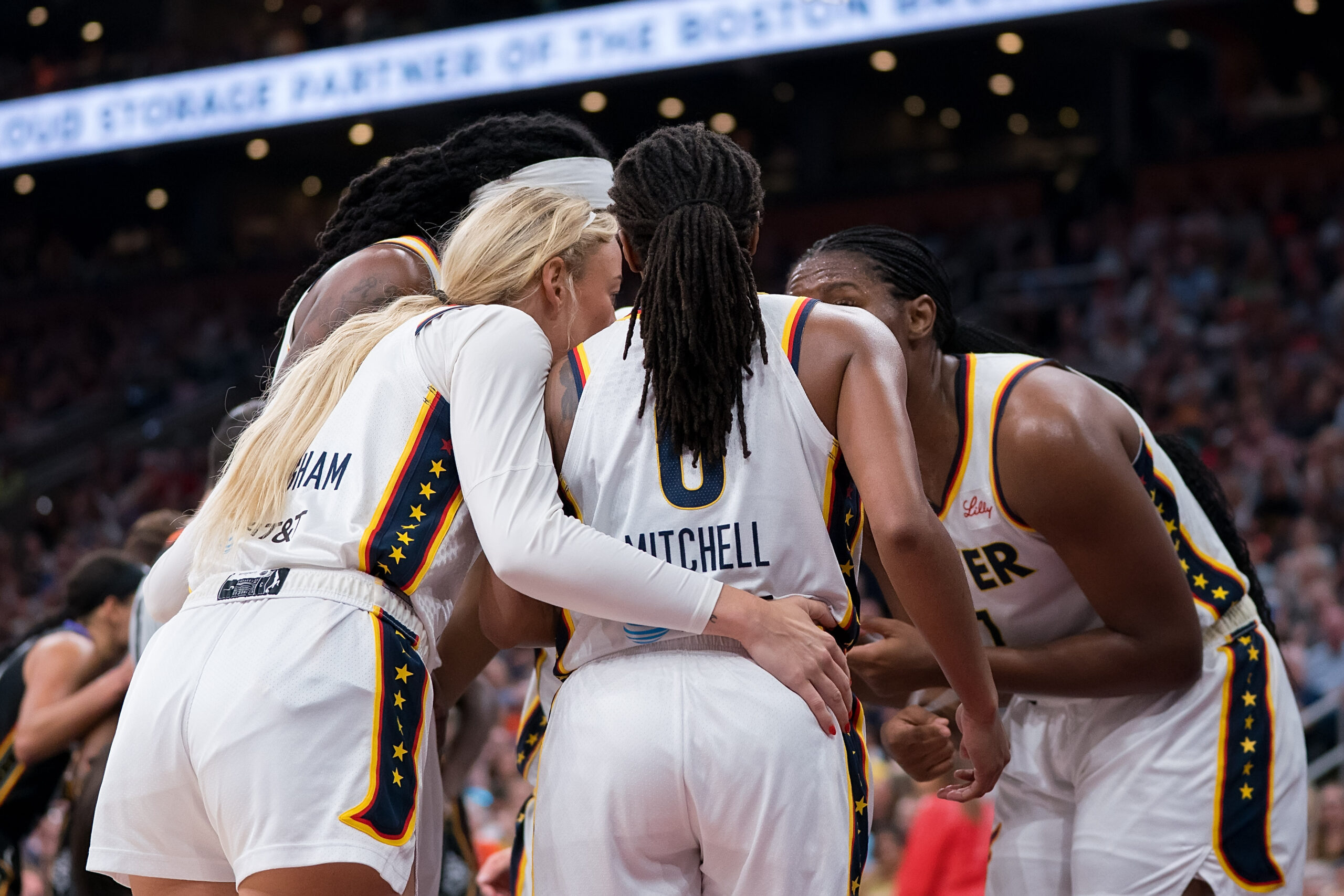
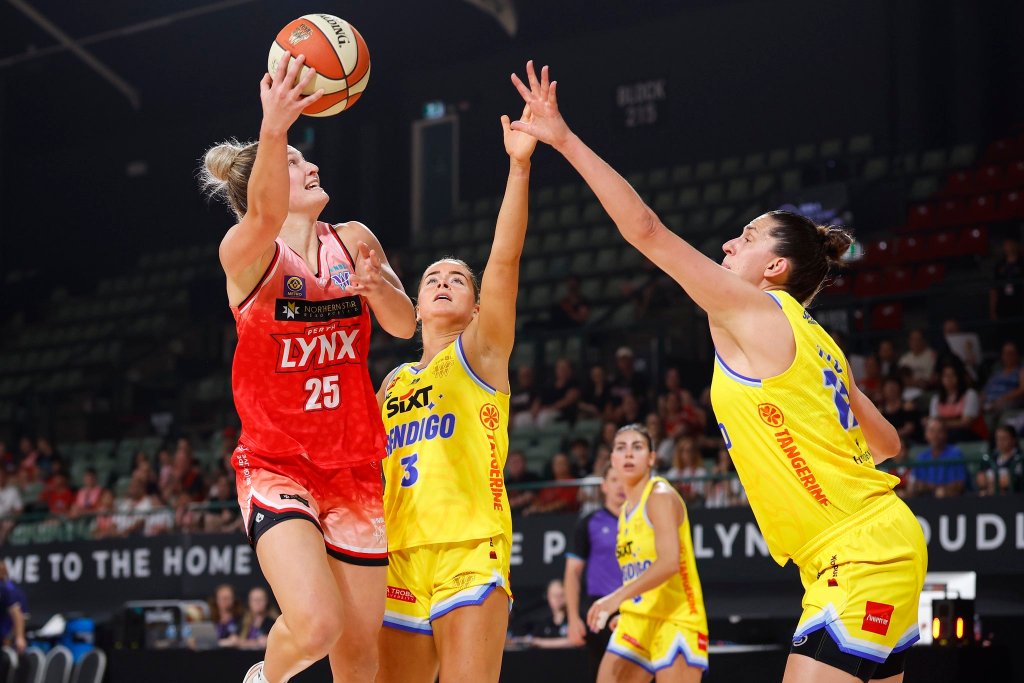
INDIANAPOLIS — In Friday’s WNBA expansion draft, the Indiana Fever lost Chloe Bibby (to the Portland Fire) and Kristy Wallace (to the Toronto Tempo). The good news? Those two combined for just nine appearances and 88 total minutes for the Fever last season. Wallace hasn’t even played for head coach Stephanie White. The Fever’s core will remain intact and, pending free agency, their depth could look similar next season.
The bad news? Two potentially useful parts of that depth have relocated. Bibby’s shooting (39.1% on 3-pointers) provided points and spacing for the Fever last season. And Wallace — who will reunite with Team Australia head coach Sandy Brondello in Toronto — is a useful off-ball player on both ends of the floor.
They both have their weaknesses, too, but there’s a reason they were selected in the expansion draft. Part of that reasoning is also presumably that both players have beneficial contract statuses for an expansion team. (All salary terms mentioned throughout are from the Her Hoop Stats WNBA Salary Cap Database.)
Wallace is a suspended-contract expired player, meaning her suspended contract from last season has now expired. She can only negotiate a new deal with the Tempo and not with other teams with that designation. Bibby will be a reserved free agent if the Fire send her a qualifying offer, meaning she can negotiate a new deal with Portland but not with other franchises.
Team control is valuable for expansion teams, just like it would have been for the Fever. But Wallace and Bibby now head elsewhere.
“Wishing Chloe and Kristy the very best,” Fever general manager Amber Cox shared on social media. “[Bibby] will always be a part of the Fever family — [she] hit some big shots in key moments for us last season! And what a fantastic human! Never got to work directly [with] Kristy but enjoyed our few interactions and thrilled to see her back in the W!”
With those two gone, Lexie Hull — who was almost certainly protected in the expansion draft — is the Fever’s only free agent who doesn’t project to be unrestricted. She is a restricted free agent. That means that, as long as Hull is sent a qualifying offer (and the Fever are certain to do so), Indiana will be able to negotiate with her and match any deal she signs with another team. That gives the Fever a significant advantage in keeping her around.
Caitlin Clark, Aliyah Boston and Makayla Timpson are already under contract for the coming season. Every other free agent who finished the 2025 season with Indiana and wasn’t selected in the expansion draft is an unrestricted free agent. They are free to negotiate, and sign, anywhere. That group of players consists of Kelsey Mitchell, Aari McDonald, Sophie Cunningham, Natasha Howard, Sydney Colson, Damiris Dantas and Brianna Turner. Odyssey Sims, Bree Hall, Aerial Powers and Shey Peddy ended the 2025 season on hardship contracts with the Fever and are also unrestricted free agents.
“Becoming Caitlin Clark” is out now!
Howard Megdal’s newest book is here! “Becoming Caitlin Clark: The Unknown Origin Story of a Modern Basketball Superstar” captures both the historic nature of Clark’s rise and the critical context over the previous century that helped make it possible, including interviews with Clark, Lisa Bluder (who also wrote the foreword), C. Vivian Stringer, Jan Jensen, Molly Kazmer and many others.
The new CBA and the upcoming Fever offseason
The league’s new collective bargaining agreement (CBA) raised the salary cap and minimum salaries. The current Fever trio of under-contract players accounts for just under $1.4 million in total salaries, well under the hard salary cap that is currently projected to be at or about $7 million.
That gives Indiana a hair over $5.6 million to spend in free agency. It’ll have nine open roster spots, plus two of the newly added developmental roster spots to add less experienced talent. Under the new CBA, teams can sign seven players to protected contracts as opposed to six under the old system. The Fever have zero of those deals currently on the books (rookie-scale deals like Boston’s don’t count).
Priority No. 1 for the Fever? According to Clark, it’s re-signing Mitchell.
“Our first priority is to sign Kelsey Mitchell back. [She] was first-team all-WNBA last year. Kind of my running mate in the backcourt; she makes it real easy for me,” Clark said during an NBA on NBC broadcast. “We’ve got a great squad, a great coach, a great support staff, so it’s super exciting.”
Mitchell is core eligible, meaning the Indiana front office could designate the All-WNBA guard as a core player by sending her a core qualifying offer. That is a one-year offer with a salary at the supermax, the same type of deal Mitchell was on last season. Mitchell cannot sign a contract with another team if she is sent a core qualifying offer but can negotiate a different deal with Indiana.
Teams can only core one player at a time. So after Mitchell, things get hard to predict. Basically every team in the league will have cap room and money to spend, so there is a chance that many players change teams.
At the same time, the abbreviated offseason could encourage players to stay with their previous team for another year — moving and getting ready for training camp in a short window would be chaotic — then let the dust settle on the new CBA before making a more significant contractual decision next season. It’s hard to predict what will happen at this stage.
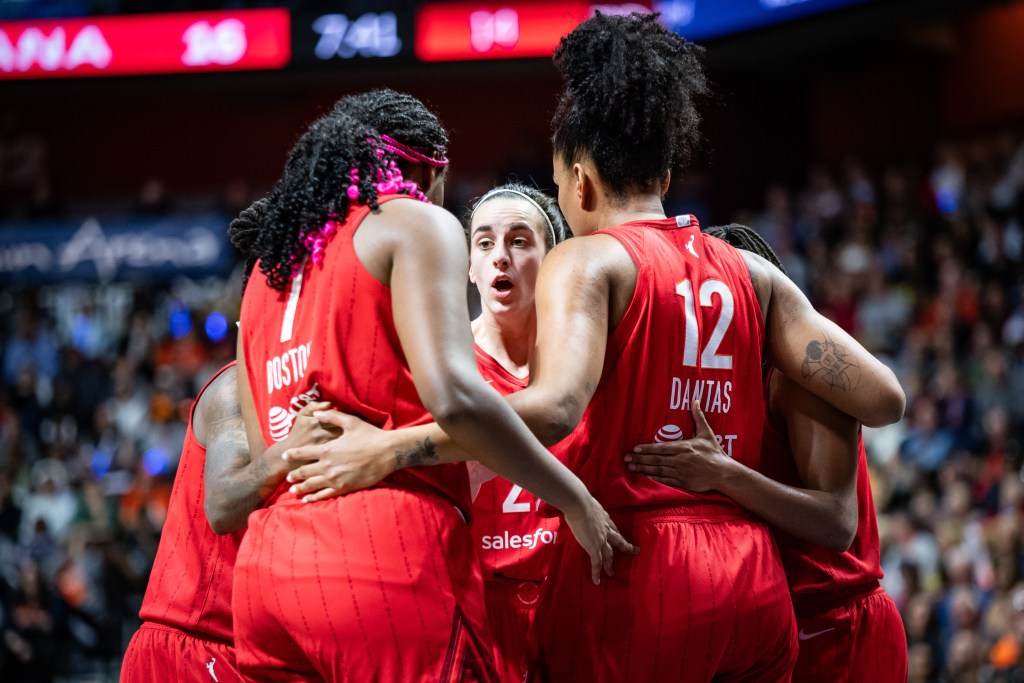
Last year’s Fever team wanted to add shooting and defense around Boston, Clark and Mitchell. Those skills will still be important, and the ability to play in an up-tempo style would be a bonus.
Hull, Cunningham and McDonald are great fits given those skills. Turner grew as a defender and pace fit throughout the season last year and was playing almost 18 minutes per night in the postseason.
Dantas’ shooting faded last season, Colson suffered a significant injury, and Howard’s value was up and down. All of them have reasons they could be brought back — leadership, veteran know-how and actual basketball value — but proved to be slightly worse fits than other Fever free agents last season.
Indiana also has three draft picks, one in each round, in the coming WNBA Draft and could opt to spend on external free agents who fit their style of play. With so much cap room available, predicting what Cox and Fever president Kelly Krauskopf will do is challenging.
And don’t forget about trades. That’s how the Fever acquired Cunningham last year. There may be fewer swaps between teams this year with fewer players under contract, but it’s all on the table.
Listen now to The IX Sports Podcast and Women’s Sports Daily
We are excited to announce the launch of TWO new podcasts for all the women’s sports fans out there looking for a daily dose of women’s sports news and analysis. Stream on Spotify, Apple Podcasts or anywhere you listen to podcasts, and make sure to subscribe!
Also of note for the Fever’s upcoming season
The Fever will play their previously announced 44-game schedule this season. That number could go up in future years.
Since announcing their schedule in January, the Fever have seen two changes. One is a preseason tweak — they will host the Nigerian national team for a tune-up game in Gainbridge Fieldhouse on May 2. The other preseason games for the Fever: April 25 in New York against the Liberty and April 30 at home against the Dallas Wings.
Also, the Atlanta Dream announced that five of their 22 home games this season will be played at State Farm Arena, which is much larger than their usual home court of Gateway Center Arena. Two of those five games will be against the Fever — one on June 20 and the other on Aug. 16.
“Our fans bring unmatched passion and energy every night, and bringing five games to State Farm Arena allows us to share that atmosphere with even more people,” Dream chief operating officer Morgan Shaw Parker said in a press release.
The Fever, and whoever is on the roster, will kick off their regular season on May 9 with a home game against the Wings.
Looking for more on the WNBA expansion draft? Read all our coverage of it at The IX Sports.
