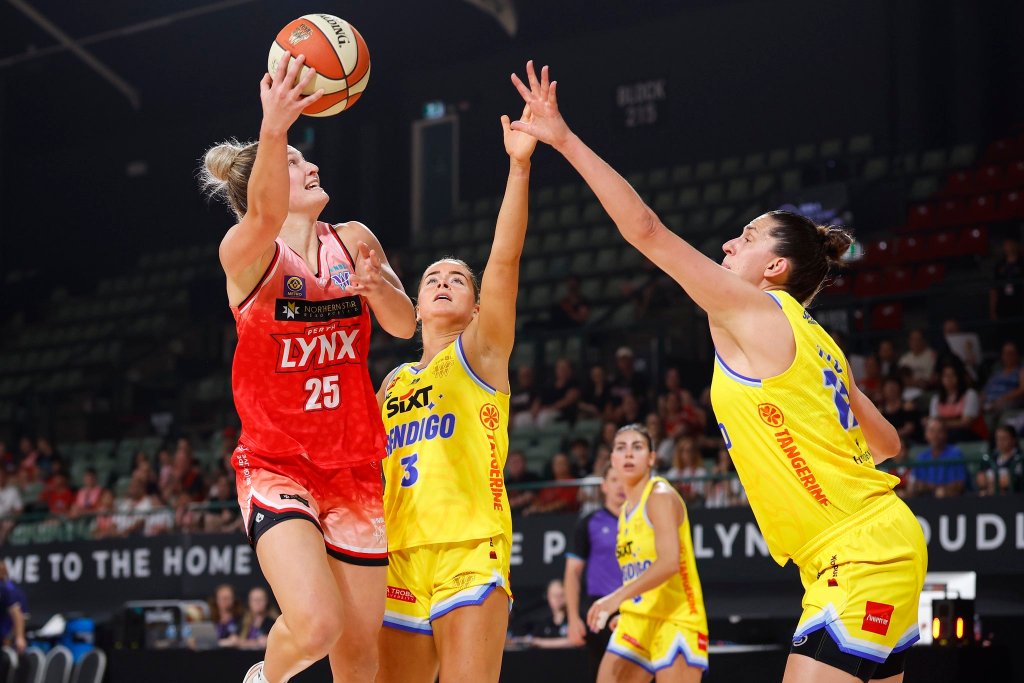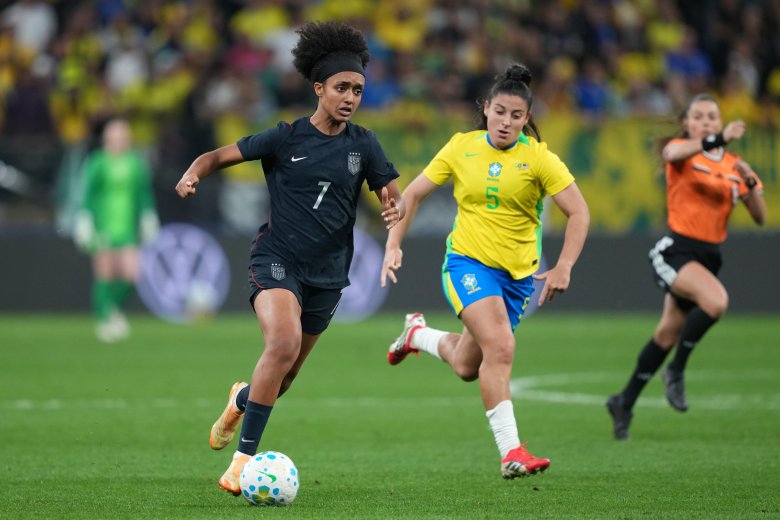
The U.S. women’s national team fell to Brazil 2-1 in a friendly on Saturday in São Paulo. The match was extremely physical and the loud Brazilian crowd, which frequently booed U.S. players, only added to the intensity. It was a match, and a result, that the U.S. will value as it prepares for the 2027 World Cup in Brazil.
The match started with Sophia Wilson’s long-awaited return to the international scoresheet. In the second minute, she picked up the ball in the middle of Brazil’s half and faced no pressure from Brazil’s defense, who gave her plenty of space to place a shot from above the 18-yard box. Her precise strike went past Lelê’s reaching arms. It was a signature shot from a player who is hungry to get back to scoring at the highest level after returning from parental leave.
The home team returned the favor less than 10 minutes later. Taina Maranhão was left with far too much space in the U.S. box, allowing her to easily head a cross from Isabela past keeper Mandy McGlynn. The Americans were flustered, and just minutes later, gave up the game-winner. Bia Zaneratto ran the ball to the box from midfield, outmuscled all pressure, did a give-and-go with Dudinha, then completed the sequence with a low shot to the back post.
“When you play in these situations, especially the early part of the game, you have to compete and stay in the game,” USWNT coach Emma Hayes said after the match. “I think Brazil took their chances really, really well in the early part, and they made it very, very difficult for us, and that’s a great learning for my team.”
The remainder of the first half belonged to Brazil. They controlled the pace and disrupted the U.S. with their proactive stepping to the ball. Without many calls from the referee, the match turned into a physical battle that the U.S. was not up for. There were occasional individual moments of brilliance from Americans, but Brazilians swarmed them at every chance.
At halftime, Hayes replaced Alyssa and Gisele Thompson with Michelle Cooper and Avery Patterson, who matched Brazil’s intensity. Those two were the engine behind a resurgent second half for the U.S., which sustained longer periods of momentum and upped the quality and quantity of shots.
When Hayes was asked why the team improved in the second half, she said, “You can’t stay in the duel; if you are always fighting, fighting, fighting without releasing the ball, you play to Brazil’s strengths. I think we got better at winning it, releasing it.”
Listen now to The IX Sports Podcast and Women’s Sports Daily
We are excited to announce the launch of TWO new podcasts for all the women’s sports fans out there looking for a daily dose of women’s sports news and analysis. Stream on Spotify, Apple Podcasts or anywhere you listen to podcasts, and make sure to subscribe!
Many good saves from McGlynn and a strong showing from still-returning centerback Tierna Davidson kept Brazil off the scoresheet in the second half, but their attacking counterparts couldn’t finish any of their chances. Brazil’s early goals proved to be the dagger.
“I think we created enough chances [in the] second half to get an equalizer, but you still have to have the quality in the last part of the pitch — you have to make the right decisions at the right time — and the difference between the two teams is Brazil took their chances and we didn’t take ours,” Hayes said.
But the USWNT’s purpose of traveling to Brazil to play two friendlies on hostile turf a year before the World Cup is not to win. It is to give the players the inimitable experience of playing against the host nation, in the host nation. Regardless of the scorelines, that mission is accomplished.
“The good news is we’re not eliminated from the World Cup right now,” Hayes said. “We have another game to play.”