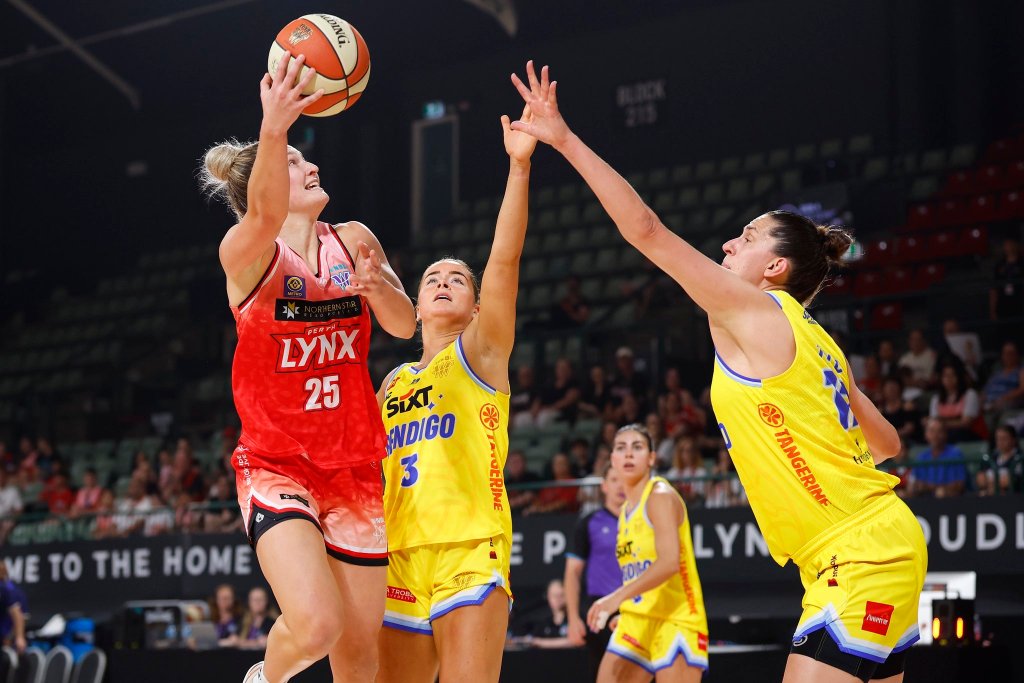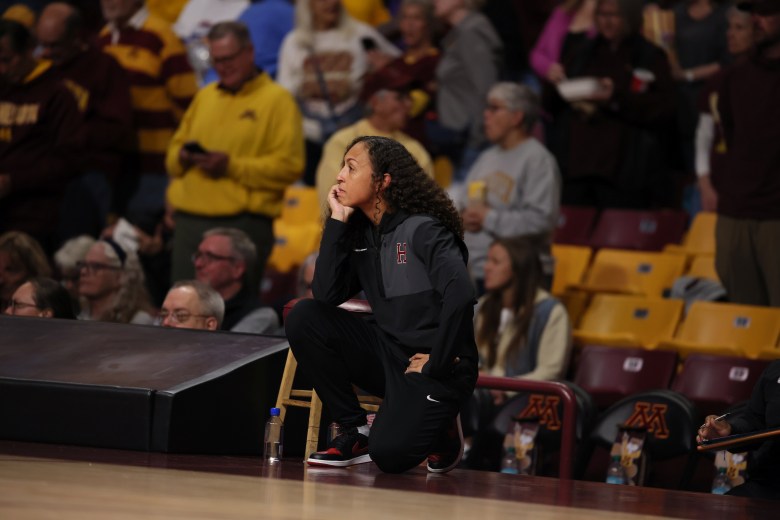
Harvard’s loss to Wisconsin in the WBIT last March gnawed at head coach Carrie Moore in the offseason. The Crimson had led by 7 points with 30 seconds left in regulation, but they couldn’t hold on and ultimately lost in overtime.
“That loss was embarrassing,” Moore told reporters on Oct. 28. “There’s not many times where I have felt like that after losses. … It was in our hands, and we allowed them to come and take it from us. And I didn’t like that feeling.”
So Moore challenged herself and her staff to go learn something from somebody else. She is proud of the fact that her staff is in its fifth season together, but she also wanted fresh ideas. “We need to make sure we’re not missing things,” she told her assistant coaches.
Around the Ivy League, coaches often use the summer as a time for professional development. They are always trying to learn, and with no summer practices in the Ivy League, they have more flexibility than their peers in other conferences to do skill development of their own between recruiting trips. Here are some of the sources that Ivy coaches have tapped in recent years.
WNBA teams
Ivy League coaches often watch WNBA games, both to learn things and to support their alums. Some coaches have been able to go a step further and attend WNBA practices.
Over the years, Princeton and Columbia have taken advantage of being close geographically to the New York Liberty. In the summer of 2025, the Princeton staff watched a Liberty practice to try to figure out the best offensive structure for the 2025-26 team, which had lots of dynamic guards but less size than in the previous season.
The staff realized it could simplify the offense and let talented players do the rest.
“[It’s] not only knowing the plays that [the Liberty] run by watching them play from the outside, but sitting in practice and seeing how they rep those things,” then-Princeton assistant coach Lauren Dillon said on a Princeton Athletics podcast in December. “And we’ve learned that our players are very talented. They don’t need much. Simplicity is key. … So just putting them in spots to do what they do is really what we focused on.”
The same summer, the Columbia staff wanted to learn how the Liberty handle training camp. The Ivy League has a relatively short preseason in the fall once classes start, and the WNBA only has a few weeks of training camp before the regular season begins. Head coach Megan Griffith noticed that her first-years have often seemed susceptible to injury in the preseason, so she spoke with the Liberty’s performance staff about how to safely build up players’ workloads.
Though Moore doesn’t have a WNBA team as close by, she has a connection to the Atlanta Dream through forward Naz Hillmon, who she coached as an assistant at Michigan before getting the Harvard job. So this summer, Moore flew to Atlanta for a weekend to learn how the Dream use their practice time.
“Our November schedule is going to essentially look like a pro schedule,” she said, referring to how few practices Harvard will get in between games and travel. “So how do they go about that? What does the film breakdown look like compared to the time on court?”
While she was in Atlanta, Moore talked with Dream head coach Karl Smesko, who knows the life of a mid-major college coach very well. Smesko led Florida Gulf Coast University from 2002 to 2024, and during his tenure, the Eagles won 84% of their games and made 10 NCAA Tournament appearances.
Finding the game shouldn’t be the hardest part
SheScores is the women’s sports scoreboard, making it easy to follow women’s sports with scores, schedules and where to watch — all in one place.
Other college programs
While there are only 15 teams in the WNBA, there are hundreds in women’s college basketball, so there is no shortage of styles and schemes to learn from at the college level.
This summer, Moore met with Maryland head coach Brenda Frese and assistant coach Jessica Imhof to learn about practice planning, defensive schemes and transition. Harvard assistant coach Ariel Gaston went to Arizona State to learn how Sun Devils head coach Molly Miller teaches defense, as Arizona State went from one of the worst defensive teams in the country in 2024-25 to one of the best in Miller’s first season. And Harvard assistant coach Ali Sanders visited Tennessee, which is known for its frenetic pace under Kim Caldwell, to try to figure out how Harvard could pick up its own pace.
The Crimson found that power-conference programs were usually willing to let them sit in. They weren’t worried about revealing any secrets; in fact, shortly after Moore visited Maryland, the Terps asked her if she wanted to schedule a regular-season game. (The teams won’t play each other this season, but they have in the past.)
Meanwhile, Yale head coach Dalila Eshe turned to a dominant program just up the road from New Haven. UConn assistant coach Tonya Cardoza is the godmother to Eshe’s children, so they speak often about basketball and many other topics. Eshe and UConn assistant coach Morgan Valley also compared notes about offensive philosophies this summer.
In addition, Eshe spoke with coaches from a few men’s and women’s college teams about defensive philosophies.
“I love hoops on so many levels, so summers are always fun deep dives,” she told The IX Sports in a text message.
Similarly, after Linda Cimino was hired as Dartmouth’s head coach in 2023, she shadowed North Carolina head coach Courtney Banghart for a day. Banghart is a Dartmouth alum and coached at Princeton before taking the North Carolina job in 2019. Cimino got to watch practice, sit in on staff meetings and get Banghart’s take on the conference Cimino was joining.
It’s not only Division I teams that Ivy League programs look to, though. Griffith consulted Division II Minnesota State and head coach Emilee Thiesse in 2025 to learn how to teach some of the finer points of defense.
“I was born in an offensive system,” Griffith told reporters in February. “You know what I mean? I’m a point guard. I gravitated to that side of the ball. … We spent a lot of time with [Thiesse] in the offseason because she’s [leading] one of the best defenses in the country at the Division II level. …
“Steal and borrow from everybody. That’s the game. That’s what we all do. … Being curious is a skill, and I think our staff has done a great job at being curious, because that was a blind spot for us.”
Going international
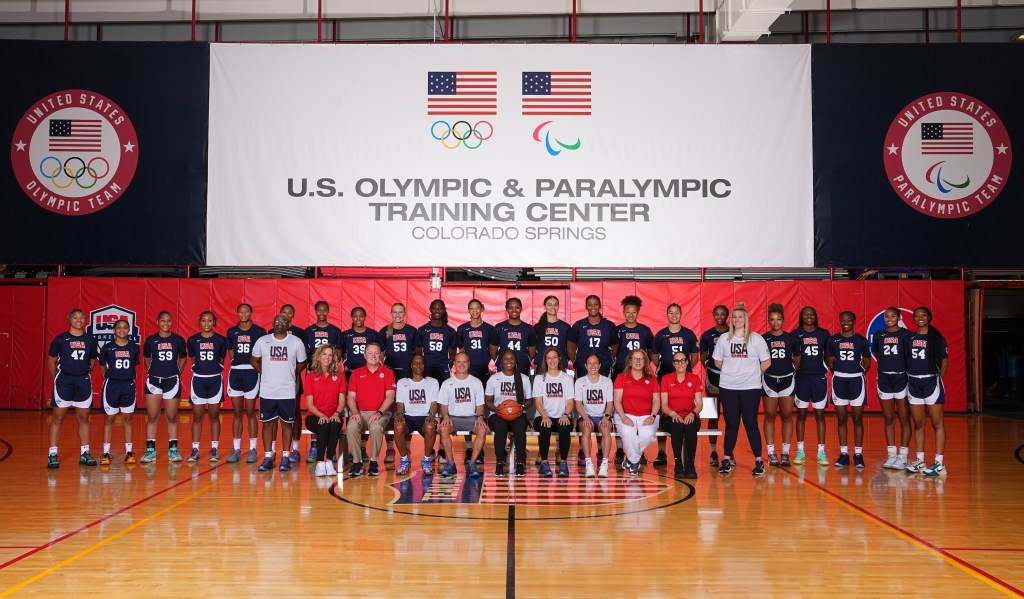
This offseason, Griffith was named a court coach for USA Basketball’s tryouts for the Under-18 FIBA AmeriCup roster. That allowed her to learn from the other coaches there: Notre Dame’s Niele Ivey, California’s Charmin Smith, Michigan State’s Robyn Fralick and Oregon State’s Scott Rueck.
“USA Basketball, honestly, for me was such a gift,” Griffith said on Oct. 29. “That was a really unique opportunity for me to learn from some great head coaches and other minds in the game, and then to bring that back to my staff.”
Cornell similarly benefited from the U-18 AmeriCup, as associate head coach Courtnay Pilypaitis was an assistant coach for Canada at the event. Canada won the silver medal, losing only to the United States.
“Experiences like this … bring invaluable international perspective back to our program and our student-athletes,” Cornell head coach Emily Garner said in a press release.
Griffith also attended the Under-17 FIBA World Cup in July, which allowed her to network with European coaches and players. For many Ivy League coaches, international recruiting trips can pull double duty this way.
Cimino went to Portugal and Spain in the spring to plan her team’s foreign tour, and she met with several coaches during her trip. While she also leans on a group of U.S. college and pro coaches, she told The IX Sports in a text message that she appreciates the faster pace of European basketball and likes to borrow from that. “I’m more of a quick-hit coach,” she said.
She added, “I spend a lot of my own time and money investing in professional development [and] meeting with coaches, especially overseas.”
Listen now to The IX Sports Podcast and Women’s Sports Daily
We are excited to announce the launch of TWO new podcasts for all the women’s sports fans out there looking for a daily dose of women’s sports news and analysis. Stream on Spotify, Apple Podcasts or anywhere you listen to podcasts, and make sure to subscribe!
Books and leadership development
For Garner, a different kind of international exposure also influenced her this summer. She read the book “Legacy: What the All Blacks Can Teach Us about the Business of Life” by James Kerr, which explores leadership lessons from New Zealand’s rugby team. The All Blacks are considered one of the most dominant sports teams ever. Garner will try to apply some of those lessons in her third year with the Big Red, as she aims to get the team into the Ivy League Tournament for the first time since 2019.
Eshe sought to develop her leadership this summer in a few ways. She read the book “The Way of Excellence” by Brad Stulberg, which describes excelling as a process rather than an end result. And she turned to sports psychology to help with some “emotional development work,” she said.
For the past two years, Cimino has leaned even further into her own professional development by hiring an executive coach. Angel Elderkin, a former Division I head coach and a longtime friend of Cimino’s, runs a business that helps coaches improve at leading in high-pressure moments, being self-aware and communicating effectively.
“Coaches need coaches,” Cimino said, echoing some of Elderkin’s words. “… She’s tremendous.”
So when you see Ivy League coaches run a new defense or call a new play this season, know that those ideas might have come from unexpected places. Just like their players are getting tens of thousands of shots up over the summer, Ivy coaches are constantly chasing knowledge that could put their teams over the top.