

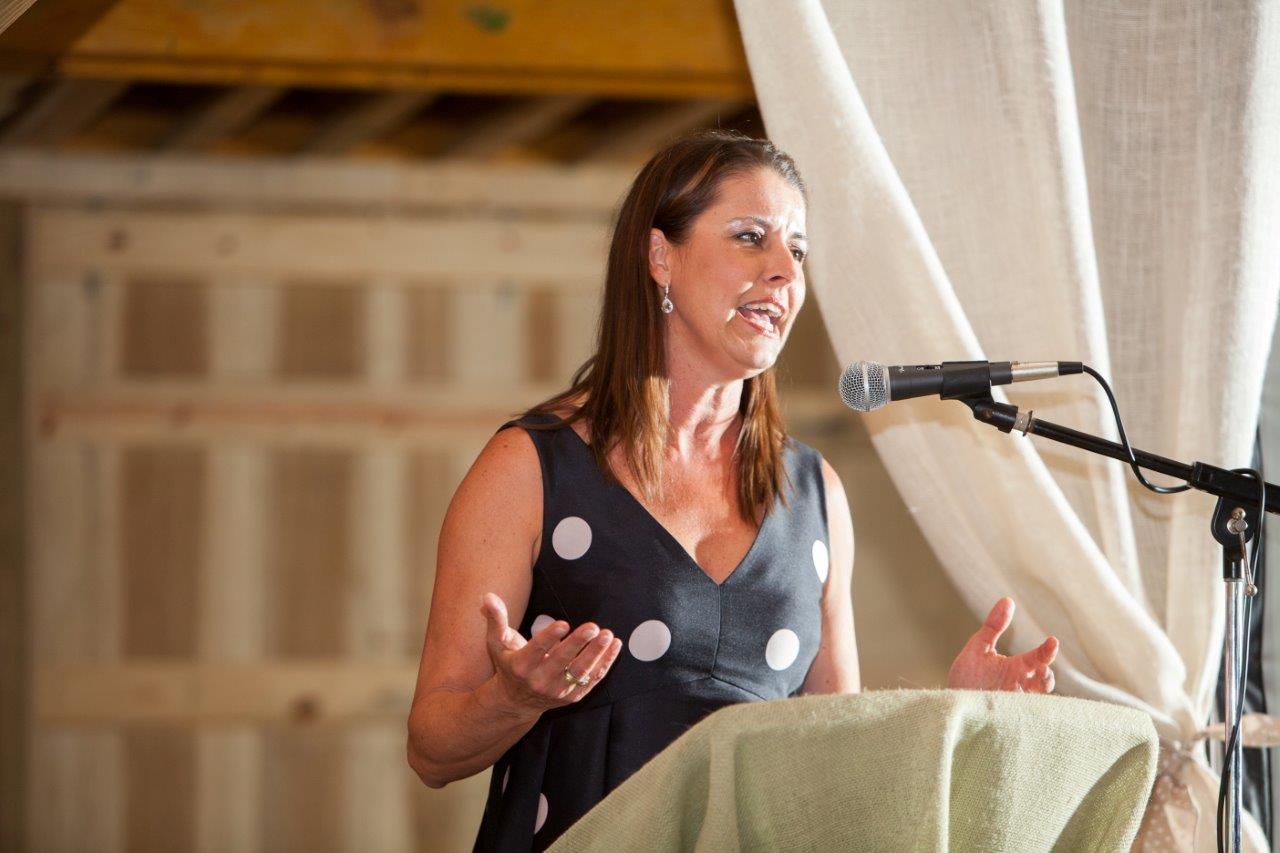
In October 1995, then-Maine women’s basketball head coach Joanne P. McCallie made a series of late-night calls from a hospital pay phone in Bangor, Maine. “I need your help,” McCallie whispered to several of her players in turn. “I am being held in the hospital against my will.”
McCallie had been committed to the hospital after experiencing what was eventually determined to be mania, leading to a diagnosis of bipolar disorder. Her players were told that she was suffering from exhaustion, but after hearing from McCallie, four players went to the hospital to try to find their coach, even peeking in a few windows after being denied entry.
McCallie now regrets involving her players, but she marvels at their loyalty—not just in showing up at the hospital, but also in insisting that she remain their coach in the weeks to come.
“The actions of the women/players who came to liberate me had sent me a clear message—I was their coach,” McCallie writes in her new book, Secret Warrior: A Coach & Fighter, On and Off the Court. “They were committed to our dreams. They refused to sit back and let the administration take hold of the situation as rumors swirled about my fate with the school and the team. Some people had believed that my days were numbered as the head coach. But the players were in control and ready to stand by me. I have never forgotten their loyalty and pride in all that we were doing.”
McCallie had gotten the Maine job—her first head coaching position—just four years prior, when she was only 26 years old. If not for her players’ stand, her career could have been over before it truly got off the ground.
Instead, she won over 600 career games at Maine, Michigan State and Duke; made 20 NCAA Tournament appearances; and advanced to eight Sweet Sixteens and the 2005 national championship game. She also became the first Division I head coach to win conference titles and Coach of the Year honors in four different conferences.
In total, McCallie—known to many as “Coach P”—was a head coach for nearly 30 years before stepping aside at Duke in July 2020. Her bipolar disorder was part and parcel of most of the wins and losses, but she kept that hidden from nearly everyone.
“I compartmentalized it for years,” she told The Next. “… Boxed it up, worked with my teams, pursued championships, all that kind of stuff.” In 2005, she considered using her moment in the spotlight after the national championship game to tell her story, but family and friends advised her against it. There was a concern that she would torpedo her career prospects, she said, but what worried her most was that she would be a distraction and make it harder for her teams to succeed.
Sixteen years later, McCallie published Secret Warrior and began to speak publicly about her diagnosis for the first time. She hopes that sharing her story will help eliminate the stigma around mental illness that exists both in sports and in society. As she writes in her introduction, “By bringing my personal battle out of the shadows, and into the broader light of life challenges, I hope to educate, enlighten, and give a voice to the secret warrior in all of us.”
Although McCallie wasn’t diagnosed with bipolar disorder until age 30, she opens the book by recounting her childhood in Brunswick, Maine, and her playing career at Northwestern. After college, she briefly worked in telecommunications before returning to basketball as a graduate assistant at Auburn.
“I had a clear direction after my Auburn experience,” McCallie writes. “I chose a career filled with developing people. I had also chosen a career that is almost bipolar by nature. Coaching the ups and downs of immediate demands for success, while balancing the issues of student-athletes, is a perfect recipe for mania and depression … the highs are very high and the lows are very low.”
In 1992, McCallie left Auburn to become the head coach at Maine, and she is candid in her book about how she would approach the Maine job differently in hindsight. She writes that she had trouble being a good listener and staying focused on the present because she was always pushing for more. The slogan “all gas, no brakes,” which is increasingly popular nowadays to describe fast-paced teams, comes to mind, but McCallie wishes she could have tapped the brakes on occasion.
The third and fourth chapters in Part One of Secret Warrior, “Breakdown” and “Manic,” describe the onset of McCallie’s symptoms and her husband John’s efforts to understand and help her, culminating in her hospital stay. Reading these chapters, there was the same feeling of dread as when you watch a video clip of a sports injury or car crash: you know something bad is coming, but you can’t look away.
At first, McCallie’s manic symptoms seemed helpful in her job—she was sleeping less, which gave her more time to work; she was energetic and upbeat; and she felt like she was “flying through life.” However, she also started having what she calls “irrational thoughts” because of how quickly her brain was generating ideas. One incident that particularly worried John was when he overheard McCallie telling a recruit that her television was speaking directly to her. (He intervened and told the recruit that McCallie was just being playful, and the recruit did sign with Maine.)
McCallie returned to coach her team 14 days after her hospital stay, but in the ensuing years, it was a process to accept her diagnosis, take her medication and learn to evaluate what her brain needed each day. “I truly felt like a formerly normal person turned professional narcissist,” she writes of the self-evaluations that became part of her routine. She experienced a severe depressive episode later in her tenure at Maine but had no major episodes in her seven years at Michigan State. During her 13 years at Duke, she established annual “Mental Wealth Day” games to raise awareness about mental health and spoke at the ACC’s Mental Health and Wellness Summit, while still keeping her personal struggle hidden.
“I never knew about her issue with bipolar when I was her assistant coach,” Felisha Legette-Jack, who coached under McCallie at Michigan State from 2000 to 2002 and is now the head coach at Buffalo, told The Next. “… It’s a hard subject to talk about because I know [now] that the struggle was so intense, and yet she battled that by herself. … I just wish that I could’ve helped her more.”
Through McCallie’s ups and downs, including a monthlong leave of absence to change medications in 2008 and a post on a sports blog revealing that she was taking medication, she just kept winning. “She’s done more in her 28-year career than some coaches could dream about doing,” said Shimmy Gray-Miller, an assistant coach at Clemson who got to know McCallie after McCallie spoke at the 2019 ACC Mental Health and Wellness Summit.
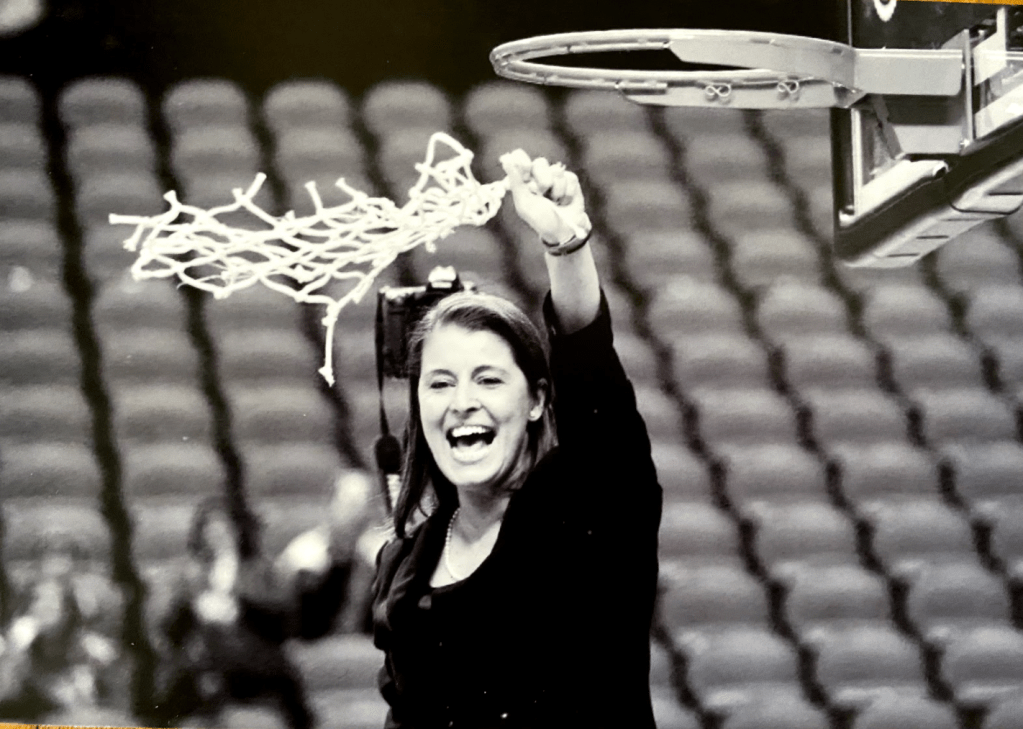
But for Gray-Miller, McCallie’s impact in less than a year out of coaching supersedes all that she accomplished on the court. “This new Coach P, the mental health advocate and the one who speaks out and brings light to this really important issue, that’s the Coach P who I didn’t know up until the last couple years and who now I’m a huge fan of, far more than the future Hall of Fame basketball coach,” Gray-Miller said.
McCallie finally decided to write her book in March 2020, when the COVID-19 pandemic abruptly halted sports. “I began writing because I was Zooming 900 kids recruiting-wise,” she said. “But still, there was nothing [to do], nowhere to go.”
Although she said that she still doesn’t see herself as a writer, she “flew through” the writing process in the ensuing months. One of the few pitfalls came when McCallie, a self-described “computer rookie to the nth degree” who had to have her son Jack teach her how to make a new document, pressed a few wrong keys and lost four hours of work.
“It was really some of my best writing,” she said. “… I don’t know computers enough to know the technical part. But we couldn’t get it back.”
McCallie started crying as the realization that her work had been lost sunk in, but Jack wasn’t having it. “He was like, ‘If you did it once, you can do it again!’” McCallie said. “… It was so funny. He was empathetic, but he was like, ‘Mom, write it again!’ And that’s my most vivid memory of writing the book.”
Still afraid to trust anyone with her secret, McCallie didn’t hire an agent to sell the book to publishers. Instead, she cold-called publishers herself, alluding to her experience with “mental illness” without mentioning bipolar disorder. She was repeatedly turned down.
“I finally just blurted [it] out, almost out of frustration. It was like my 900th call,” she said of her breakthrough voicemail message to John Köehler at Köehler Books Publishing. “I said, ‘Hi, this is Joanne P. McCallie, and I’m a coach at Duke. And I’m bipolar and want to tell my story.’ And bam, he picked up the phone.”
Secret Warrior was published on Feb. 16—less than a year after McCallie started writing it—and was a No. 1 bestseller on Amazon in both the coaching and mental health categories. Friends and strangers alike have reached out, stopped her in the grocery store or approached her on the golf course to share their stories with her or ask for advice. And women’s basketball legends including Stanford head coach Tara VanDerveer, Rutgers head coach C. Vivian Stringer and Olympic gold medalist Ruthie Bolton all wrote official endorsements that sit in the front pages of the book.
But whether because of the fraught topic or the fact that the book was published less than a month before the NCAA Tournament, McCallie’s phone didn’t blow up with congratulations and words of support from her colleagues in women’s basketball. Two coaches who did reach out were Gray-Miller and Legette-Jack, both of whom have coached players who struggled with their mental health.
Gray-Miller, who had been inspired by McCallie to establish mental health awareness games at Clemson, sent McCallie a shirt that she had ordered for players and staff to wear for this year’s game. It read, “You good, Sis? #mentalhealthmatters.”
Legette-Jack called McCallie to express her support, and she also ordered copies of McCallie’s book for her players and staff. As she has done with other books, she is asking everyone to read it and write a few paragraphs of reflection. “It’s important that we show [student-athletes] what brokenness looks like and see how, when you get the help, what it can continue to look like,” Legette-Jack said.
Several of McCallie’s former players, including WNBA standouts Chelsea Gray and Elizabeth Williams and up-and-comers Haley Gorecki and Leaonna Odom, also praised their former coach for speaking up about mental health. “I think mental health is something that we always have to talk about, and she’s always been an advocate for it, so I’m not surprised about the book,” Gray said. “I’m not surprised that she’s coming out and being an advocate for it. I support her in telling her story, telling her truth, and hopefully it allows for others to do the same, whether you’re in a coaching position, you’re a player, you’re a CEO at a Fortune 500 company.”
Both Gray-Miller and Legette-Jack believe that women’s basketball is moving in the right direction on mental health. Legette-Jack said that discussions in the women’s game are progressing from “mental health” to “mental wealth”: the former involves individuals sharing their stories and managing their own mental health, while the latter is about creating a community that talks openly about mental health and supports one another.
Yet there is still a long way to go, as McCallie’s status as a pioneer shows. “We’re still not to the point where we’re able to be like Coach P and say, ‘Hey, not only do we need to erase the stigma and not only do we need to raise awareness, but I struggle with it,’” Gray-Miller said. “… I don’t know any other coach except for Coach P that has publicly come out and said, ‘I’m bipolar. I struggle with mental health. I’m on medication.’”
Legette-Jack added that recruits are looking for “that pulled-together coach,” not one who is necessarily open about her personal struggles, and that opposing coaches will sometimes use perceived shortcomings as ammunition in the recruiting process. As a result, coaches often keep their own mental health and that of their team under wraps. When then-Buffalo guard Hanna Hall spoke publicly about her struggle with anorexia a few years ago, Legette-Jack initially thought “maybe one or two other teams” were facing similar challenges. But she received a flood of phone calls, and Hall’s story went viral, because so many other teams were quietly dealing with it themselves.
“What [McCallie is] doing is she’s giving us as coaches kind of a free pass,” Gray-Miller said. “Like, ‘Hey, look, you guys, I’ve shown you that you can successfully navigate this, that this is important, that by us not talking about it we’re doing more harm than we are good. … I’ve talked about this and I’m still standing. They’re not taking away my championship trophies or taking my plaques off the wall.’”
McCallie hasn’t ruled out chasing more championships, either, but for now she is embracing being “Coach P 4 Life,” not Coach P the basketball coach. That includes starting a foundation dedicated to mental health, doing lots of public speaking and even talking to student-athletes who message her on social media with questions about mental health. She has also appeared on several podcasts and is interested in having her own one day in which anyone could submit questions anonymously and she would “not diagnose, [but] give them inspiration, hope and examples.”
“A hesitation, a pause, and a deep sigh find their way into each new day for me, as the former coach, a label I am still not completely comfortable with,” McCallie writes in Secret Warrior. “And there is uncertainty over what’s in store in the years to come. I still wonder if my decision to step away from coaching at age fifty-five came prematurely. …
“I hope that my story somehow contributes to a more robust, open and honest dialogue about taking care of our minds. … As a nation, we need to have a clear path to help the affected, just as we would for any other ailment or disease.”
Whether or not McCallie ever writes another practice plan or helps another player improve her shot, the seeds she has planted for mental health over the past year could benefit a whole generation of young players as well as countless others outside the sport. And Legette-Jack made sure to give her friend and former boss her flowers:
“She’s on the incline of greatness because [of] her clarity of who she is and her certainty that it’s not necessary to hide what others might think is a shortcoming … It’s going to help a lot more people than she ever can imagine.”

Thank you Coach P
Thank you Coach P! I’ve always been a huge fan of yours, now I’m an even bigger fan. I have mental health challenges and hearing it normalized in such a way is very uplifting.
You’re a top notch Coach!!