

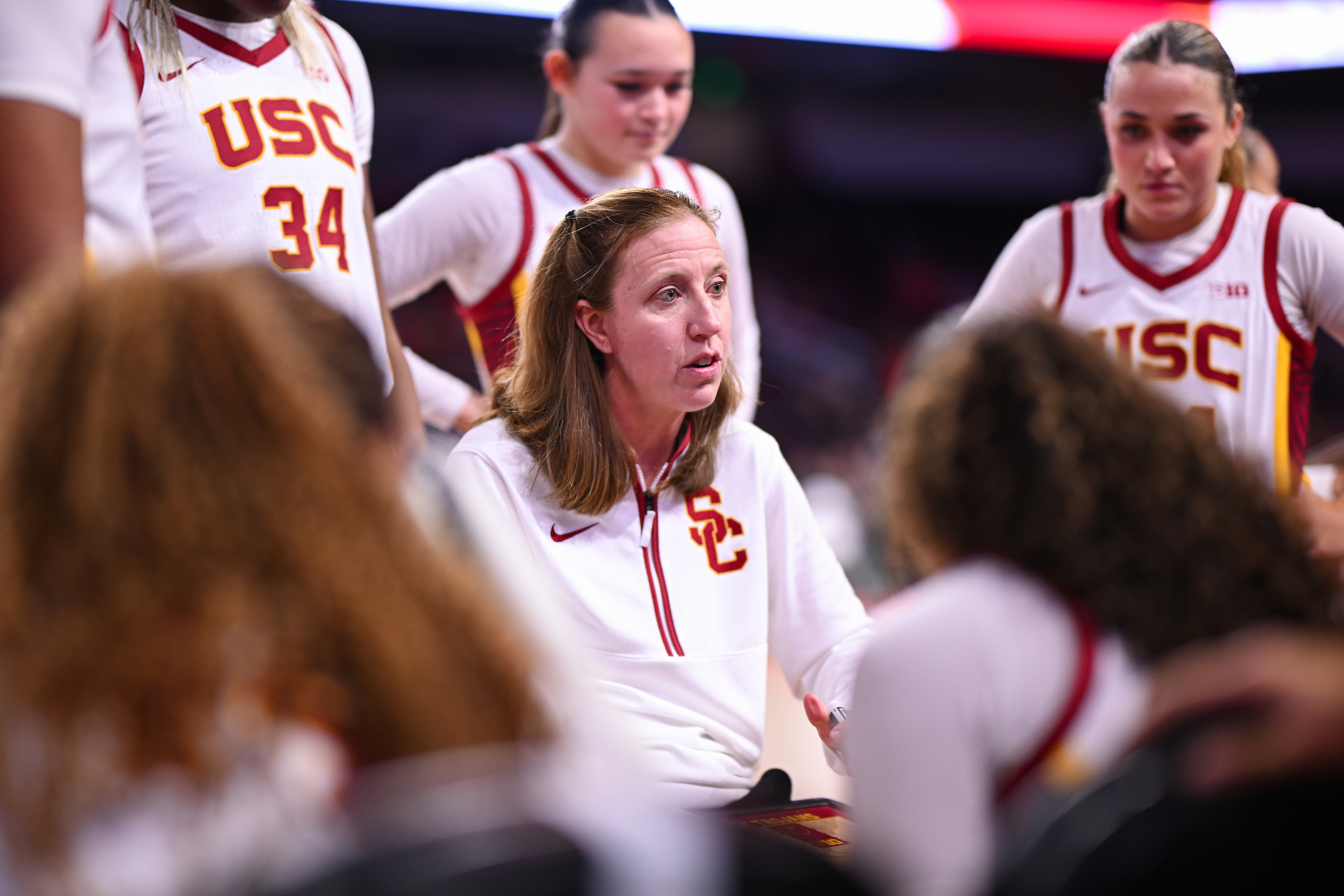
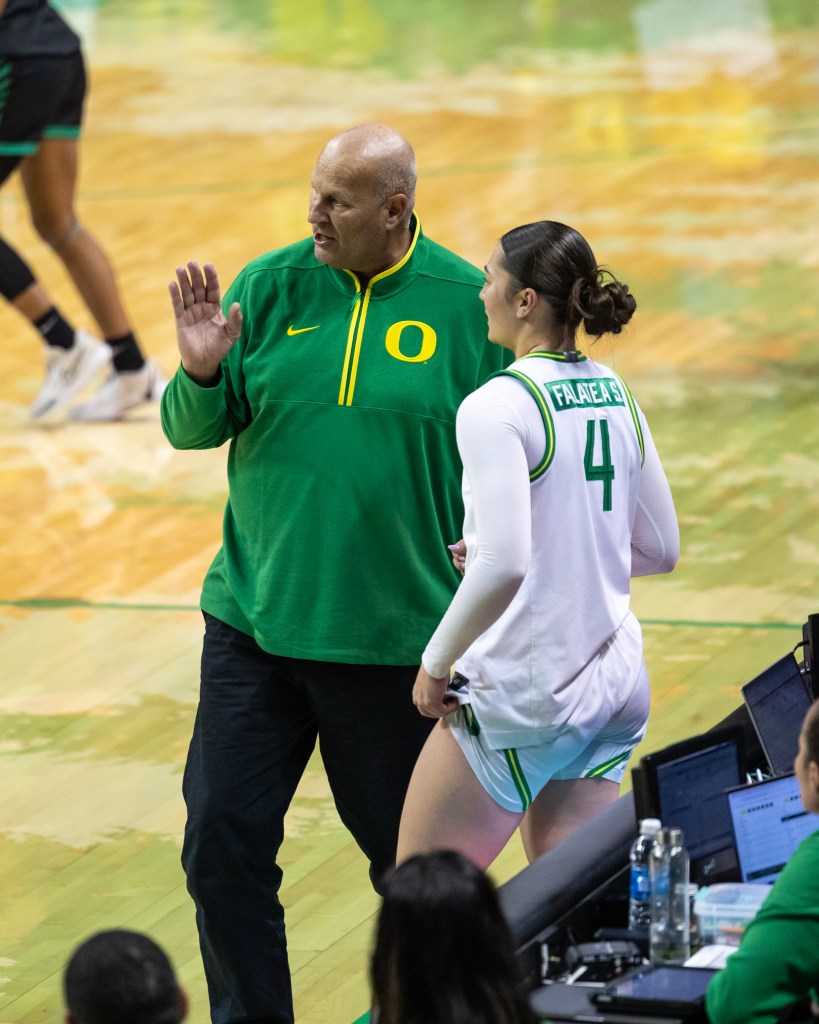
You’ve probably heard that the Big Ten added four new teams this year. The Next caught up with two of the conference’s newest coaches — Lindsay Gottlieb, the head coach at USC, and Kelly Graves, the head coach at Oregon — to discuss the biggest adjustments that come with transitioning to a new league.
They spoke about the challenges of facing new opponents, how they plan to make the most of longer road trips and what excites them most about this new opportunity.
Their answers have been edited and condensed for clarity and brevity.
The Next: Given you’ll be facing programs you don’t have much or any familiarity with, do you anticipate game prep taking longer than normal?
Lindsay Gottlieb: We tried to take a look and do a little bit of an analytical deep dive in the summer. I started watching a little bit, but I would say the brunt of it is going to come this winter when all of a sudden you’re playing teams once and you’re playing them oftentimes for the first time, and certainly the first time in some of these arenas. There’s an excitement about that, and there’s also just a very new situation that none of us are completely prepared for.
Kelly Graves: I don’t necessarily think it’ll take longer. On every team, even if you know their style for years — Tara [VanDerveer] at Stanford — they run the basic same offense that they’ve run forever, but the personnel’s different, so you’re still having to look at that.
Gottlieb: You just don’t have history on your side. You don’t have the experience of, this is what this coach likes to do when they’re down or when they’re up or out of a timeout, and I don’t know that there’s any amount of film that can provide for you years’ worth of experience. That said, yes I think we’ll treat each game a little bit more like an NCAA Tournament game, a single opportunity to play somebody.
Graves: To me, the biggest difference is the fact that we’re only playing them once. You don’t get a chance to make adjustments the second time you see them. It’s a one-and-done deal. That’s the thing that’s going to be different for me. Then you also have some of the logistical stuff that’s different. We always knew where to park, where to go for practice, where to stay, where to eat. Now, we’re going to places that we haven’t been to before, so that’ll be a little bit unique but nothing that we can’t handle.
The Next: How do you expect to tackle some of these longer road trips?
Graves: We’re going to have to find a way to make that extra day meaningful, not just practice, not just hotel, not just going to dinner but actually doing something as a program: go to a movie, go see a local site. I was thinking when we go to Iowa City, maybe we go out and check out where the Field of Dreams was. Different stuff since we’re in new cities. Just try and make it an edifying experience as well where we’re learning something about a different part of the country.
Gottlieb: We are just trying to do the things that are best for our student-athletes in terms of, everyone says sleep, hydration and nutrition are the best indicators of success on the road and acclimating to time changes, so we’ll focus on that. Where it’s possible we’ll try to do something or see something. If there’s an extra day and we’re in D.C., and it makes sense to go see a museum or a monument, we will, as long as it fits in.
The Next: Anything that’s surprised you so far?
Gottlieb: The one area that really caught me off guard was, I was conceptualizing a weekday and then a weekend game and then come home. So if we were going to play a weekday, let’s say a Wednesday-Saturday or a Thursday-Sunday, to me, that weekday game was going to be at 7 p.m., so we were going to leave on Tuesday — practice in the morning, leave, you lose time going there, then have two days in between, then play a daytime game [over the weekend] and get home. Now, all of our games are Sunday-Wednesday for the most part, so we have to leave Friday night if you’re playing noon on Sunday, so it’s a longer stretch of time away than I had anticipated and all you can do is handle it and manage it.
Graves: There’s been the thought out there that the Big Ten is Midwest tough, big kids, and therefore you’d think OK, this is a defensive league. But as I was going through and looking and really taking a deep dive into the programs, it’s an offensive league. That was surprising. I think four, five or six of the top 20 most-efficient offenses in the country last year were in the Big Ten, not just Caitlin Clark and her crew — that was obvious to see that they could play great offense — but the other programs: Ohio State, Michigan State, these are great offensive teams, and I think I always figured it might be a really good defensive conference, but I don’t think there was a single Big Ten team last year in the top 50 in defensive efficiency. That was a little eye-opening to me. It’s funny how you get a certain thought in your brain, and that’s what you stick with, but I was completely wrong in that assessment.
The Next: What excites you most about getting to play some of these new schools?
Gottlieb: I think the exposure. There’s no comparison to how much our players will be seen on TV and the platforms on which they’ll be seen. It’s also exciting to go into these new arenas, experience new fanbases. I think that’s exciting. And just really to challenge ourselves against some really, really good basketball teams.
Graves: I’ve been doing this a long time. I’ve damn near coached 1,000 games, so there’s not a lot that’s new to me, but there are places in this conference that I’ve never played at. I’ve never played at Michigan, as great a school as that is. I’ve never played at Rutgers, never played at Maryland. Nebraska and Minnesota, I’ve never even coached in those states, so I’m looking forward to seeing new places.
On game day, I love to walk the campuses. I’ve always done that. It’s a bit of a tradition. It’s easy to walk in Tucson and Tempe, Arizona and LA and those places. I don’t know if walking in Iowa City or Madison is going to be quite the same in the winter, but I look forward to walking those campuses and seeing what they’re like.
The Next: Any places you’re looking forward to coaching at?
Gottlieb: Assembly Hall. I went to a recruiting event in Assembly Hall but never played there. That’ll be neat. When I was a 21-year-old assistant at Syracuse, we played at Iowa. That’s a long time ago now. Looking forward to going there and their fanbase. For me, going back to the East Coast, I’ve coached at Rutgers before but never with USC, and that’s close to home for me. I could go on and on.
Graves: This summer, I bought a big map and put pins in all the places I’ve coached as a head coach between Gonzaga, St. Mary’s and now Oregon, and I’m up to most of them. But the next two years, I get to cross off a few. Like Nebraska and Minnesota this year, and then next year, I’ll cross off Maryland and New Jersey. Then I’m down to like West Virginia and the upper Northeast: Vermont, New Hampshire and Maine. I’ve got to figure some way to get those three on the schedule at some point. I don’t know if that’s ever been done, but I’m going to try and hit all 50 states before I’m done.
The Next: Anything else you want to add?
Graves: This is my 36th year of college coaching, and at this point, I’ve kind of seen almost everything. I’m actually really excited. This has kind of rejuvenated me in a way. Something new in the later stages of my career, so I’m looking forward to just going to new places, meeting new fanbases. I’m excited for it. I think it’s going to be a great move for our institution and the other three from the Pac-12. I think all four of us are bringing some great history, and I think we’re all pretty good this year. I think we’re going to really add to the Big Ten.
Gottlieb: I’ve tried to make sure that once the decision was made that we’re doing everything that best puts our student-athletes in a situation to be successful to have an enjoyable time. Our administration has been in lockstep with us on that. The Big Ten has been great.
