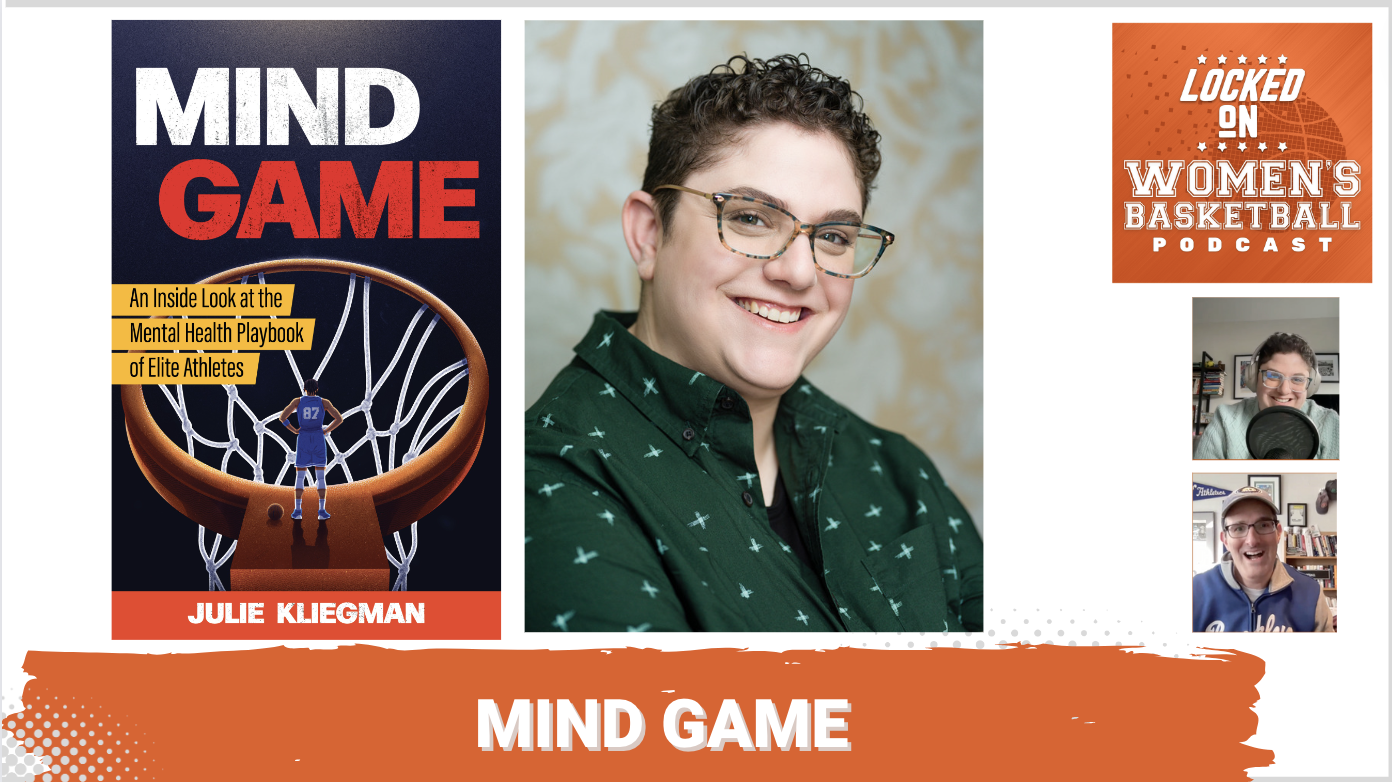
On the latest episode of Locked On Women’s Basketball, host Howard Megdal is joined by Julie Kliegman, the author of “Mind Game: An Inside Look at the Mental Health Playbook of Elite Athletes,” to discuss how elite athletes navigate mental illness. They also spoke about Tennessee and WNBA legend Chamique Holdsclaw, who dealt with depression during her career, and the framework for covering mental illness in sports.
Howard and Julie begin by discussing the evolution in the conversation around mental illness in elite athletes.
“The history of sport psychology goes back more than a century. But it’s a very start-and-stop kind of situation, where people weren’t really taking it seriously for various reasons. Certainly, in addition to athletes and coaches not really being open about this stuff, fans weren’t ready to process it, either,” Julie said. “As a movement, it didn’t really coalesce until much more recently.”
Then Howard and Julie discuss Holdsclaw’s life both on and off the court. She retired from the WNBA once and returned a couple of years later. After her final retirement, she came to use the label of bipolar disorder to describe herself.
“At that point, [Holdsclaw] told me it was the first time that any of her [professional] teams had put on a whiteboard or anything, like, ‘Hey, here’s the number of a sport psychologist’ or, you know, ‘Here’s what to do if you’re struggling.’” Julie said. “And she has told me that she would have benefited a lot from hearing that earlier.”
Make sure to subscribe to the Locked On Women’s Basketball podcast to keep learning about the WNBA, women’s college basketball, basketball history and much more!