MINNEAPOLIS — There aren’t too many resumes in sports that match the variety that you’ll find on Madison Schiller’s. The second-year data scientist for the Minnesota Lynx is a former collegiate basketball player and mathematical wiz who found her place on Cheryl Reeve’s bench by way of career stops with the Phoenix Suns, as well as the Naval Air Warfare Center Weapons Division. As one does.
During her college career at California State University, East Bay in Hayward, California, Schiller played four seasons for the Pioneers and was coached by former Lynx player Shanele Stires. After a senior season in which she averaged 11.8 points per game, Schiller was named Cal State East Bay Female Athlete of the Year. Off the court she earned her bachelor’s degree in computer science, and a master’s in data science. Charting a path for a career that draws from her two biggest passions, basketball and technology.
“I didn’t always think this was my path,” Schiller told The Next. “It was probably right before I started my graduate degree that I thought, Oh my gosh! I can probably combine both my passions in life of basketball and technology in a job. It led me to my data scientist degree. I didn’t think computer science was enough. I knew I needed to expand into data science as well to make this job come true for me.”
Schiller landed a basketball strategy and research internship with the Suns after finishing graduate school. It didn’t take long for her to emerge as the ideal candidate when the Lynx were looking to add a data scientist to their analytics team just a few months later.
“We just felt like there was such a need,” Reeve told The Next. “Certainly we have Paul Swanson, our resident statistician. He’s titled ‘statistician,’ but I told him he’s an analyst. He’s a basketball operations analyst. Providing a lot of great material through the years. We had a website that a lot of teams would come to because of what Swany would produce that at that time was considered advanced metrics.”
Given Reeve’s analytical mind, it’s no surprise the Lynx were at the forefront of adopting advanced analytics as a crucial part of the team’s culture. As the field of analytics only continues to grow, and the addition of Second Spectrum’s data tracking to the league this season, so too does the importance of having someone who can effectively interpret the data at your beck and call.
“With everything taking off in that realm [and] how far back you can go in your data, adding someone like Madi is [important],” Reeve said. “To learn what sites she can scrub to get data, learn how meaningful the data can be, we just felt it was time to support [Swanson] and go beyond what his technical abilities are. To be able to look at data, how to put the data in a form that’s useful.
“We had such a thirst for that. Poor Madi, when she got here we had such a long list. You know it was ‘we want to do this and we want to do this.’ We were ready. Our engines were revving before she got to us and she’s hit the ground sprinting.”
Schiller grew up in the town of Ridgecrest, California, which is home to the Naval Air Warfare Center Weapons Division, China Lake. A daughter and grand-daughter of engineers, the nearby naval base served as a natural spot as any to get a first job.
“It’s a unique experience I got to have,” Schiller said. “A lot of my family worked at the naval base as civilians, as engineers. My dad and grandpa were both engineers. So it’s in my blood a little bit, that math part, that [love of] problem solving.”
Schiller worked on projects for a few different departments across multiple summers at the base, though, naturally, not all of those projects are available for common discussion.
“I built some software, a website, and a lot of classified stuff,” Schiller said. “It was a great experience. Probably not what a lot of people have as their first job experience.”
For someone who grew up with a love of math and basketball in a family of engineers, Schiller’s current role is a blend of those passions. A typical day for Schiller includes a wide range of data mining, building player models, season simulations, etc. She’s also tasked with putting together the very densely filled data packet for all coaches’ meetings.
“Sometimes it might be too much data,” Schiller said. “I try to summarize it a little bit, but Cheryl wants a lot of data. Her data packet is probably like 13 pages long. There will be player personnel tendencies, team-to-team comparisons. Now that we have Second Spectrum, the packet has definitely been amplified with player tracking data.”
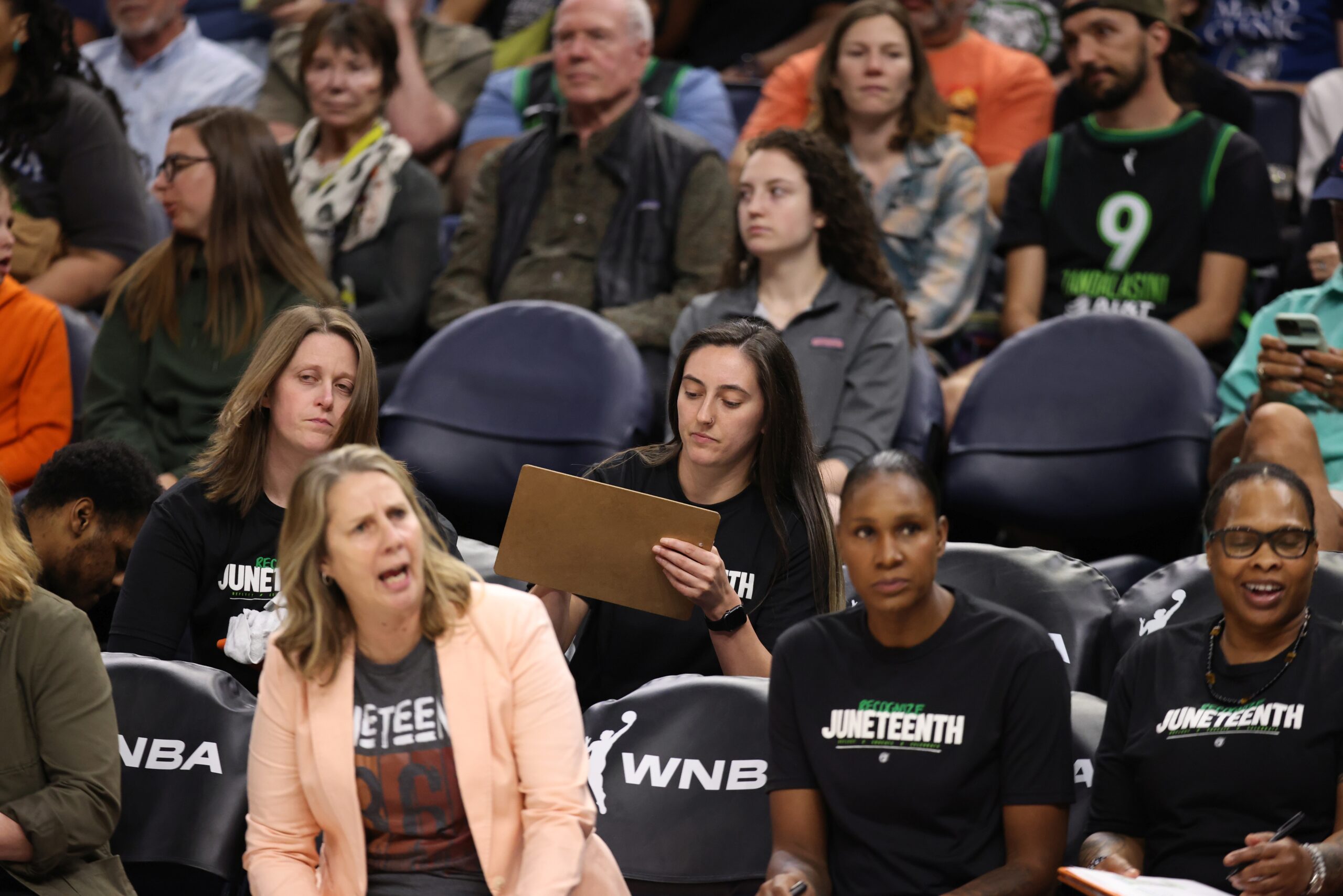
Schiller doesn’t merely just provide the pages and pages of reading material for those meetings, she’s in the room as well, ready to answer any questions or translate any of the potential language barriers that can arise in a sea of data.
“It’s a really awesome opportunity to be in those coaches’ meetings,” Schiller said. “Not a lot of data scientists are [in coaches’ meetings] so it’s a great opportunity. I really appreciate that Cheryl loves analytics as much as I do. It’s a great opportunity with the role I have.”
Schiller’s responsibilities don’t end with preparation. During the game she’s one of the most important people in the arena.
She’s in charge of the video platform for coaches’ challenges.
“That’s a pride and joy of my game day [duties],” Schiller said. “It’s not an easy job. I’ve talked with many people who have that job and hate it [laughter], but it’s important. I try to use a little bit of analytics behind it, like expected value or win probability models. You try to see if this possession is actually worth the challenge, if it will add anything to our win probability. So it’s a lot to take in in the 20 seconds we get to determine if we will challenge it or not. It’s a hard job.”
Being directly involved in the age-old decision of ‘to challenge or not to challenge’ carries an almost Shakespearian level of pressure. Thankfully for Schiller, and data scientists around the WNBA, the league provided some relief this season.
“But now we have the second challenge this year if you get the first one right,” Schiller said. “So that’s a little alleviated pressure, but it’s still there.”
Schiller knew her career as a player couldn’t last forever. She appreciates Stires more after getting a taste of how much more work goes into things on the coaching side of the equation. Combining her love of basketball and problem-solving through numbers has created Schiller’s version of a dream job with the Minnesota Lynx.
“It definitely is combining both my passions in life,” she said. “I knew I didn’t want to play for the rest of my life or anything like that. And I was kind of done after college, but it was a way for me to stay connected to the game and do what I love to do. I still feel like I’m part of the team. I’m still contributing, it’s just in a different way.”