The year 1999 was quite the era. Think Napster and Austin Powers, Michael Jordan still playing in the NBA, and a teenage pop star named Britney Spears just bursting onto the scene.
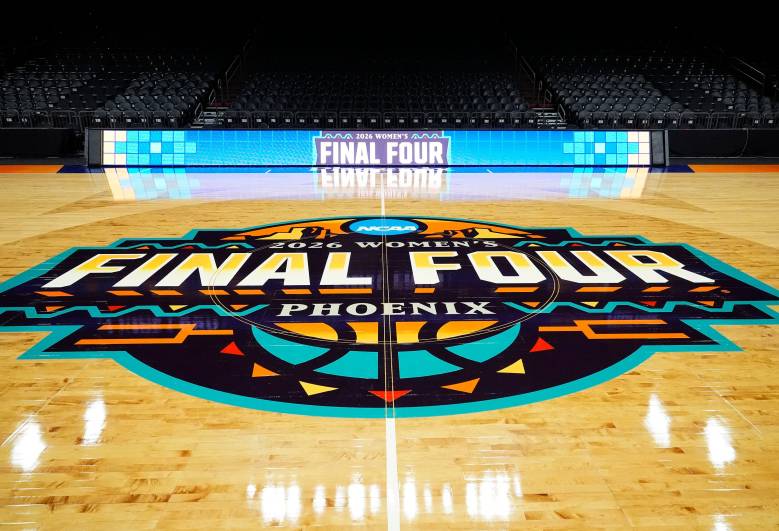
It was also the last time the Women’s Final Four was played in the West Coast. Twenty-five years after Purdue defeated Duke in San José for the national championship, the game finally returns west—this time to Phoenix.
The land of late-night tipoffs, and what remains of the former Pac-12 footprint, will now take center stage for women’s basketball’s biggest showcase. Whether that moment is overdue depends on who you ask—and where they sit within the sport’s geography.
“I don’t agree that it’s overdue,” said former Notre Dame coach Muffet McGraw. “I think the Final Four needs to be accessible to the most fans, so it needs to be somewhere in the middle.”
“I think we need to have balance,” said UCLA coach Cori Close, who grew up on the West Coast in Northern California. “Parity in geography helps build a national fan base. The challenge is there are simply fewer universities west of the Mississippi than there are east.”
Listen now to The IX Sports Podcast and Women’s Sports Daily
We are excited to announce the launch of TWO new podcasts for all the women’s sports fans out there looking for a daily dose of women’s sports news and analysis. Stream on Spotify, Apple Podcasts or anywhere you listen to podcasts, and make sure to subscribe!
That’s not opinion—it’s reality. There are roughly 50 Division I programs west of the Rocky Mountains, compared to more than 300 in the eastern half of the country. And with the dissolution of the Pac-12 as a power conference, no major league is now based west of Texas.
But what’s true for college basketball isn’t true for the WNBA—or for the game’s talent pipeline.
Phoenix, Los Angeles, Las Vegas, Golden State, Seattle and now Portland account for 40 percent of the WNBA’s 15 teams. And many of the sport’s brightest stars have West Coast roots: UCLA’s Lauren and Sienna Betts, USC’s JuJu Watkins and Jazzy Davidson. Add to that a lineage that includes Sabrina Ionescu, Diana Taurasi, Jordin Canada and Kelsey Plum.
The next wave is no different. Three of the top six high school recruits in the country—Oliviyah Edwards (Washington), Jerzy Robinson (California) and McKenna Woliczko (California)—hail from the West.
The West Coast has produced elite talent for decades. Yet the sport’s marquee event has rarely met those players on their home turf. Women’s basketball is now, more than ever, a truly national game. Its biggest stage hasn’t always reflected that.
Where the Final Four is played matters—for visibility, for access, for growth. Keeping it largely anchored in the Midwest and East tells only part of the story. Bringing it west signals something larger about where the game is headed: everywhere.
As the NCAA continues to reevaluate the structure of the women’s tournament—host sites, regional formats, and the growing list of events surrounding the Final Four—geography will remain central to the conversation.
“People don’t see enough of the teams on the West Coast—it doesn’t get the same kind of coverage,” said former Arizona State coach Charli Turner Thorne. “It’s important for the NCAA to grow its fan base across the country. I’m excited that so many people who may have never attended a Final Four will get that opportunity.”
For years, leaders within the Pac-12 were asked when the Final Four would return to the West. There’s some irony now: the game arrives in Phoenix only after the conference—once one of the sport’s strongest—has dissolved.
The challenge hasn’t rested solely with the NCAA. West Coast cities and conferences have also been slow, or reluctant, to bid for the event. Spokane, one of the region’s most reliable hosts for early rounds, lacks the infrastructure to support a Final Four.
“The problem has been that we haven’t had enough West Coast cities willing to bid,” Close said. “We need to encourage that. We need sports commissions in those cities to step up and help make it happen.”
The Final Four will return west again—Portland is set to host in 2030. But first, the event heads back to familiar ground: Columbus, Indianapolis and San Antonio.
For Close, the shift is already meaningful. In more than three decades of coaching, she’s never had the benefit of staying within the same time zone throughout the tournament. This year, her team can move from Los Angeles to Sacramento to Phoenix without that disruption.
“If we can create more balance and have more Western cities host at a high level,” Close said, “that’s not just good for West Coast programs—it’s good for the growth of the game.”
Looking for more March Madness stories? Read all our NCAA Tournament coverage at The IX Sports.