With one month to go before the season begins, the PWHL has announced several rulebook updates. The league also introduced its officiating team for the upcoming season. Download an updated version of the PWHL rulebook.
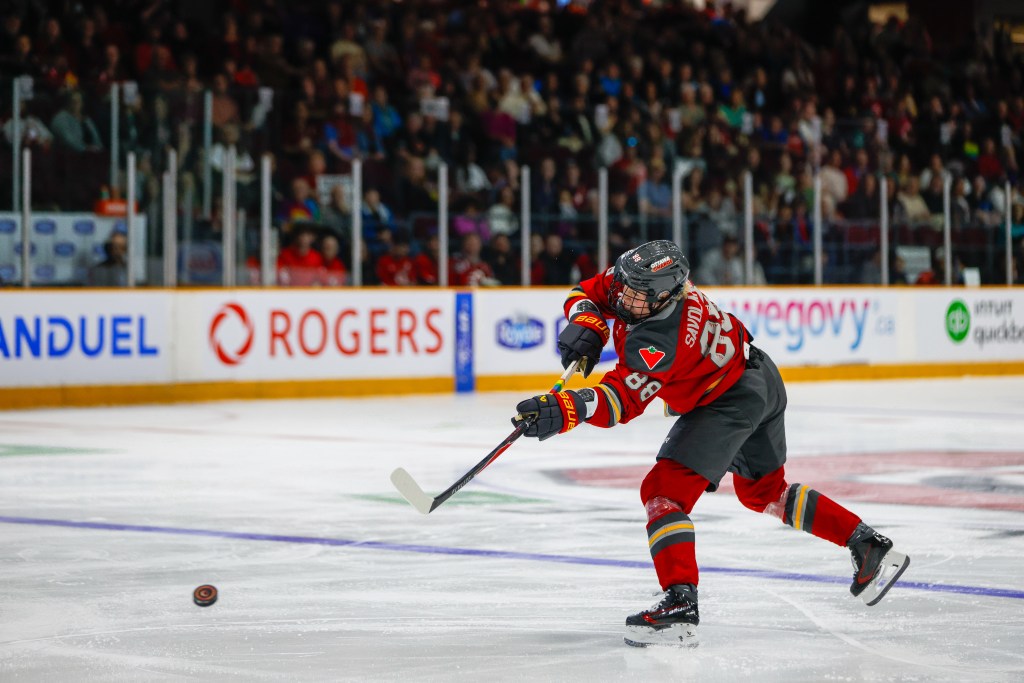
Neck protection
New rule: “All players (including goalkeepers) must wear cut-resistant protection in the neck area with a minimum cut-level protection score of A4, and a score of A5 preferred, in accordance with the ANSI/ISEA standard. Neck protection must be worn in all games, including during pre-game warm-up.”
Previous rule: “It is strongly recommended that all players wear certified Neck and Throat Protection.”
Is this a good change? Absolutely. The IIHF has required neck protection since 2023, and the AHL followed suit in 2024. The NHL currently mandates the protection only for rookies. If a player hasn’t previously worn it, it may take a little bit to get used to. But player safety must be paramount, and neck protection is a critical piece of that.
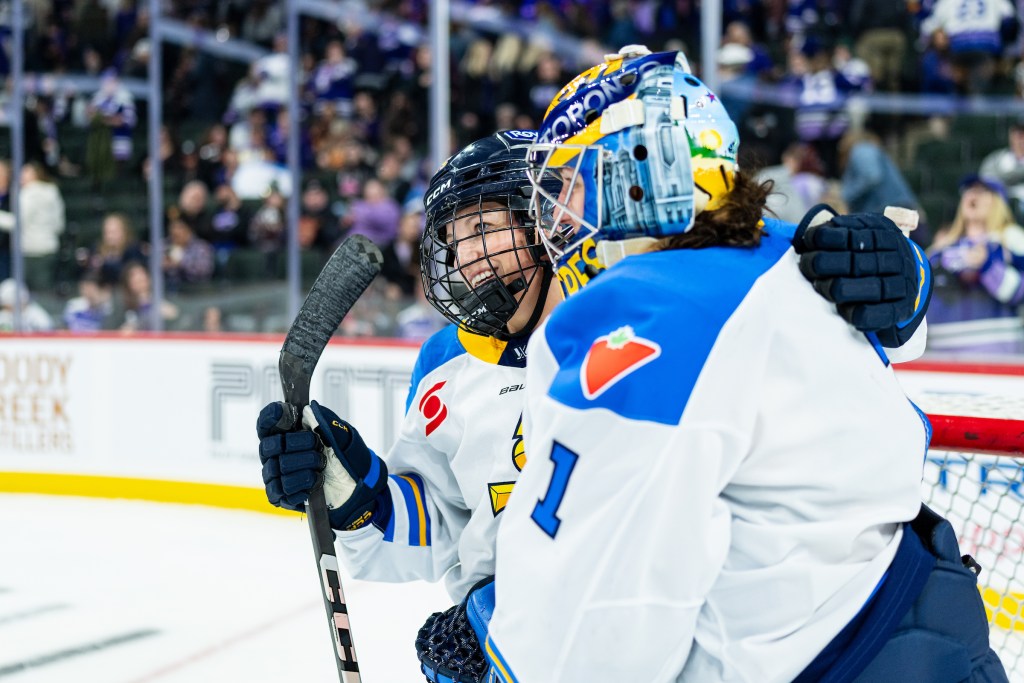
High-sticking the puck
New rule: “Batting the puck above the normal height of the shoulders with a stick is permitted. When a puck is struck with a high stick and it subsequently comes into the possession and control of a player from either Team (including the player who made contact with the puck), either directly or deflected off any player or Official, the play shall be permitted to continue, and the Referee shall give the ‘washout’ signal immediately.
Cradling the puck on the blade of the stick (like lacrosse) above the normal height of the shoulders shall be permitted. If this is done by a player on a penalty shot or shootout attempt, the shot shall be stopped immediately and considered complete.”
Previous rule: “Batting the puck above the normal height of the shoulders with a stick is prohibited. When a puck is struck with a high stick and subsequently comes into the possession and control of a player from the offending Team (including the player who made contact with the puck), either directly or deflected off any player or Official, there shall be a whistle.
When a puck has been contacted by a high stick, the play shall be permitted to continue, provided that: (i) The puck has been batted to an opponent (when a player bats the puck to an opponent, the Referee shall give the ‘washout’ signal immediately. Otherwise, they will stop the play); and, (ii) A player of the defending side shall bat the puck into her own goal in which case the goal shall be allowed.
Cradling the puck on the blade of the stick (like lacrosse) above the normal height of the shoulders shall be prohibited and a stoppage of play shall result. If this is done by a player on a penalty shot or shootout attempt, the shot shall be stopped immediately and considered complete.”
Is this a good change? I think so? The biggest pro is that it could help with the flow of the game. The rule change eliminates a stoppage; now, the play will just keep going. The NCAA has tested this a little bit, and it’s fine but not a big game-changer. Ultimately, I don’t imagine the rule change will have a huge impact, so sure, it’s fine.
Body checking
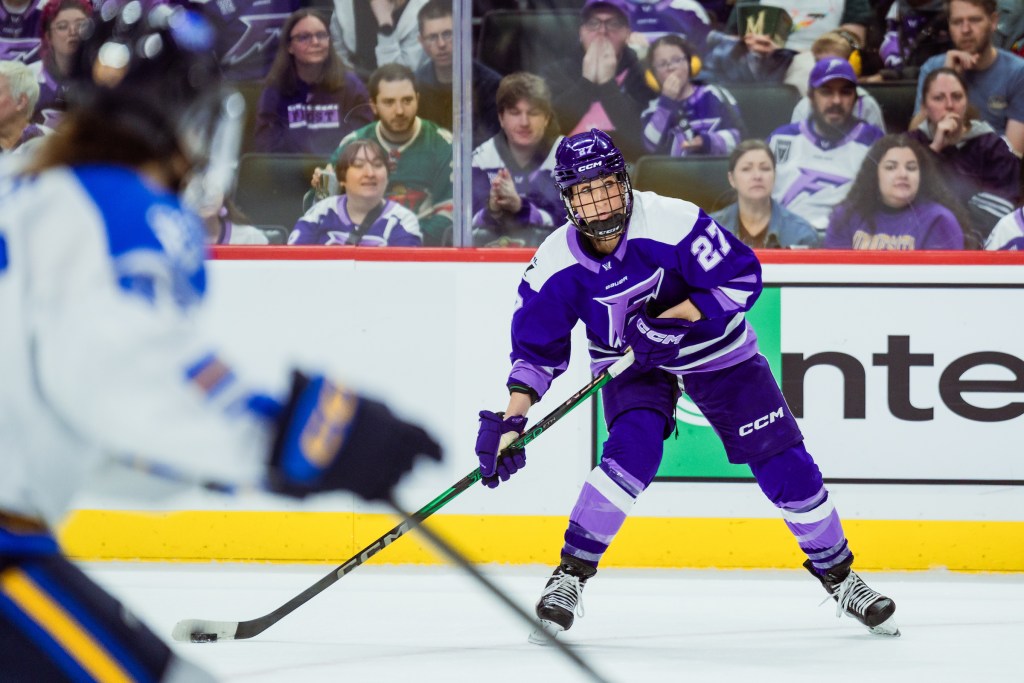
New rule: “In the PWHL, a form of body checking is permitted with no penalty assessed, except where it is described in situations that are illegal.
Permissible:
- Body checking is allowed when there is a clear intention of playing the puck or attempting to ‘gain possession’ of the puck;
- Players may angle their opponent by establishing and maintaining body position to separate their opponent from the puck. When both players are traveling in the same direction, a player may use legal body contact to impede the opponent’s progress and gain possession of the puck;
- A player who holds her position on the ice or is stationary, with the puck carrier approaching her, shall be permitted to enter into contact with her opponent. No player is required to move out of the way of an oncoming player to avoid a collision;
- When two (2) players are in pursuit of, or competing for, the puck, they are allowed to use legal body contact, including pushing and leaning into each other, provided the primary objective is to gain or maintain possession of the puck.
Illegal:
- Body checking shall be deemed illegal when a player delivers a blindside check to a defenseless opponent;
- A player launches upwards, extends or drives an arm, or leaves her feet to make contact immediately before or during contact;
- A player deliberately steps or skates into an opposing player with excessive force.”
Previous rule: “In the PWHL, a form of Bodychecking is permitted. Players may angle their opponent by using their body in order to separate her opponent from the puck. To do so, players who move in the same direction with body contact that follows, causing the puck carrier to lose possession of the puck, are permitted with no penalty assessed. Additionally, a player who holds her position on the ice with the puck carrier approaching her shall be permitted to enter into contact with her opponent with no penalty to be assessed.
Bodychecking shall be penalized for an ‘illegal hit’ when the result is that a player makes deliberate contact with an opposing player with opposite-directional force, when a player leaves their skating lane to make contact, or when a player extends an arm, shoulder, or hip after angling an opponent.
More specifically, the following is permissible in the PWHL:
- (i) ‘Bodychecking’ is allowed when there is a clear intention of playing the puck or attempting to ‘gain possession’ of the puck, with the exception from the situation described in this Rule below.
- (ii) If two (2) players are in pursuit of the puck, they are reasonably allowed to push and lean into each other provided that ‘possession of the puck’ remains the sole object of the two (2).
- (iii) Players are allowed to ‘hold their ground’ any time that they have established their position on the ice. No player is required to move out of the way of an oncoming player to avoid a collision. Therefore, a player, who is stationary, is entitled to that area of the ice. It is up to the opponent to avoid body contact with such a player. If that player is stationed between the opponent and the puck, the opponent is obliged to skate around the stationary player.
- (iv) If a player with the puck is skating directly at an opponent who is stationary, it is the obligation of the puck carrier to ‘avoid contact.’
Penalties shall be assessed for situations as follows:
- (i) If the puck carrier makes every effort to ‘avoid contact’ and the opponent moves into the puck carrier, that opponent will be assessed at least a Minor Penalty (2’) for an ‘illegal hit.’
- (ii) Any move by a player to step or glide into an opposing player will be assessed at least a Minor Penalty (2’) for an ‘illegal hit.’”
Is this a good change? Yes, I think so. Much of the language in the rule remains the same. Better defining what constitutes an illegal body check is the biggest change. Using terminology like “blindside check” and “defenseless opponent” is helpful. This language makes it clearer that the intention (“launches upwards,” “deliberately steps”) is important. This rule is about striking that balance between what’s a “hockey play” and what’s not — between what’s excessive and what’s just a part of the physical action. Clarifying these aspects is never a bad thing, and much of it really comes down to the practical application.
Testing out something new
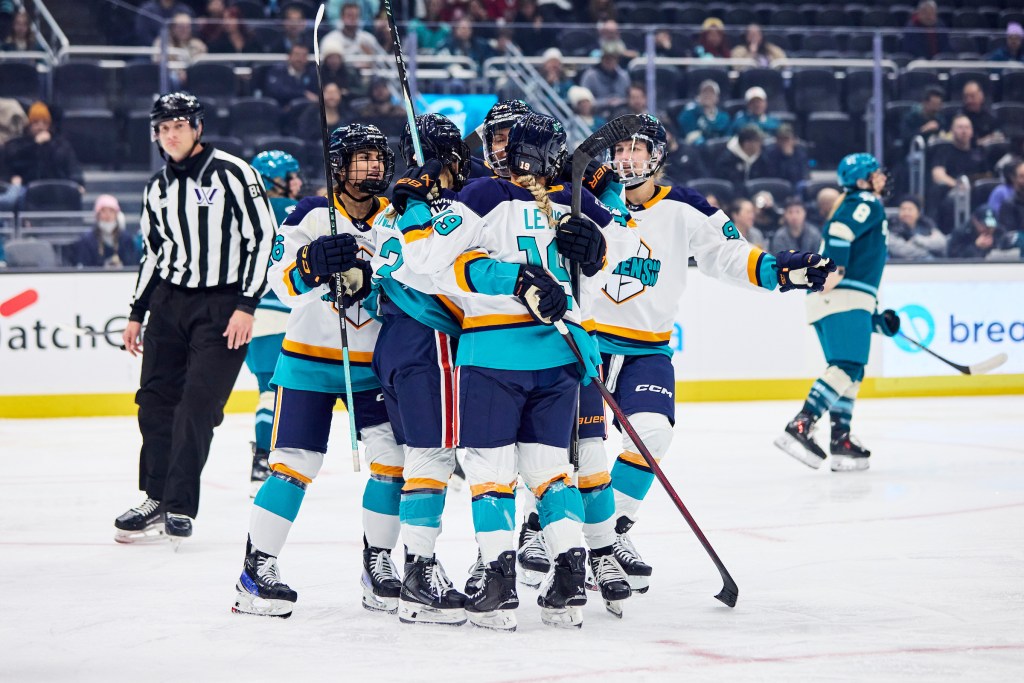
New rule (for preseason scrimmages only): “When a minor penalty is assessed during the overtime period, the non-offending team will have the option to take a penalty shot instead of a power play opportunity.
A power play in overtime would continue to result in a 4-on-3 player advantage for the non-offending team, consistent with standard league rules. Should the non-offending team opt for a penalty shot, it may be taken by any eligible player in the lineup.
All 12 preseason scrimmages will have a 3-on-3 overtime period (followed by a shootout), regardless of the score.”
Is this a good change? I mean… okay, sure. At some point, it does feel a bit like the PWHL is trying things just to be different. I don’t see any harm in testing this rule out for the preseason, at least. I’m not sure about it for the regular season. To me, it’s wild that any eligible player can take the penalty shot. (Normally, the offended player should take the shot. At the very least, the player taking the shot should’ve been on the ice during the play.)
Officiating team announced
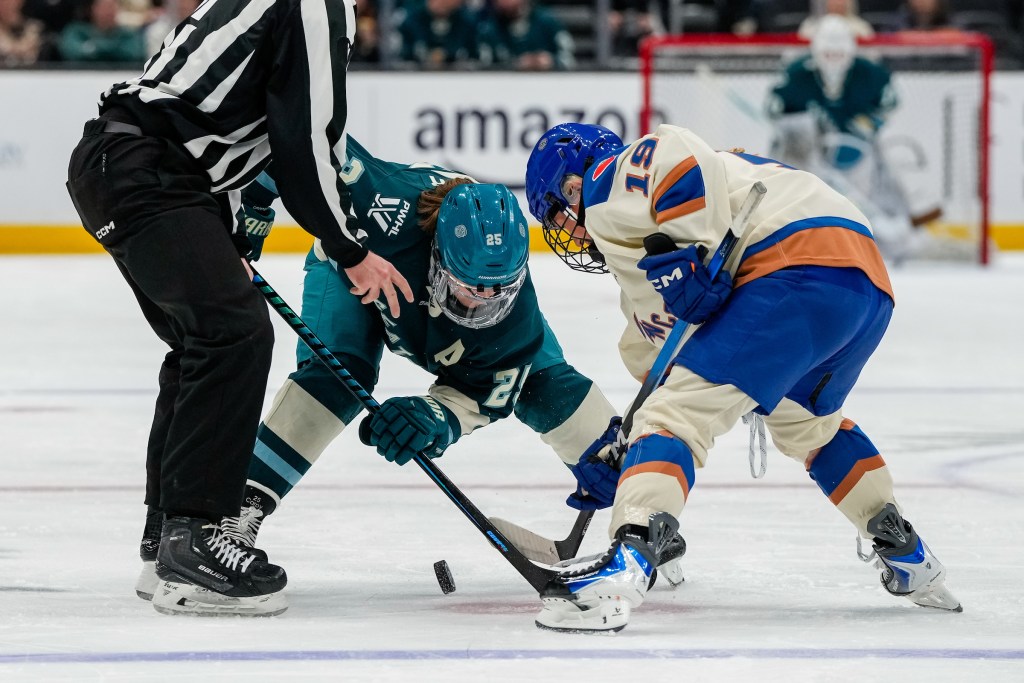
Although the PWHL itself has expanded, it has reduced its officiating team roster from 59 to 42. The league says this move is “part of a strategy to ensure greater consistency by increasing the number of games worked for each rostered official.”
There are five new officials for the 2026-27 season, including referee Mike Langin. New linespersons are Nikolaus Diehr, Mitchell Gibbs, Nathan Howes, and Alexander Ledovskiy.
The Central Situation Room will be led by Liam Clare, Ken Cox, and Steven Hoffner. The officiating supervisors are Steve Barton, Bryan Lewis, and Ken Wheler. Directors of officiating are Bill McCreary (strategy & performance), David Taveroff (operations), and Katie Guay (training, development & recruitment).
Finally, the player safety committee consists of chair Matt McMahon, Cassie Campbell-Pascall, and Mike Murphy. This number marks a slight reduction from last year’s committee. Last year, Jayna Hefford chaired the committee, while Chris Burkett and Meghan Duggan were also part of the crew. (Duggan is now the general manager of PWHL Hamilton.)