The PWHL announced several changes on Thursday night that the league will implement beginning this coming season. Among the changes: increased roster sizes and higher minimum salaries. The league and the PWHLPA mutually agreed on all changes.
Rosters increase, reserves eliminated
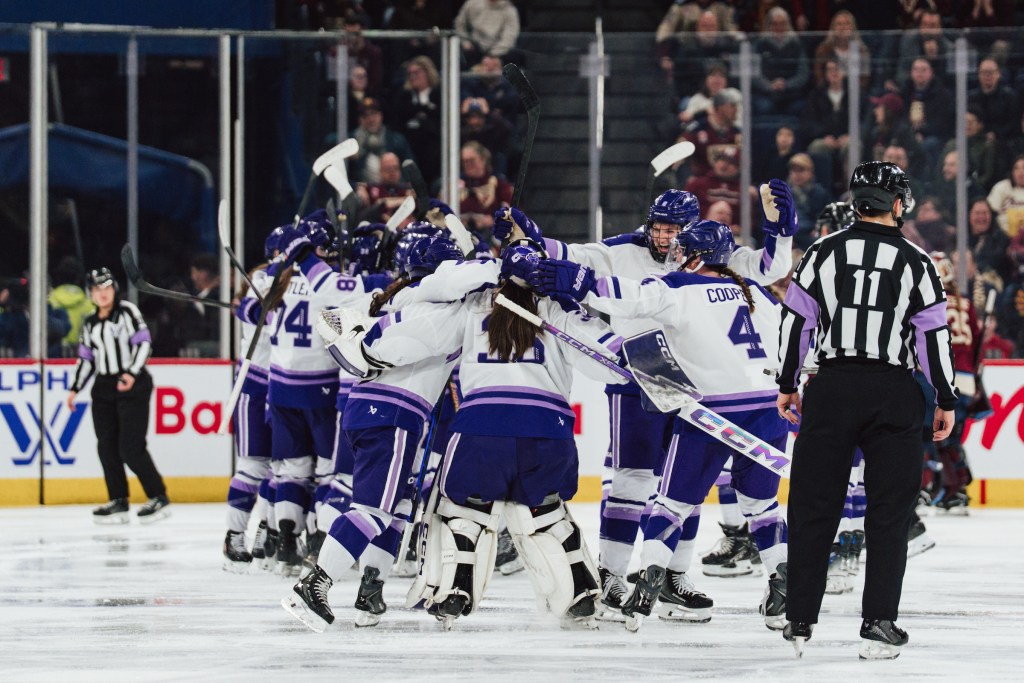
First, the league’s active rosters will increase from 23 to 24 players per team. This will open up 12 additional roster spots across the PWHL for full-time players. The league will now be able to have up to 288 players on its active roster, with 12 teams in the fold.
However, the league also announced that the reserve player structure will not be used in the 2026-27 season. In previous seasons, teams were able to carry three reserve players who would typically practice with the team and be available in case of injury.
Instead, the new agreement introduces a one-game standard player agreement mechanism for “unexpected, exigent roster circumstances,” according to the PWHL’s press release.
Minimum salaries increase
The PWHL also announced higher minimum annual salaries, to begin this season.
Looking back, the PWHL’s minimum base salary in its inaugural season was $35,000. Each year, the minimum increases by three percent. That means the minimum in the 2024-25 season was $36,050. Last season’s minimum was $37,131.50.
That means the minimum salary for this season should have been $38,245.44. Instead, the league announced a new rate: $42,000. That’s a 13.11 percent increase – much higher than what the collective bargaining agreement had in place.
The PWHL also announced higher minimums for four additional seasons beyond that:
- $45,000 in 2027-28 (7.14% increase)
- $47,500 in 2028-29 (5.56% increase)
- $50,000 in 2029-30 (5.26% increase)
- $52,500 in 2030-31 (5% increase)
No more than nine players on each team can be paid the minimum.
It’s (mostly) good news for players
Thursday’s announcement marks mostly good news for the players, especially those who were going to make the minimum. With the current state of the economy and prices seemingly going up every day, higher minimum salaries are always a good thing. It’s a significant increase from what the minimum would’ve ordinarily been.
That said, the minimums here are still not really considered a livable wage in many states. For instance, in California, the living wage for a single adult is $63,402. In New York, it dips slightly to $62,167, while in Nevada, it’s significantly lower at $50,259. In Massachusetts, it’s $63,610.* Either way, the PWHL minimum doesn’t meet that – so players making minimum salaries may not be able to sustain themselves on hockey alone.
* All data courtesy of the Massachusetts Institute of Technology’s Living Wage calculator, last updated on February 15, 2026 and accessible here.
Additionally, I’m not thrilled with the elimination of reserve players. It certainly wasn’t a perfect system – those players were paid about $15,000 to essentially practice and be ‘on hold’ in case someone got hurt. But I do think the reserves were important to have, in case a player did get sick or injured.
Opening up the full-time roster to one additional player is great, but did it have to be at the expense of cutting three reserves? In one sense, yes, this is opening up 12 more full-time spots for players. But it also means that up to 24 players who would’ve been reserves are walking away with nothing. It’s basically like taking the compensation that would’ve been given to three reserve players and alloting it to one full-time active player instead. Couldn’t there be a happy medium?
Additionally, this is an interesting announcement given the recent news surrounding PWHL owner Mark Walter’s financial situation. Walter recently sold the NBA’s Los Angeles Lakers and is reportedly looking to sell the WNBA’s Los Angeles Sparks. On the surface, Thursday’s announcement seems to indicate not just stability within the PWHL, but growth. As a longtime follower of pro women’s hockey, I am cautious, yet optimistic.