If you were to divide the history of Women’s Hockey into eras in a similar fashion to comic books, the Silver Age of Women’s Hockey would probably be best described as being from 2007-2023.
We had the formation of the Canadian Women’s Hockey League (CWHL), the new National Women’s Hockey League (NWHL) which later became the Premier Hockey Federation (PHF), along with the World Championships & Four Nations tournaments finding a regular home on TSN (in Canada at least), and women’s hockey as a whole slowly joining the modern times of streaming games plus a growing level of stat collection.
It was far from perfect but it certainly beat the previous Bronze Age of 1990-2007, where women’s hockey was only shown once a year during the World Championships or the Olympics. If you weren’t playing on a national team in the Bronze Age there was not much of a chance people knew who you were, and even then if you weren’t the consistent starting goalie you would still fall off the radar.
Not making your national team or being the number one goalie on that National Team in the Silver Age wasn’t a death sentence in terms of your recognition, but it certainly hurt people’s chances of getting to know you.
For the Bronze Age we have goalies such as Sami Jo Small, who was very talented but unfortunately had to share the net with Manon Rhéaume and Kim St-Pierre, which limited her time in Team Canada’s crease. This of course leads to Sami Jo Small’s most recognizable moments coming after retirement, which is unfair to her playing career.
While Small’s playing career will forever be a tough one to decipher just how good she really was, the Silver Age of Women’s Hockey ensured that the successor to Sami Jo Small wouldn’t have to deal with the same problems. One of those successor’s is Geneviève Lacasse, the Silver Age Sami Jo Small.
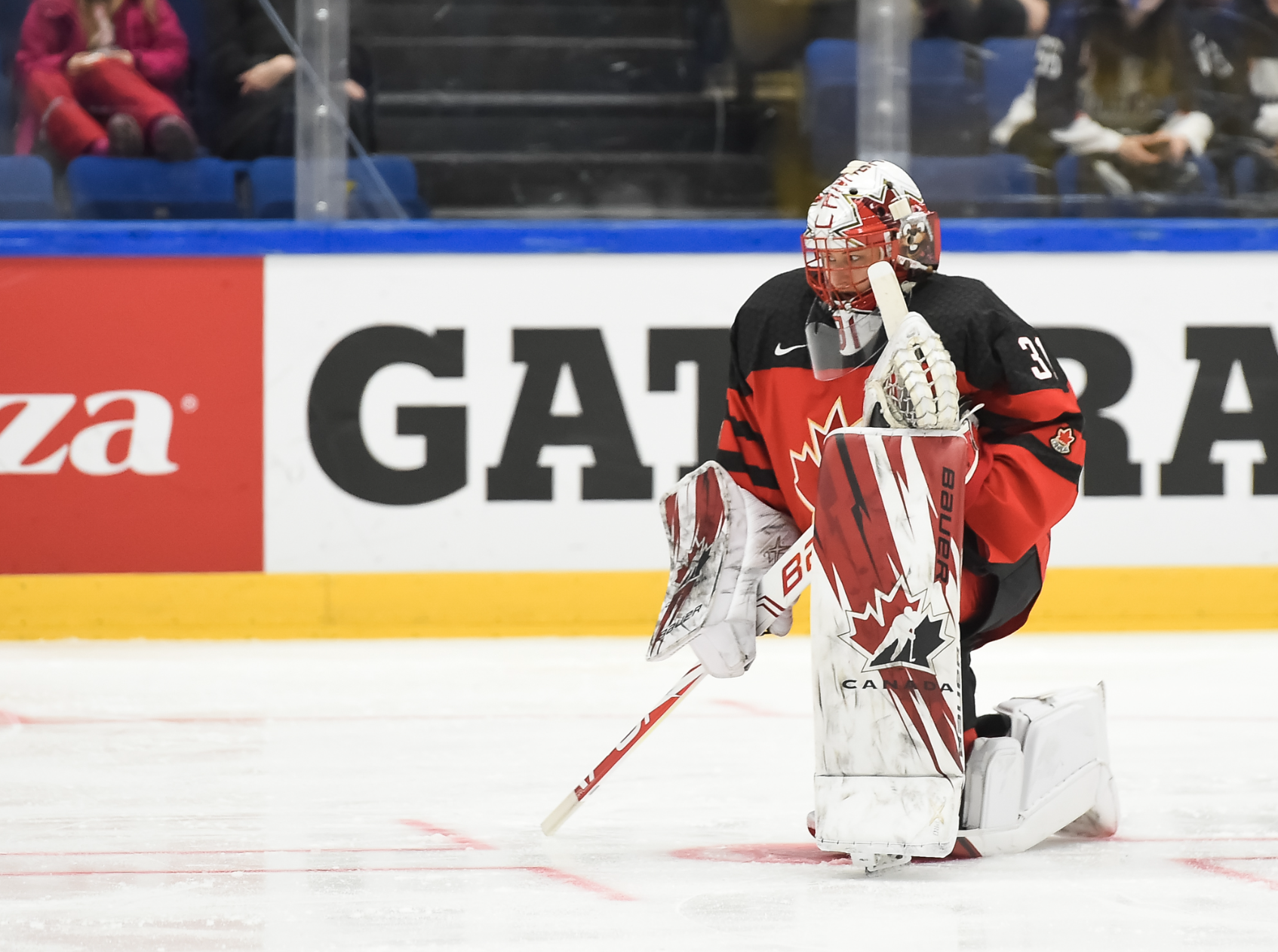
Joining the NCAA and Providence College at the age of 19, Geneviève Lacasse took the number one role and never let go the rest of her NCAA career. Her lowest save percentage (SV%) year in the NCAA was her sophomore year, where she posted a 0.920 SV%. The other three seasons she was above a 0.930 SV% while also wearing an ‘A.’ Then, to end her NCAA career, she was the Captain of Providence College. Her last year in the NCAA also saw her post a 0.938 SV% despite having a losing record (the highest scorer on the team had 29 points in 37 games in case you’re wondering how that happened) and earned Lacasse a spot as the third goalie on the Canada’s 2012 IIHF World Championship team.
While Lacasse waited for her time to break through being just third goalie on Team Canada, she found herself in the CWHL playing for the Boston Blades. Or, in other words, with the majority of east coast Team USA players. In her CWHL rookie year Lacasse showed why Team Canada wanted her in the program by earning CWHL Goalie of the Year honours (9.2 Goals Saved Above Average, 13-1-0 record, 0.941 SV%, 1.000 Quality Start %) and of course topping it off with a Clarkson Cup Championship.

After spending the next season in centralization with Team Canada for the 2014 Sochi Olympics, it was back to business for Lacasse in the CWHL. Her 2014-15 CWHL season saw Lacasse win another Clarkson Cup championship with the Boston Blades while her numbers (10-1-1, 0.919 SV%. 0.720 QS%, 3.96 GSAA) reflected a top-two goalie in the league also finally earning Lacasse a role on Team Canada with playing time.
Unfortunately this was the peak of Lacasse’s march up the National Team depth chart. At the 2015 WHC Lacasse was in a tandem with Ann-Renée Desbiens where Lacasse made 30 out of 34 saves in a tournament opening loss to the USA. In the gold medal game Lacasse came in relief of Desbiens, only to make 10 out of 13 saves which secured the win for the USA. This wasn’t the end of Lacasse’s time with the national team; she’d go on to play in three more tournaments, though the opportunity to see top goalie-style ice time never came around again.
The hits kept on coming for Lacasse, who went from a great NCAA career to being one of the CWHL’s best goalies on a championship team to…well.
History tells the story. At the start of the 2015/16 season the NWHL came into existence, and with it Lacasse saw the vast majority of her teammates leave for the brand new Boston Pride.
This resulted in the Boston Blades franchise making the SDHL’s Göteborg HC – a team with six wins over four seasons and 144 games played prior to folding last year – look like a hockey powerhouse. Despite a season of immense adversity Lacasse stood tall, seeing 50.5 shots against per 60 minutes , the second-highest in league history, while posting a 0.565 quality starts % and -0.099 goals saved above average per 30 shots against. If you ignore the shots against it looks like an average stat line, but when you realize Lacasse posted those numbers in that environment it should be considered a Herculean (or Xena) effort.

Now Lacasse must have been playing Daft Punk’s “Harder, Better, Faster, Stronger” on repeat in the 2016 off-season. as she was moved to the Calgary Inferno where she’d go on to have another great year participating in a goalie triad with Delayne Brian and future spouse Emerance Maschmeyer. Lacasse finished fifth in GSAA, first in QS%, and fourth in GSAA/30. With her performance Lacasse made it back on Team Canada and while it was as the third goalie, most importantly she was back on the team.
Being back on Team Canada saw Lacasse continue her resurgence as she would then make the Canadian Olympic team. While the number one goalie spot was all wrapped up by future Hockey Hall of Famer Shannon Szabados, Lacasse ensured that she’d make a lasting mark at least one last time on the national team stage.
Team Canada was looking rough at the start of the Rivalry Series in the lead-up to the 2018 Olympics, got blown out 5-2 to start the series, and was looking to continue that run into game 2 as they put up 38 shots on goal. Unfortunately for the USA, Lacasse saved all but one, putting Canada back on track and leading to Canada winning the rest of the series 5-1. Cherry on top is Lacasse got another start and made 32 saves for her first shutout against the USA in a 2-0 victory.
2017-18 was Geneviève Lacasse’s “Team USA Killer” era and the Canadian coaching staff definitely noticed it as Lacasse was given the round robin game against the USA during the 2018 Olympics. Lacasse decided to one-up her Rivalry Series performances by making 44 out of 45 saves for a 2-1 win. This would be the only Olympic game in her career but what a game it was.
While Lacasse’s days of winning championships and medals wasn’t over after 2018, her doing so as more than the number-two goalie certainly was. Injury issues started during the 2018-19 season that affected Lacasse for the rest of her career. She’d recover in-season enough to make the 2019 WHC team but the combination of injuries and COVID having a major affect on women’s hockey, Lacasse’s prime was over after the 2018 Olympics.
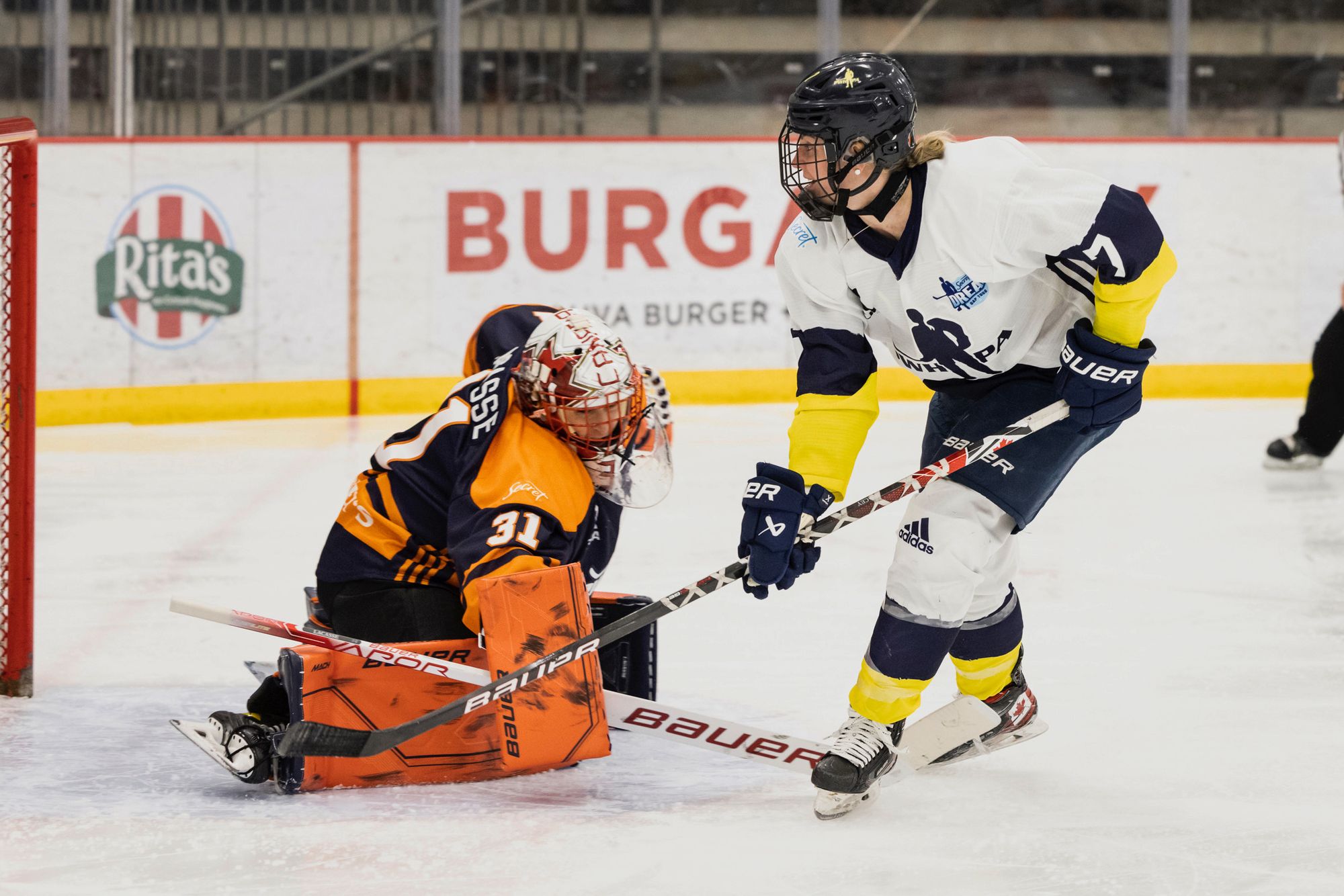
Lacasse would later join the PWHPA and made her last season count. In six starts Lacasse put up a stat line of: 5-1-0 (tied for third in wins), 27.91 SA/60, 2.272 GSAA (fourth in the league), 0.406 GSAA/30 (third in the league), and a 0.833 QS% (first in the league). Add a PWHPA Championship onto that to make for one magnificent final season from Geneviève Lacasse and a cherry on top of a marvelous career.
If Lacasse had played in the Bronze Age where the only stats we really had were from international competitions, using the word ‘legend’ to describe her would look like quite the overstatement. Lacasse finished her career with one Olympic gold, one WHC gold, three WHC silvers, one Olympic silver, and one WHC bronze. Lacasse earned all those medals, as even making Team Canada as a goalie is a tough task. Where her international accolades fall short is, Lacasse only has six WHC games and one Olympic game played with her most impressive tournament being the 2018 Olympics as mentioned previously. Very few people would give Lacasse the time of day with an international record like that. Yes, she made Team Canada seven times, but she was never THE goalie for Canada.
There’s a lot wrong with the Silver Age of women’s hockey but what it did give us is the ability to look past a goalie’s international resumé to see a larger sample size. This is where Lacasse flourishes; as with her aforementioned PWHPA final season she has a great prime in the NCAA and the CWHL. Lacasse is sixth in NCAA career saves (3482), 24th in NCAA career save percentage (0.933), and 27th in NCAA career shutouts (20). As mentioned previously Lacasse never had a NCAA SV% lower than a 0.920 SV%. In the CWHL, Lacasse’s trophy case features two Clarkson Cups and a Goalie of the Year award. Lacasse finished seventh in CWHL career games played (64), 10th in CWHL career wins (35), fifth in CWHL career saves (1818), tied for 10th in CWHL career shutouts (5), eighth in CWHL career quality starts % (0.707), eighth in CWHL career GSAA (12.505), and 15th in CWHL Career GSAA/30 (0.132).
Every age of hockey has its heroes and legends. Lacasse showed she was more than just the second or third-string goalie on Team Canada. She put up a great career that we can all look back, on and even if you weren’t able to watch her play we know just how good she was through stats other goalies such as Sami Jo Small or Meeri Räisänen didn’t have in their prime. Hopefully now when looking back at past Team Canada rosters and wonder who Geneviève Lacasse was, they can learn just how great she was here.
Author Note: CWHL, World Hockey Championship, and Olympic stats are sourced from Giants in the Crease.