Nearly two years ago I wrote about Florence Schelling being the most slam dunk candidate for the Hockey Hall of Fame to induct in all of women’s hockey, actually in all of just hockey in general. She retired a top-three goalie and arguably hasn’t been knocked out of that spot yet. I also view Shannon Szabados as a top-three goalie of all-time and just as much of a slam dunk HHOF inductee as Florence Schelling.
I haven’t written about Szabados previously because I figured the HHOF committee knew something about her that I didn’t and were waiting to induct her. Maybe she was going to attempt a comeback into the PWHL as she’s never really formally retired; she just kind of faded into her personal life and hasn’t put on the Canadian jersey since 2019. Unless she wants to correct me, I think it’s fair to assume after not playing or being registered to play after the 19/20 hockey season, Szabados is essentially retired.
With that being the case, Szabados is the most shocking omission that the committee has been making, considering her resume and that the committee actually knows who she is. I’ll give them an atom’s worth of leeway in not knowing who Florence Schelling is off the top of their heads. Schelling spent five total hockey seasons in North America, four with Northeastern University and one with the Brampton Thunder of the CWHL. She played internationally for Switzerland, who was essentially Schelling and Stalder against the world. Even now with a better roster up front, Switzerland is usually considered the underdog. All these are reasons for a bunch of North American men who don’t watch women’s hockey—except maybe once every four years—to not know who this Swiss star was on the ice.
They didn’t and don’t have this excuse with Shannon Szabados. She’s been in North America her whole life. Apart from international play and one season in the NWHL/PHF, Szabados has only played men’s hockey. She played in the Alberta Junior Hockey League which is a Junior A men’s league in Canada, which those who watch the NHL will know was once home to a certain Cale Makar.
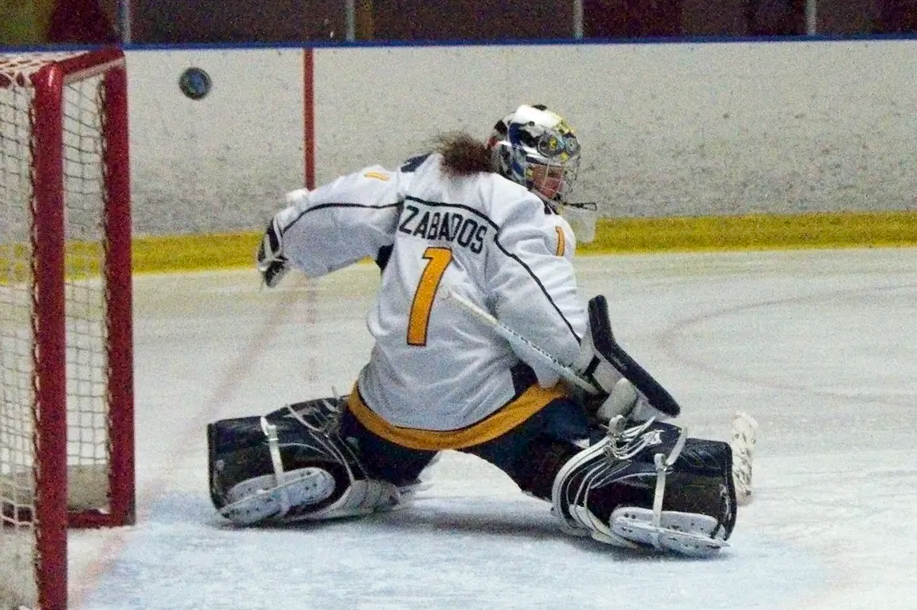
Szabados didn’t just play in the AJHL either—she was great! Especially in her final season with the Fort Saskatchewan Traders, where she was named the AJHL Goalie of the Year and came one game away from winning the AJHL championship. Szabados was a co-MVP with the Sherwood Park Crusaders and was named team MVP of the Fort Saskatchewan Traders. That’s not even her whole junior career: there’s still the time she went to training camp with the Tri-City Americans when Carey Price was there, playing in four exhibition games before being cut. She did all this while being the first woman to play in a WHL game and in the AJHL. The AJHL actually had to vote on letting her join the league.
It’s hard to ignore what she was doing in a country that many HHOF committee members are from, and in the WHL/AJHL, where there are plenty of eyes. In her last season in the AJHL, 2006/07, she was on the same team as Matt Frattin, who was picked that year by a team some might have heard of: the Toronto Maple Leafs. Szabados won the AJHL Top Goalie award over Allen York, who would also be drafted that year by the Columbus Blue Jackets, and Kieran Millan, who would end up being drafted by another rarely heard of team, the Colorado Avalanche. People knew she existed and was making an impact.
Due to Szabados spending time in a WHL training camp, she wasn’t eligible to join the NCAA. She instead stuck around in Alberta playing Alberta College hockey (ACAC) with Grant MacEwan College, then transferring to Northern AB Inst. of Tech. Her time in the ACAC earned her a Silver Medal and ACAC championship. It’s understandable if people lost track of her in the ACAC, where the best players are those who were done with the Major Junior or Junior A or the ECHL and decided to get an education while still being in a competitive league. She was once again the first woman in the league, but it’s less impactful when people see ACAC and wonder if you’re talking about an insurance company.
You know whose radar she was on, though? Hockey Canada’s. Despite being in one of the more obscure leagues in Canada, they found Szabados and brought her to the 2009 World Hockey Championships, where she was the third goalie behind Canadian legends Kim St-Pierre and Charline Labonté. Szabados earned an invite to centralization for the 2010 Olympics and went from playing behind legends to starting her own.
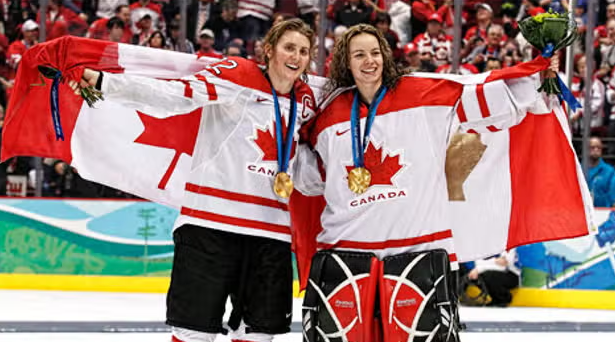
Szabados took the number one spot from Kim St-Pierre and Charline Labonté, both of whom had played in Gold Medal games in previous Olympics. This time it would be Szabados playing in an Olympic Gold Medal game where Canada won 2-0 on home ice courtesy of two Marie-Philip Poulin goals and a 28-save shutout by Szabados. In her first ever Olympics, Szabados took home a Gold Medal, Top Goalie honours, and also being named to the tournament All-Star Team.
From there Szabados would play in four WHC tournaments, winning one Gold, two Silvers, and a Bronze. In the four WHC tournaments where Szabados played games, she finished in the top five of SV% and GSAA three times each. It was a near guarantee that she would give you one of the better chances at winning in each tournament. Apart from 2009, in each tournament Szabados was in she was the undisputed number one goalie on the team. For those keeping track at home that means that in the eight tournaments Szabados played in from 2010 to 2019, she was the clear number one goalie.
That typically does not happen. For context, Ann-Renée Desbiens is on a six-tournament run of being the undisputed 1G and before Szabados it was Kim St-Pierre with Charline Labonté taking the lead in a few tournaments to break up St-Pierre’s starting streaks. Szabados’ streak would be even longer but pro hockey duties kept her away from the 2015 and 2016 WHC’s.
Apart from that impressive run Szabados was also the clear starter in three Olympics. For North American goalies, that just doesn’t happen. It requires a special level of talent and dedication to keep up that level play over the course of 12 years. On the biggest stage in hockey, a stage so big even your average men’s hockey pundit will tune in, Szabados showed herself to be the best goalie in women’s hockey. Her Olympic resume boasts two Gold Medals and a Silver acquired in a shootout. The only way Szabados was beaten in the Olympics was in a skills competition. But wait, there’s more! Szabados was named Best Goalie at the Olympics twice (2010/2018) and named to the Olympics All-Star team at the 2010 Olympics.
Szabados’ time in the limelight wasn’t just in international tournaments. She put herself back on the front page of hockey news by joining the SPHL as the first woman to join North American pro hockey in a long time with the Columbus Cottonmouths in 2014 until 2016, with a small stint with the Peoria Rivermen. Before finally stepping back from the spotlight, Szabados would add the cherry on top of her HHOF career by making a stop in the NWHL, later known as the PHF.

During the height of the NWHL/PHF’s on-ice talent, Shannon Szabados finally made her debut into a women’s hockey league. The league during the 2018/19 season featured some names even newer fans of women’s hockey might have heard of: Nicole Hensley, Amanda Kessel, Kendall Coyne Schofield, Hannah Brandt, Amanda Boulier, Kateřina Mrázová, Denisa Křížová, Lee Stecklein, Amanda Leveille, and more. Szabados wasn’t lacking for competition when it came to the skaters trying to score on her, or when it came to her fellow goalies. Still, at the end of the season Szabados stood above the rest, earning Top Goalie honours and once again making a splash in hockey news—that’s hard to ignore, considering all the talent involved in the league.
There’s really no reason to keep Shannon Szabados out of the HHOF. Her career was the opposite of quiet. The HHOF committee members should be well acquainted with who Szabados is, to the point that she should be at the top of their list of who to even do minimal research on. They have the internet. They should remember this Canadian goalie who was a part of double Gold in Vancouver and backstopped Canada to one of the greatest comebacks in Olympic Hockey Gold Medal history. This is all enough to warrant looking her up and getting a surface level view of her career, which screams HHOF goalie. Instead, we sit here watching one of the greatest to ever play be passed over again and again.
The same goes for Florence Schelling. As I previously mentioned, it’s a sliver more understandable that a Swiss women’s hockey goalie who retired at the age of 29 after the 2018 Olympics isn’t at the forefront of the HHOF committee members’ minds. Still, it is their job to know who should be eligible to join the HHOF, and it’s not as though Schelling had a quiet career.
In 2004, at the age of 14, Schelling took part in her first WHC. She played three games and won her first ever WHC game by beating Japan. About a year and a half later, Schelling played in her first ever Olympics at the age of 15. Eight years later, Schelling made hockey history by earning Switzerland their first medal in women’s hockey (Bronze) and the first Olympic hockey medal the country had seen since 1948.
We’re just getting started. Schelling backstopped Switzerland to their country’s first medal (Bronze) at the WHC in their women’s hockey history and their first WHC medal since 1953, when their men’s team won at home. Schelling’s trophy case, apart from the medals, certainly isn’t lacking either. She’s the only goalie in women’s Olympic hockey history to be named tournament MVP (2014). She also has an Olympic Top Goalie award (2014) and All-Star team accolade (2014). Then of course there’s Schelling’s Top Goalie (2012) and All-Star honours (2012) from the WHC.
Oh, and it would be rude to forget that in her four-year NCAA career that Schelling was named to the Second All-American Team (2010) and First All-American Team (2012), which is their version of an end-of-season all-star team, and was a top three Patty Kazmaier finalist (2012). Last but not least of course being that Schelling was named the Top Goalie in the SDHL (2018) and in two of her three seasons there led the league in SV%. She would have made it three for three if not for an injury that only allowed her to play 10 games in the 16/17 season.
Once again, this is all readily available and easy to find with minimal effort. This was not a quiet career. The Swiss Bronze Medal win at the 2014 Sochi Olympics was a big deal. You don’t walk away with a surprise Bronze, Top Goalie, All-Star team honour, and Tournament MVP award quietly. I get that she retired before she was even 30 and that there was a legitimately scary pandemic that you would naturally pay attention to. Even post career, though, she’s kept herself visible. She’s always going to Olympic events looking to improve upon the experience for athletes. Schelling even made history by being the first woman to be the General Manager of a National League (top tier Swiss men’s hockey) team.
Every single HHOF committee member has zero excuse for not seeing her name and doing even surface level research on her. Not a single one could be bothered to look her up and even try to make a case for her without even getting deep into the numbers. So instead we have one of the best in the game sitting idly by waiting to be properly acknowledged with no end in sight. If Szabados is being consistently passed over, it’s sad to think about how much longer it will take for Schelling to be acknowledged, as she doesn’t have the advantage of having played in North America for a significant period of her career.
Maybe I’m holding the HHOF committee and the HHOF itself to too high of a standard. It’s certainly not without its problems, especially when it comes to anything related to women. Of the 18 committee members, only two are women. They’ve never had more than two women on the committee. It hits home even harder that women in hockey either have been watching and working in the men’s game for the majority of their life, or they come from the women’s game but watched men’s hockey their entire lives because that’s only been what’s on.
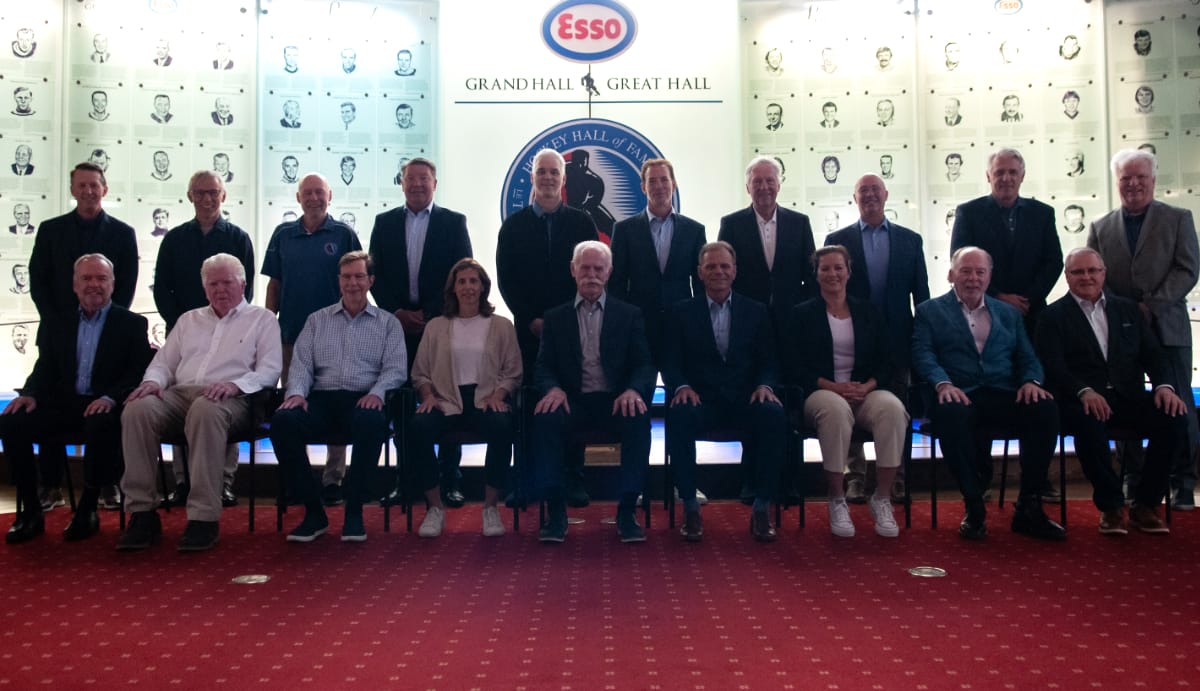
Cammi Granato and Cassie Campbell-Pascall have loads of knowledge of men’s as well as women’s hockey history. These aren’t the only two women with this kind of knowledge and more should be on the committee. The more knowledge the better, yet we need 18 experts in men’s hockey and only two in women’s hockey. Without turning this into a total rant, there’s also the fact that somehow Danièle Sauvageau is the first woman to be inducted as a builder and women players still only get two spots per year.
Despite all of that, the HHOF is still seen as the pinnacle of accolades. Once your name is in there, typically, it’s in there forever. Your face, name, and accolades are next to all the other greats to whack a puck around the ice. To quote a cornerstone film of millennial culture “Heroes get remembered, but legends never die”. You end up in the HHOF and you’re a legend. Szabados, Schelling, and plenty more women who have been stars in the game should be remembered as legends.
The HHOF committee is still made up of people and those people do read articles. Maybe they don’t actually remember Schelling or Szabados. It’s possible they don’t remember enough about them to consider them to be worthy of even looking into their careers. In the men’s hockey sphere, the one they should be the most knowledgeable about, there are still misses that the media/fans have been harping on for years—case in point being recent inductee Alexander Mogilny, who was widely considered the biggest snub for years now.
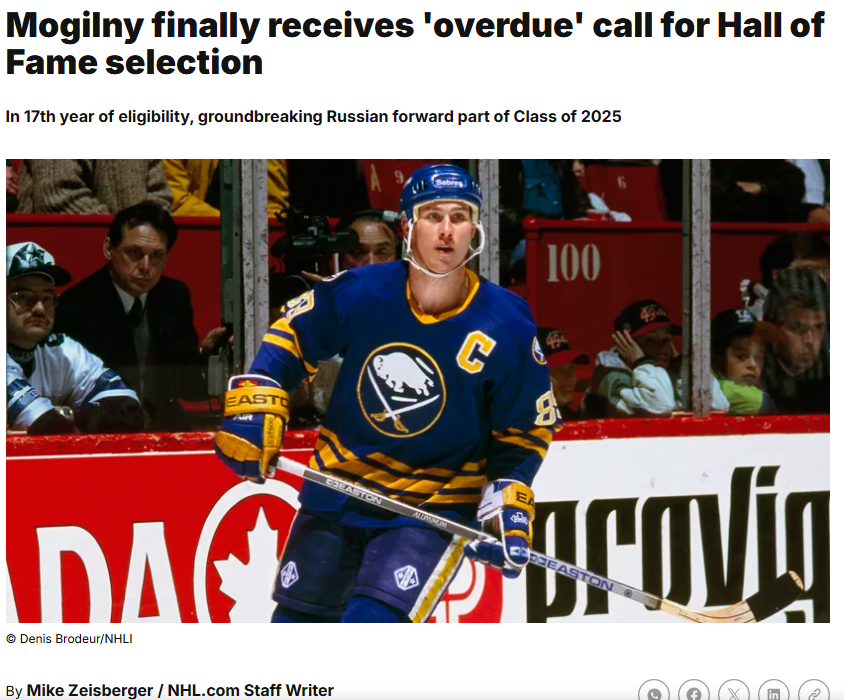
Meanwhile Schelling and Szabados’ HHOF cases are whispers in the wind at best. They maybe get a passing mention in an article about next potential HHOF inductees, but nothing like the passion or amplification the “Mogilny has been snubbed” type articles have been getting. You can tell the disparity in care for the history of each side of hockey when people get out the pitchforks for a winger that retired in 2006 and is not even in the top 100 of all-time NHL players, potentially not even in the top 150 of all-time NHL players, but two top-three goalies of all-time only get one article between the two of them every couple years.
I’m going to give some grace to women’s hockey media and fans alike here on this issue. I certainly don’t expect the majority of people to be spending their time doing deep dives into women’s hockey history, especially when it comes to the goaltending position. Most people you’ll talk to enjoy watching goalies but struggle to evaluate them in a game, let alone use statistics to figure out just how good they were. If you’ve made it this far, you know the surface level details of Schelling and Szabados’ career, but nothing that would be considered a deep dive.
I’m not going to write another 4000 words on why they deserve to be in the HHOF, but I think digging under the surface a bit will show just how great these two goalies are in part two. Stay tuned for that article’s drop if you want to know more about these extraordinary goalies.