The 2026-27 NCAA hockey season really had a way of sneaking up on us. It’s hard to believe that games have already been played and that the next six months will be full of exciting matchups.
Hockey East’s 2025-26 season was one to write home about. For the first time in half a decade, the conference sent two teams to the national tournament. The standings were competitive all year.
Last year’s entertaining hockey makes this season’s predictions that much harder. We still have two insanely talented teams at the top, but some others are looking to make more noise.
In this preview, I’ve split the conference into tiers. Within those tiers, the teams are slotted in the order I think they may finish in. (Please keep in mind that I went two for 10 in my predicted standings last year. So, take these predictions with a grain of salt.)
I truly believe there won’t be a 50-point difference from first to last like last season — or, at the very least, I hope not. You can also check out the 2026-27 Hockey East Preseason Coaches’ Poll.
Top Three
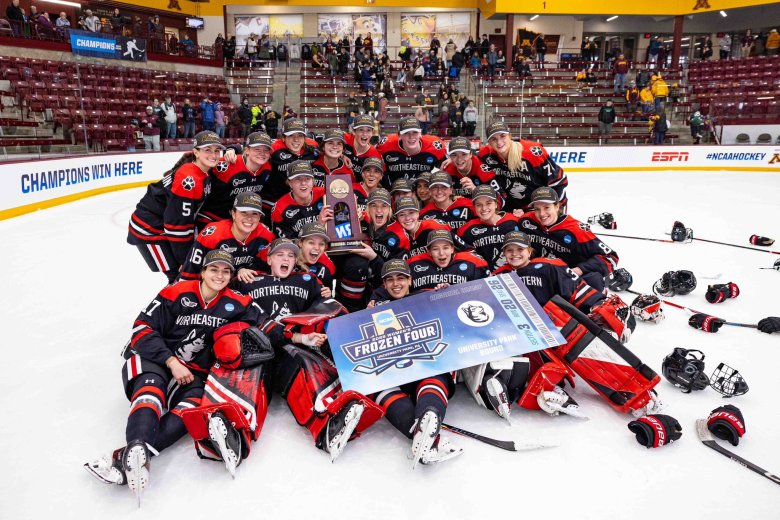
Northeastern
Last season: 29-9-1 overall record | 21-2-1 in conference, finishing 1st with 65 points | Lost HEA final. Won NCAA regional final against Minnesota. Eliminated by Ohio State in NCAA national semifinal.
This team really just finds ways to stick around, huh? After back-to-back seasons of falling just short of the Hockey East title they’d dominated for over half a decade, many thought this team was on the downslope. The closure of their home rink midseason was also expected to throw a wrench in some of their plans.
Instead, the Huskies were once again a force to be reckoned with. The team went 21-2-1 in the Hockey East regular season, finished as the No. 4 team in the country, and returned to the Frozen Four for the fourth time in the last seven years. Did they miss out on the HEA tournament title? Yes, but considering the whole picture, NU had a pretty good year.
The offseason saw some big-name departures from the program, and replacing them all certainly won’t be easy. But something about this roster makes me think that NU are the team to beat once again — as long as they don’t let one thing be the difference maker.
Difference maker: Lacking a home rink
No one has to explain to me the implications of Northeastern not having a home rink. I get it; I’ve seen it in action. But I just don’t think that practicing 40 minutes away from campus and playing far more games on the road than at “home” is going to affect the Huskies as much as one might assume.
No doubt, it’ll be difficult. But compare the numbers from before and after NU shut their famed Matthews Arena in December. The difference isn’t massive. Two key contributors to Northeastern’s run are returning: netminder Lisa Jönsson, who was outstanding throughout the postseason, and reigning Hockey East Player of the Year Stryker Zablocki.
The team’s also adding another Olympic medalist in Swiss standout Ivana Wey, who could very well be the best freshman in the conference. The Huskies are going to be hard to stop on the offensive end and difficult to get through on the defensive one.
Sure, they don’t have a rink. But they already know how to stick together without one. They’re going to have to continue that way, because they certainly have the talent to compete with the best of them.
UConn
Last season: 28-9-2 overall record | 17-6-1 in conference, finishing 2nd with 53 points | Won Hockey East Tournament. Won NCAA opening round against Princeton. Eliminated by Penn State in NCAA regional final.
UConn are another team that just seem to keep finding their way back to the top — and what do you know? They’re also Huskies.
These Huskies are no stranger to the premier spot in the conference. They’ve had the conference’s best goaltender the last two seasons and play one of the quickest, cleanest styles of hockey with some of the best face-off winners in Hockey East. UConn grinds their opponent down, and it’s paid off in a multitude of ways, from a tournament title back in March to a first-ever national tournament game win the following week.
But they’re not without their losses, the largest being Tia Chan, who graduated following her national Goaltender of the Year performance. They lost standout forwards Kyla Josifovic and Megan Woodworth to graduation, and Ashley Allard is spending her final season with the Golden Gophers. The departures of these major contributors have left a lot of space on the roster.
Difference maker: Filling some big shoes
Luckily, they are returning two of the conference’s most entertaining players in now-senior Julia Pellerin and rising junior Claire Murdoch. The pair combined for 79 points last season, with Pellerin having an edge in goals (14). Murdoch drove more of the play, with a team-high 27 assists. The two had a fantastic year and have had outstanding NCAA careers so far. They’ll need to be the biggest contributors offensively for another season.
The most critical question is who will follow Chan in net. The three goalies on the roster have combined for four career appearances, a total of 140 minutes. The lack of experience on paper looks concerning, and it is, to an extent.
Freshman netminder Amelia Wilkinson is my name to watch to replace Chan full time. The 19-year-old is coming off a fantastic season with the Durham West Jr. Lightning. In 26 games, she finished with a .930 save percentage (SV%) and brings international experience to the table as well. If she’s able to perform, that will alleviate some of UConn’s concerns before the season starts.
The Huskies will undoubtedly experience growing pains. But with the incoming talent to join their already-impressive forward group, including Canadian standout Caileigh Tiller, I believe UConn will be back near the top of the standings.
Vermont
Last season: 16-17-5 overall record | 9-11-4 in conference, finishing 6th with 32 points | Eliminated by Northeastern in semifinals.
This is by far my biggest swing. There’s a sizable gap between the top-two predicted teams and the rest of the field. But UVM have an edge that I think helps their case.
The Catamounts, for the most part, appeared to have had another disappointing season. The team finished 16-17-5 overall, with a win percentage under .500 in Hockey East action. However, the second half of the year stands out, especially when looking forward to 2026-27.
The majority of UVM’s wins were in the spring semester — 10 in total from Jan. 2 onward. Their offensive output bounced up, their defensive metrics also stabilized, and overall they played better hockey. It didn’t hurt that Stella Retrum went nuclear in January and that Zoé Cliche was one of the best netminders in the conference. The Catamounts had the pieces to make things work, which brings me to their difference maker.
Difference maker: Keeping together what worked last year
Consistency from one year to the next is key. UVM are one of the teams seeing the most continuity into this season. All five of their top scorers are returning, including Retrum. The Cats saw just five players depart their roster this summer — far fewer than some of the other programs.
This leads me to believe that UVM are in a prime position to carry what worked last season into another year. Despite the six-month offseason, the systems aren’t being overhauled completely.
What it will come down to is whether Retrum and her teammates continue to produce the way they did last season. The Catamounts also now have stronger depth in the crease, a position they’ve struggled in for a few years.
Cliche is the strongest of the returning trio, coming off a .929 SV% in 15 starts. But the team brought in former Mercyhurst backup Tara Bach, who had a .955 SV% across seven appearances last year, to challenge for the spot. It’s a good problem to have, and it leads me to believe Vermont is going to surprise some people by the time we hit March.
Middle of the pack
This section is where I struggled the most. I think these teams are going to be quite close with one another. It’s really a game of inches in this tier.
Boston College
Last season: 16-18-1 overall record | 14-9-1 in conference, finishing 3rd with 42 points | Eliminated by UVM in quarterfinals.
I really just don’t know what to make of Boston College.
They have two of the most promising up-and-comers in the conference. Co-Rookie of the Year Ava Thomas is set to lead their offense for another season. Joining her is standout defender Maddie Murphy, who quietly had one of the better seasons in HEA last year. Then, of course, there’s senior Sammy Taber, who has long cemented her status as one of the most consistent point producers. BC had a strong power play and a decent penalty kill and were a solid performer for most of the year.
Yet the Eagles still can’t get over the hump. They finished in the top-five again in the conference standings, but they fell short in the tournament again, failing to make even the semifinals.
Now, without their former starting netminder Grace Campbell and with an entirely new set of assistant coaches, I wonder how well things will hold up in Chestnut Hill. We saw them regress last season, and with the added changes roster-wide, I worry more of that regression is possible.
Difference maker: Weathering the changes
A head coach is the leader of the program. But when assistants change, it means certain subsects of the team’s game also change. All three of BC’s assistant positions changed this offseason, leading me to believe we’ll see changes in how they handle offense, defense, goaltending and special teams. No big deal, right?
Add those potential changes on top of playing in front of a new goaltender with a different style of play, and I wonder what the growing pains will be. Offensively, they can let the proven talent continue to generate, but how will the changes affect the intricacies of the team overall?
If the turnover doesn’t affect them much, then BC can be strong and a contender. If the loss of Campbell and the changes behind the bench truly disrupt the beginning of their season, we might see another lackluster year. We’ll have a better sense of what that entails in the next few weeks. But for now, they really are the team with the biggest question marks.
Holy Cross
Last season: 19-13-3 overall record | 10-11-3 in conference, finishing 4th with 37 points | Eliminated by UConn in semifinals.
The 2025-26 season was a history-making one for the Crusaders. The team from Worcester put up multiple record-breaking performances, including in wins. They also made their first-ever semifinal appearance in the conference tournament and saw a program-best finish at fourth in the regular season standings. HC had a very solid year, and they’re looking to continue that moving forward.
Luckily, they’re retaining some of their best offensive pieces. Three of their top-five scorers are returning for the 2026-27 slate, including the impressive rookie duo of Violet Carroll and Naemi Herzig. The majority of their player power from last season is returning for another year, which leaves me optimistic about how Holy Cross will perform.
But goaltenders Abby Hornung and Brooke Loranger both graduated, meaning for the first time since 2023-24, a new goaltender will start a game for the Crusaders. Both netminders finished with a SV% above .930 in 2025-26, and that sort of reliability won’t be easy to come by.
Difference maker: Knowing what it takes — and doing it
For HC, it’s a matter of taking last year’s experiences and implementing them in a new season. I said in the spring that the foundation the program has been building is starting to come to fruition, and I believe that will continue.
Do I think they’ll be at the top of the table again? No, not particularly. But I do believe in the team’s ability to perform at a higher level than we’ve seen in years past. The days of Holy Cross being an easy out are long gone. I believe they’re going to take advantage of their opportunities more often than not. Their hardest tests will be against the higher-powered offenses within the conference, opening with a game against BC on Oct. 9.
New Hampshire
Last season: 16-16-3 overall record | 10-12-2 in conference, finishing 5th with 33 points | Eliminated by Holy Cross in quarterfinals.
The Wildcats have had a rough go of it the last two seasons. After falling drastically between 2023-24 and 2024-25, last year New Hampshire were in the middle of the pack.
Offensively, they were the third-best team in the conference, finishing with 99 goals. Defensively, they were also good, as the fourth-best team in the conference in goals against. Nina Rossi was one of the most productive players in Hockey East, while Sedona Blair and Noemi Martinez both performed well in the crease.
The Wildcats have the pieces to be a competitive team in the conference, and yet they never found a way to do it last year. Most critical for them moving into this season will be finding, and keeping, their rhythm.
Difference maker: Maintaining consistency
When UNH were good last year, they were good. But they were never able to stay good for long stretches. They saw a lot of split weekends, split series and split points as a result. Their longest win streak was three games.
This season, I’d like to see that number stretch. Three of their top-five scorers are returning. Both netminders who saw considerable ice time remain on their roster. All told, the largest components of the team are intact for this upcoming year.
With the steps taken back by conference opponents, there’s a lot for UNH to take advantage of. If they finally are able to do so like in 2023-24, they can make that jump higher in the standings. They just need to put it together for longer than a game or two.
Maine
Last season: 13-19-4 overall record | 8-12-4 in conference, finishing 7th with 30 points | Eliminated by UConn in quarterfinals.
Similarly to their border rival, the Black Bears struggled to stay consistent last year. A rough start to the season set the tone for Maine, and they finished near the bottom of the standings for yet another year. They did show signs of promise, particularly in their younger athletes.
A coaching change in the offseason surprised multiple people, leaving Maine in a fairly different position than back in March. With the young core, and a coach emphasizing a more-aggressive form of offensive attack, I think Maine are set to surprise fans when they take the ice this year. The offense was the biggest question mark, especially their shooting choices. Will a new system and way of play change that?
Difference maker: Improving the shooting accuracy
Of all Hockey East teams, Maine finished fifth in total shots, with 1,096. When it came to shooting percentage, however, the team was second-last, at just 6.5%. They scored 71 goals across the year and more often than not harmed their chances in closer games.
This issue isn’t new for Maine. For the last half-decade, the team has been a high shooting team. But in the last two years, they haven’t been a high productivity team. Their shots often weren’t taken with intention, or they were taken from areas that allowed for easy saves. Despite taking a lot of shots, they weren’t making particularly high-danger chances happen.
This aspect needs to be a big change coming into this season. If they’re able to pick their chances better, I believe the overall offensive output will increase. Doing so can help on the power play, which has been hovering around 12% for two straight years. Getting that productivity back up and altering how they generate their offense might make Maine successful in the long run.
Climbing from the depths
Boston University
Last season: 11-21-3 overall record | 8-14-2 in conference, finishing 8th with 28 points | Eliminated by Northeastern in quarterfinals.
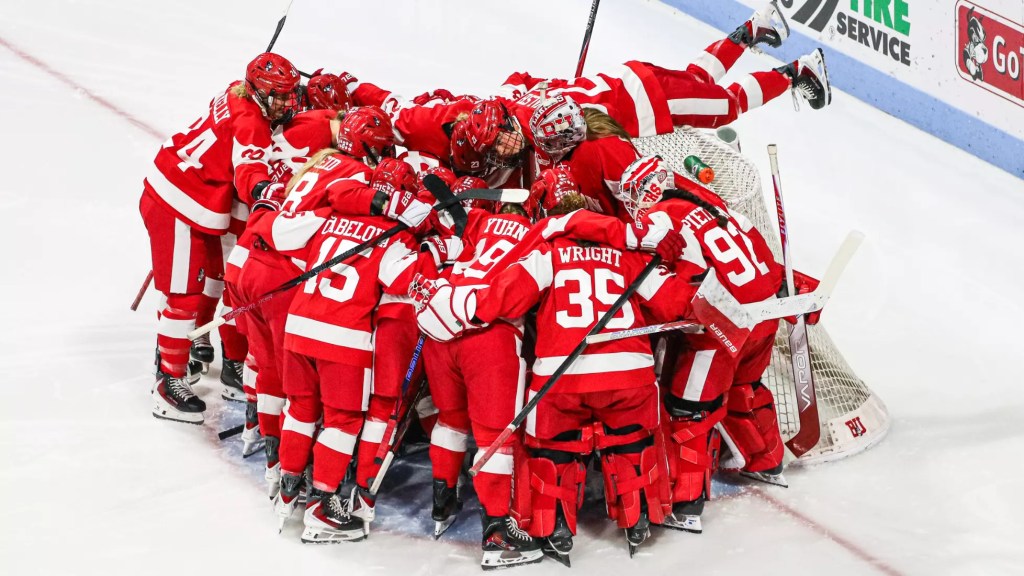
It’s no secret 2025-26 was rough for BU. The Terriers were defending champions heading into the season. Then, they went 2-10 in the first six weeks, dropped to eighth in the conference standings, and just couldn’t find a way to get out of their funk.
This year, the Terriers are looking to make a splash. With another summer of turnover, this team is almost unrecognizable compared to the one that took the conference title 18 months ago. It remains to be seen whether that turnover affects their success as much as it did this time last year.
I think that it might. But, at the same time, the challenges BU saw last year in different ways will ideally be less impactful this season.
Difference maker: Maintaining lineup consistency — and generating some offense
Last season, the changes to the back end were difficult for BU. What didn’t help in that department was the sheer amount of player power the team lost throughout the course of the season.
Only eight players on the 2025-26 roster played in all 35 games thanks to injury and national team obligations. The lineup was constantly shifting, making it difficult to settle into a rhythm. A more stable rotation this season will hopefully level them out after last year’s lackluster performance.
However, 10 players graduated or transferred. Six of BU’s top-10 scorers graduated in the spring. The four who are returning scored just 37 points combined. The biggest returning contributor is Kaileigh Quigg, who registered 12 points in 34 appearances. The Terriers need to find new ways to score, and quickly. Freshmen Loelie Lachapelle and Quinn Taylor could provide some sort of boost, but they’ll need to do so right away.
BU’s future lies in their power play. To compete in this league, and in the NCAA as a whole, the Terriers cannot have another PP success rate under 10%. BU went a measly 7.2% on the power play in 2025-26, the second-worst advantage in National Collegiate behind just Saint Michael’s. The Terriers need to improve the player advantage if they want to return to the top of the league.
Providence
Last season: 11-22-2 overall record | 8-14-2 in conference, finishing 9th with 25 points | Eliminated by BU in opening round.
This past season was one to forget for Providence. The Friars started off poorly — they were outscored 20-3 in their first four games — and finished even worse. They went just 4-12-0 in the second semester, including a stretch of seven straight losses in January. The team saw a regression in offense coincide with a defensive overhaul.
This season, they’re looking to change that. However, even with a more-experienced group of defenders, Providence will now see the flipside: Their offense is set to undergo a significant change thanks to graduation and the transfer portal — not to mention a change in net. Hope Walinski’s NCAA career coming to a close leaves the starting position open for the first time since 2022.
Now add the surprise departure of Matt Kelly. The longtime head coach of the Friars departed the program mere days before athletes reported to campus for the fall semester. The cards are seemingly stacked against Providence, with a multitude of questions left to answer.
Difference maker: Finding offense
That brings me to the keys to success for Providence. In 2024-25, the Friars allowed 2.1 goals per game. In 2025-26, that number jumped to 3.2. Not a single member of last year’s team had a positive goal differential by the end of the year. Their offensive numbers dropped to a 1.8-goals-per-game clip from a 2.9 average. A difference in a goal per game in each direction was, frankly, catastrophic.
With a more-experienced group of players on the back end, I believe the defensive metrics might stabilize out. If they’re able to do so, at the very least Providence will close the gaps they had with some opponents.
However, the offensive side is a far bigger issue now, and it’s across the team. No player in Providence’s lineup last year had more than 25 points, and of the seven players to hit double digits, only three are returning.
If the squad can find other, new ways to score, things might look up. However, it’s tough to predict exactly where the offense is going to come from, if at all.
Merrimack
Last season: 7-24-4 overall record | 4-18-2 in conference, finishing 10th with 15 points | Eliminated by Maine in opening round.
Merrimack have had a tough last few years. The Warriors had seemed to be on an upward trajectory since the turn of the decade. They’ve made strides in the Hockey East postseason tournament. They’ve seen individual success for multiple athletes. And they were competing against their opponents on any given night in new and exciting ways.
Last year, things took a sharp, cataclysmic turn. Between Oct. 19, 2025, and Jan. 16, 2026, MC won just one game: a non-conference matchup against Assumption. In their other 16 matchups, the team went 0-14-2, failing to secure a conference win until January. By the end of the season, Merrimack had 15 conference points out of a possible 72. They finished with a 7-24-4 overall record, then proceeded to part ways with the entirety of their coaching staff.
This season, with a new head coach and a fresh slate of games, Merrimack are hoping to bounce back in a big way. It’ll all come down to one of the biggest clichés in the book: how they come together as an actual team.
Difference maker: Continuing as a cohesive unit
Much like multiple other programs, Merrimack saw an absurd number of roster changes before last season. What’s different is that the Warriors didn’t lose only a couple of names. They changed almost the entire team between spring and fall 2025 — 18 players from one year to the next.
This season, MC saw some departures with the coaching change. But the turnover isn’t to the same extent, leading me to hope that the Warriors will have a better time out of the gate thanks to the familiarity they’ve already built.
It also doesn’t hurt that Courtney Kennedy is a great hire as head coach, with a proven record on the international stage as well as within the conference. With new systems to go along with the foundation built last year, MC could be, at least, more competitive than they were a season ago.
Non-conference matchups begin for Hockey East on Sept. 24, when Merrimack hosts Lindenwood at 5 p.m. ET. In-conference action will begin Oct. 9, when Northeastern plays at Providence at 2 p.m. ET.
For NCAA coverage on all five conferences, be sure to check out more from The Ice Garden.