For the first time since 2019, the IIHF returned to an equal group format and playoff for the 2026 Women’s World Championships. For the previous six years, the best teams in the world played in Group A, and the rest would play in Group B. All five teams from Group A made the quarter-finals, while only three teams from Group B advanced. The Group B teams were then forced to play the top teams from Group A, and often wouldn’t make it past the quarter-finals.
Now, in 2026, the top four teams from each Group advance to the quarter-finals, and countries are evenly divided between the two groups, without stacking any one particular side.
The results? More lopsided games, more upsets, more negative comments, and—perhaps surprisingly to all of the negative commenters—more growth.
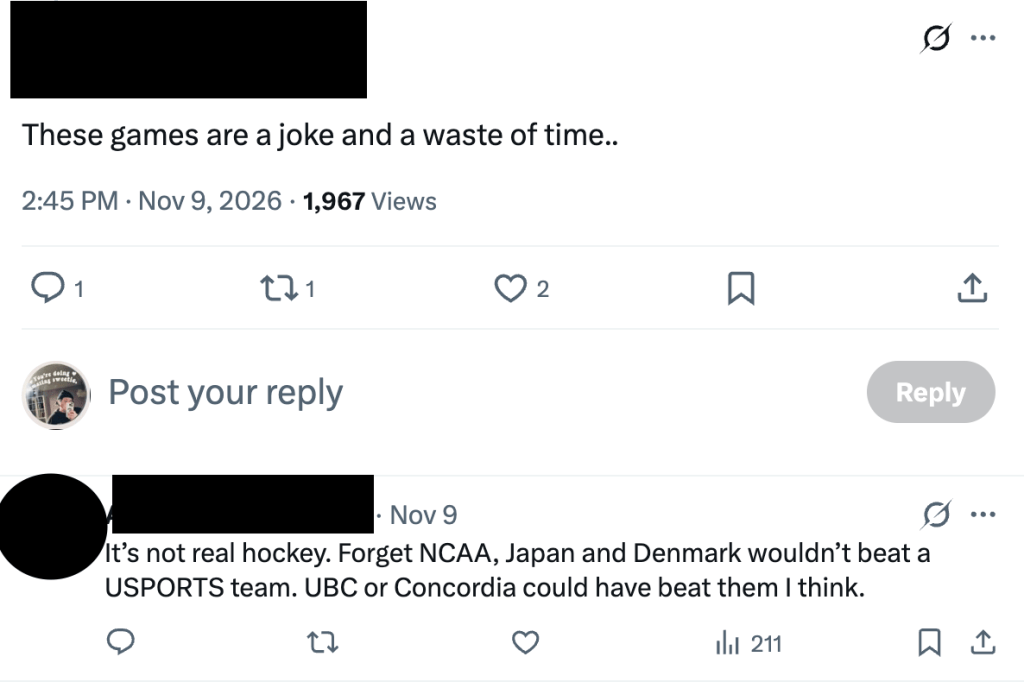
I saw a comment on X after a 10-0 Canadian win over Denmark and an 11-1 American win over Austria that said, “These games are a joke and a waste of time,” followed by another commenter who said, “It’s not real hockey.”
Later in the tournament, when Denmark played the U.S. in the quarter-final and lost 14-0 after facing 85 shots against, I saw this comment: “The worst team playing against the best team in the NHL is far, far more competitive than some of the lopsided games you see in international play. #SeaKraken won’t get outshot 85-8 tomorrow, this is my promise to you.”

More and more of these comments flooded in as news of these blowout games reached people who rarely pay attention to women’s sports, or hadn’t been following the tournament.
Some may say that’s a good reason to let sleeping dogs lie. If they never watch women’s sports, why care what they have to say? Well, I can’t let things go.
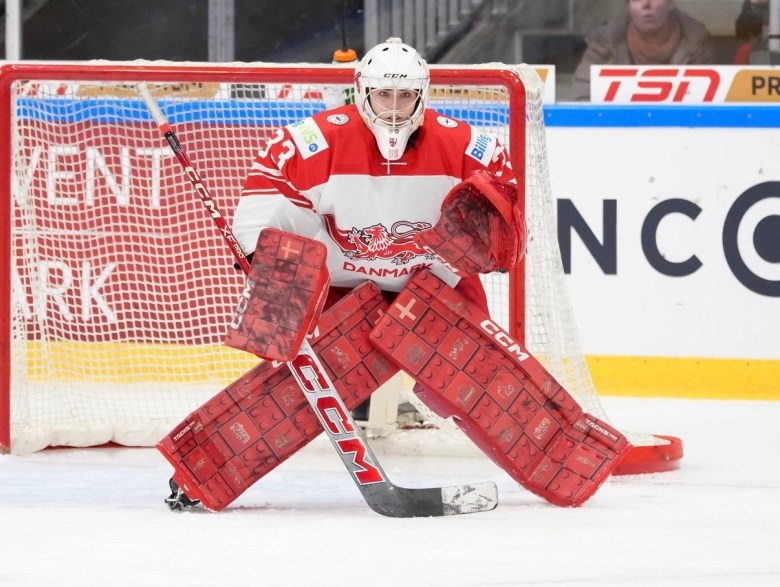
In between all of these lopsided scores is growth that goes unseen without watching the game or paying attention to what is going on. Did Denmark get out scored 40-4 in the tournament? Absolutely. But hidden in those numbers is the goaltending duo of Emma-Sofie Nordstrom and Caroline Bjergstad, who collectively made 71 saves against a team that won gold at the Olympics. Inside those numbers are Nikita Bergmann’s first two goals at a senior national-level tournament at just 18 years of age. This is a Danish team that, under the old format, never would have made it to the quarter-finals. Finishing eighth in the tournament is the highest they’ve placed in my lifetime.
Every minute of play for each of these players against the top teams in the world is a moment where they pushed themselves, or tried something new, or made a name for themselves in front of an entire audience. Are they loving every second of it? Absolutely not. No player wants to go out there and lose 14-0. Still, they go, and they work hard, and they learn from it.
For the Austrian team, every single game at this tournament was a first for them, and not something that was ever guaranteed. Austria won the Division 1A tournament, promoting themselves to the senior national tournament for the first time in the program’s history. But, they were willing to put all of that on the line to fight for better treatment from their federation. Led by former PWHL player Anna Meixner, the team was willing to boycott this opportunity to force the federation to make changes. And it worked. The Austrian team headed to this tournament knowing that, just by making the tournament, they’d already enacted huge change for Austrian hockey players.
Mixed in with the 10-0 loss to Canada and the 11-1 loss to the Americans was the first goal ever scored by an Austrian at this level. In between it all was Selma Luggin, who made 156 saves in four games and was recognized as the top goaltender of the tournament by the media. Despite not making the quarter-finals, Austria battled back to beat Japan and keep themselves in the tournament for another year.
You never know who will make a splash at these championships and get a nod at a chance to play professionally. Gabriella Durante, the goaltender who played four of Italy’s five games at the Olympics, may never have had a shot at a PWHL contract before the Olympics. Yet, her 108 saves against some of the best players in the world not only made her a fan favourite, but led to the Seattle Torrent drafting her.
Do both of these teams have a long way to go to get to the level of some of the other European powers? Sure. But that can’t happen if they don’t get the chance to play in these games and grow from them.
A perfect example of what happens when you give teams the opportunity in this new format is how the tournament went for Sweden and Germany. Since the tournament switched in 2019 to the new format, Sweden and Germany have always been in Group B. Any progress they made through the group stage halted when they went up against the top teams in Group A, without having faced that level of competition all tournament. In that time, Germany never finished higher than seventh and Sweden never finished higher than sixth.
With the new format, both nations finished second in their groups, managing to beat everyone other than Canada or the U.S. Germany didn’t make it out of the quarter-final stage, but Sweden did. They shutout the Swiss and moved onto the semi-finals where they held Canada to just three goals, earning a chance to play for bronze. And for the first time since 2007, the Swedes were victorious, taking home a bronze medal.
A lot of this success comes from the immense amount of work that German and Swedish players have put in behind the scenes to grow these programs. However, without the opportunity to show that they can compete at this level, and without the new format, they don’t get that payoff in the form of a higher ranking.
Also, for those who want to compare these lopsided scores to NHL or even PWHL scores: you can’t compare a salary-cap era team to the funding that a Danish women’s team gets. If the Danish women’s team had the same resources and levels of talent development as the US, we wouldn’t be seeing these big differences in talent.
And while we’re on the topic, here are some scores from the last Men’s World Championships: 7-1 for Finland over Latvia, 8-1 for Latvia over Hungary, 9-0 for Switzerland over Austria, and 9-0 for Switzerland over Hungary. When there are different federations with different levels of funding and player development, there will always be lopsided games. This is not a concept that is unique to women’s hockey other than that the funding disparities are often larger due to organizations unwilling to fund women’s sports to the same level as men’s.
Yes, it’s painful to watch these blowout games, and we all feel bad watching a team get scored on so much. But we can’t ever get to the point where that changes if we don’t offer up these opportunities in the first place.