Despite starting her hockey career in a country with less than 400 registered female players, Danish defender Josefine Jakobsen set off with determination to become the best in the world.
The two-time Danish Player of the Year has never been denied a point in any international tournament since she joined her senior national team at 16. That year, sizzling off a 79 point season in the domestic Danish league, Jakobsen blazed into the SDHL to win back-to-back-to-back “Most Goals by a Junior.” In her first NCAA season, she ranked ninth in the nation and third in the WCHA for points by a rookie—and these are only scratching the surface of her career accomplishments.
Looking at numbers alone, Jakobsen not only had an unmistakable natural gift for the sport and an ability to earn points at an early age, but also dedicated herself to constant improvement. She’s proven herself to be a reliable point producer on any team and always makes her presence known on the ice from youth to the professional ranks.
Quotes have been edited for clarity.
The story idea was simple: showcase a national team captain with a lengthy international, professional, and NCAA career to highlight the unique path of elite international players. I happened to select Denmark’s roster first, and when I saw Jakobsen had 15 years of international tournaments, a 13-year professional career, four years at University of North Dakota and an Olympic appearance, the search ended instantly.
However, when I went to Instagram to invite her to an interview, her most recent post at the time took me by surprise.
Retired?! What will the impact be for the Danish national team without their anchor? What’s it like as an athlete to leave behind such a legacy for their country? What does someone like Jakobsen do after they announce retirement? So many questions suddenly flooded my mind as this simple player profile quickly morphed into a career reflection.
So, how did a player from a country with few options for hockey development become one of the best European players in the game?
“I just think for me: if you want to be one of the best, you have to practice and play with the best. I knew early on that I wanted to go to Sweden as the first step and then to college.” —Josefine Jakobsen
Jakobsen’s story of getting into hockey starts familiarly. She was the younger sibling of an older brother already playing hockey.
“I got on skates before I could barely walk, so it was pretty early on and I liked it right away,” Jakobsen says. “My brother was playing and since he was at the rink, I had to follow and that’s the way I went!” Jakobsen also participated in soccer, one of Denmark’s most popular sports with over 300,000 participants, but decided to specialize in hockey at 14 when sports became more competitive.

“When I chose hockey before soccer I had different goals and I accomplished all of them early on,” Jakobsen says. She details the plan she created, as a kid, for her hockey career: “I wanted to play in high school, go to Sweden, then go to college.” After committing to hockey, she went on to dominate in Denmark’s domestic league. She earned 136 points in 24 games across three seasons on mostly boys’ teams. She transitioned to Sweden’s Riksserien (now known as the SDHL) at 16 to further her development, and while many players struggle and shrink in new leagues, Jakobsen only got better and continued to shine.
In fact, she likely achieved one of the strongest junior careers in the league’s history, which included two championships and setting an eight-year league record.
Jakobsen joined former Riksserien powerhouse Segeltorps IF, which was the perfect team to support such an ambitious player with dreams to be the best. When she arrived in 2008, Segeltorps housed some of Europe’s leading and experienced talent at the time. Erika Holst had captained Team Sweden for six years, leading them to their magical Olympic silver medal. She also had four years of NCAA experience at Minnesota-Duluth. Line Bialik Øien recently earned Norway’s Player of the Year award (and would win it again in 2009). Their blue line was secured by Gunilla Anderson, who had the most goals by a defender in the 2006 Olympics and was named Swedish Player of Year one year later. Between the pipes, both of their goaltenders ended the season with the highest save percentages in the entire league. Segeltorps was stacked.
Needless to say, Jakobsen was in the perfect position to learn from the best and craft herself into an NCAA-caliber player.

Reflecting on the beginning of her career, Jakobsen says, “when I came to Sweden when I was 16, I played with [Erika] Holst, Gunilla Andersson – like legends in Swedish hockey, even a couple Norwegians, you know, big players!” She continues, “it’s easy to just move on, move on… but now, when I look back, that meant a lot to me to train and be with these women. They taught me how to be, how to play, how to behave, so that’s what I take with me.”
But Jakobsen didn’t want to sit back and watch the best—she wanted to be the best, and by her second season, she was the fourth-leading goal scorer in the leauge. The only player to outscore Jakobsen and five other Segeltorps players was Linköping’s Austrian superstar Dennis Altmann. Unsurprisingly, Segeltorps swept the league that season which included a dominant 6-0 blowout against Brynäs IF to win the 2009 Riksserien championship–checking another goal off Jakobsen’s list.
Yet, all of that was only a warm-up for her true breakout season in 2010.
In a single season, she accumulated a third Riksserien championship, Best Plus/Minus (+48), Most Assists by a Junior (25), and Most Points by a Junior/Most Points (58). Where did the other 33 points come from, you ask? That would be that eight-season Riksserien record we brought up earlier.
Still, even with two Riksserien championships and a record-setting season, Jakobsen was hungry for more.
Next up on her list: NCAA Division I hockey.
#17mai & en dansk med ett av världens bästa hockeysinnen! Tillykke med fødselsdagen @josejakobsen!!! #GreatDane#UNDpic.twitter.com/lA5cyWGNYD
— Mats Bekkevold (@Smats1984) May 17, 2014
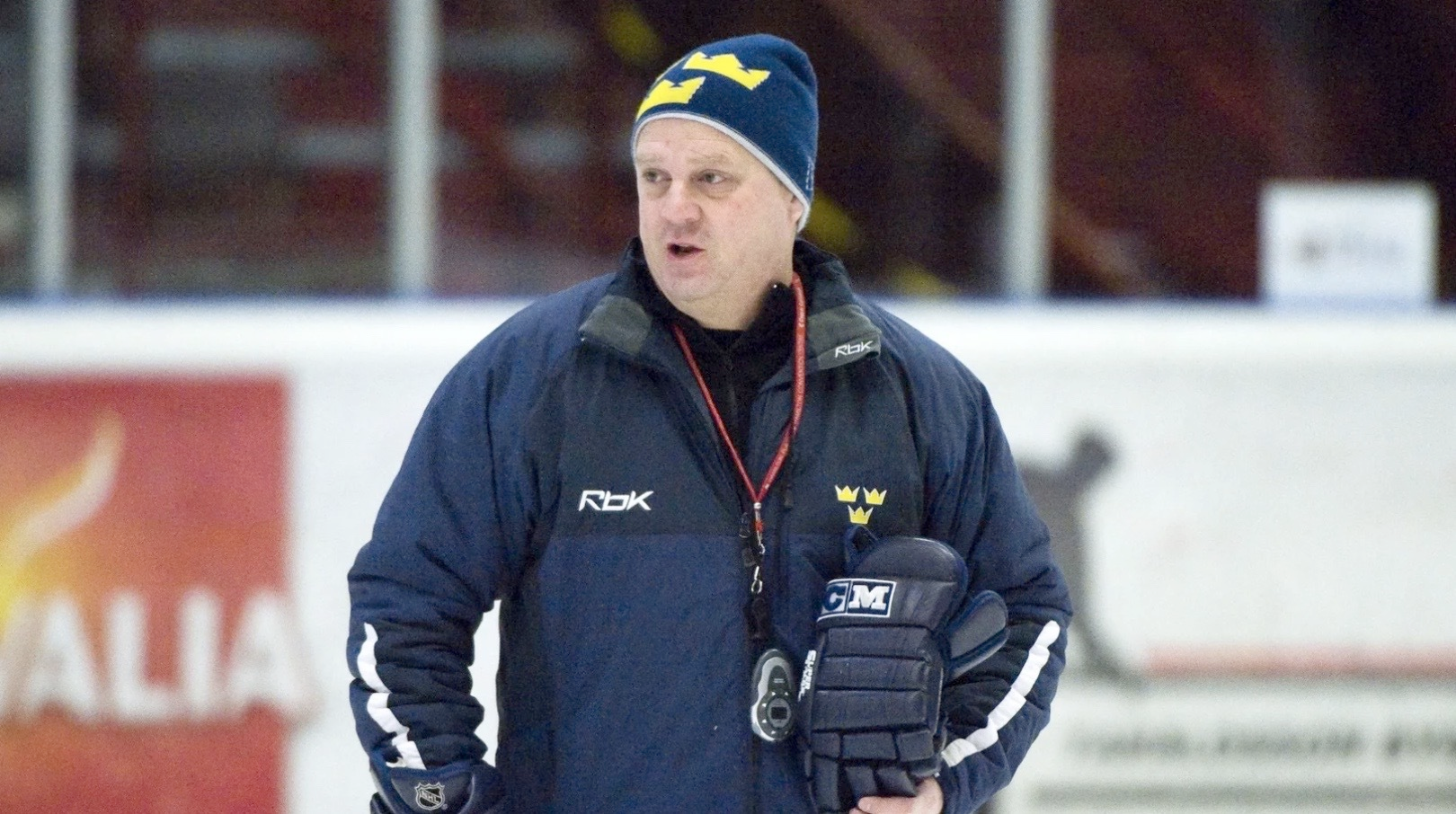
“I could see directly that this 14-year-old girl has the chance to be an absolute world class player. Her hands, vision, and understanding of the game was on another level,” says Peter Elander, former head coach of the University of North Dakota women’s hockey team.
The Sweden native, who previously led the Swedish women’s national program for nine years, watched and supported Jakobsen’s development since she was a youth player. So when Elander accepted the head coaching role at UND one year before Jakobsen graduated from high school, there was no doubt who his next phone call would be.
While Jakobsen wasn’t smashing NCAA records like she was in Europe, she still remained a noticeable and consistent point producer on her team and in the Western Collegiate Hockey Association (WCHA). Earning 30 to 40 points per season, she proved that she could skate with the best on both sides of the Atlantic. It’s worth noting the other hockey icons that populated the WCHA during her career with the Fighting Hawks. Jakobsen competed against players such as Natalie Spooner, Ann-Renée Desbiens, and Hannah Brandt, who all still play professionally today.
For her fifth year, Jakobsen decided to focus on her studies but practiced and worked with the team as a volunteer student coach. She discusses a bit about making this choice and how this year supported her development:
“I would rather take a fifth year than stress for four years. Just seeing the opportunity to do the student assistant part because I’m interested in the leadership and coaching side too. Obviously you need to play games, but at the same time with the facilities and the team team they had—I don’t think you find a better training environment as I did in North Dakota. What I did was more with the coaches behind the scenes, seeing what they were doing and how they did it and just learning and that was great experience.”
To spend a season getting a coaching masterclass from Peter Elander, what a treat!
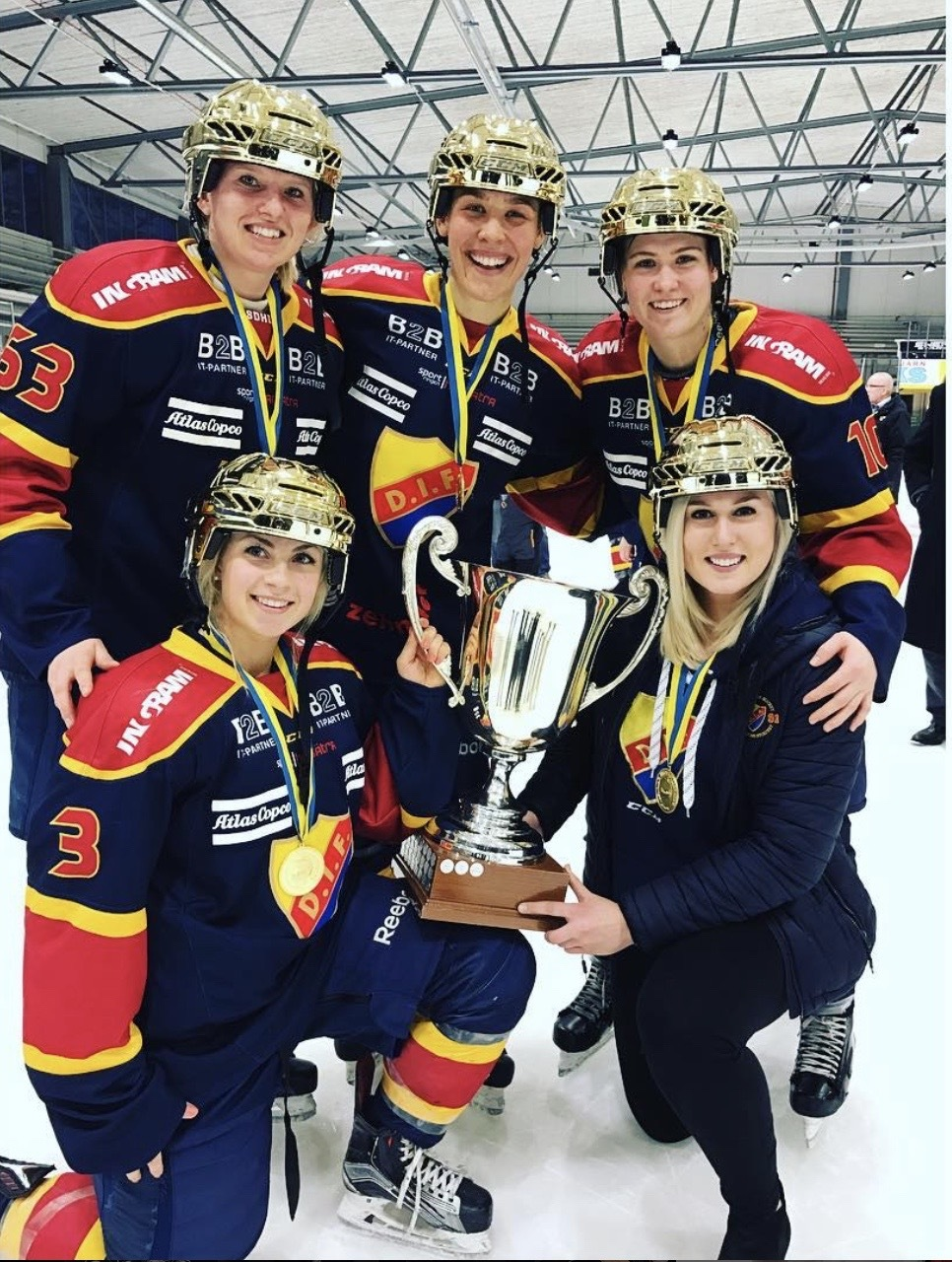
After graduating from UND with a Kinesiology degree, Jakobsen returned to the Riksserien where she reconvened with her teammate Andrea Dalen on a new team, Djurgårdens IF. Together and armed with four years of NCAA experience plus a year of mentorship from Elandar, Jakobsen helped secure Djurgårdens’s first and only standing SDHL championship.
As a player, I’m inspired by the development path Jakobsen achieved and her ability to maximize her potential in each new phase. To play effectively in the NCAA, Jakobsen needed to adapt to a smaller rink, closer age gaps between players, and players that had trained in luxurious Division I facilities for the last three to four years and, of course, competed in the league’s toughest conference. To Jakobsen’s benefit, she also had access to these facilities, and with Elander at the helm, received guidance from a world-class coach that believed in her potential since she was young.
Elander echos these sentiments in additional comments about Jakobsen:
“Josefine’s ability to develop and add more tools to her toolbox have improved as a player every year. She is very intelligent and super loyal to her team unselfish at the same time showcase the ability to take a team on her shoulder. Her strength and conditioning has improved every year and it shows on the ice and also her curiosity to study the game all the time has helped her development.”
It can be difficult for athletes to remain motivated through the extremes, whether that’s low or high. For players that experience their first big win or breakthrough at a young age, they can fall victim to complacency and slowly lose their competitive edge. This can be devastating for a career should it happen too early, but Jakobsen remained attentive, despite leading her leagues, setting records and winning two championships before she turned 20. Even in the highest level of hockey players, only a few can be so effective and reliable no matter what game or league they are playing in—and Jakobsen is one of them.

To fully grasp just how impactful her presence is on the ice, look no further than her outstanding international career with Team Denmark—an impact that will undoubtedly be missed.
Read more in Part Two.