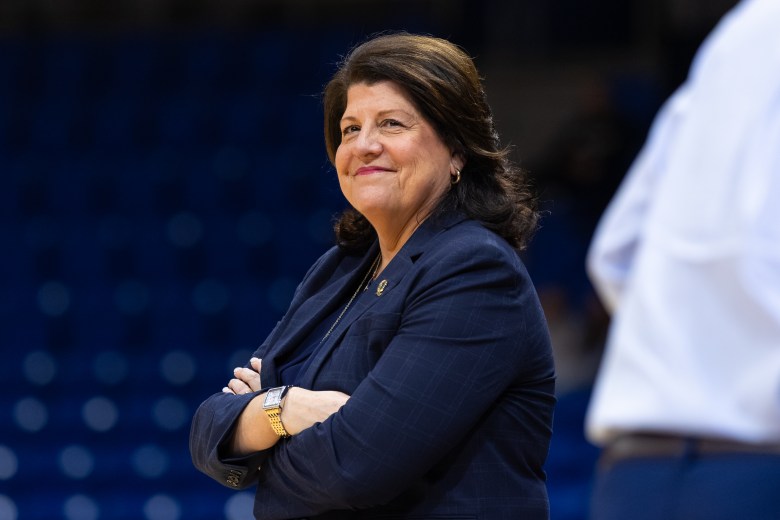
THE QUIET MORNINGS feel the most different now for former Quinnipiac head coach Tricia Fabbri.
Since she retired in March, Fabbri can wake up slowly, savor a second cup of coffee and take a long walk outside. Like an animal shedding its winter coat in the spring, the perpetual pressure of being a college basketball coach and needing to maximize each day has fallen off her shoulders.
But whenever Fabbri wants a taste of her old life, all she has to do is head to her dining room, which has become a holding pen of sorts for everything that used to be in her office. Plaques, photographs, pieces of basketball courts, game balls, branded plastic sunglasses, even some Tricia Fabbri bobbleheads that Quinnipiac gave out before a game in 2017 — they’re all there. It’s so packed with memorabilia, in fact, that Fabbri couldn’t immediately locate a glittery gold stepstool from Quinnipiac’s 2017 Sweet 16 run as she spoke with The IX Basketball.
“My dining room looks like a Quinnipiac University women’s basketball room for a museum,” Fabbri said.
That description is fitting because that room now holds not just mementos from her 31 years leading the Bobcats, but 31 years of history. Until her retirement, Fabbri was the only full-time women’s basketball head coach Quinnipiac had ever had and led the program to a record of 571-363. Her 556 Division I wins, all with the Bobcats, rank in the top 50 all-time.
FABBRI’S FINAL POSTSEASON RUN came in the WBIT. It wasn’t the tournament she’d hoped to be in for the ultimate storybook ending, but she ended up getting one anyway.
Fabbri announced her retirement on March 16, a week after Quinnipiac narrowly lost to Fairfield in the MAAC Tournament final. Three days after the announcement, the Bobcats upset George Mason in the first round of the WBIT despite playing without injured point guard Paige Girardi. Then on March 22, they nearly stunned Stanford to keep the ride going.
For Fabbri, multiple factors made 2026 feel like the right time to retire. For starters, the growing number of transfers in women’s basketball and greater emphasis on the financial side for players both felt at odds with Fabbri’s desire to recruit four-year players and build lifelong relationships with them.
“The most beautiful, rewarding thing for me, besides having the success and winning and achieving with different young ladies, was watching them become who they can in those four years,” Fabbri said. “… It really made me think, ‘This is not what I built a career on.’”
That shift in the landscape planted the seed, but Fabbri wasn’t sure entering the 2025-26 season when she’d call it quits. She’d just hired her daughter Carly as an assistant coach, and she was excited about her team.
Christmas, though, has always been “a little bit of a weak spot” for Fabbri. She loves to host and go all-out for it, but there’s seemingly never enough time to spend with family around the basketball schedule. This year, she said to herself, “I can’t keep racing through these years and holidays.”
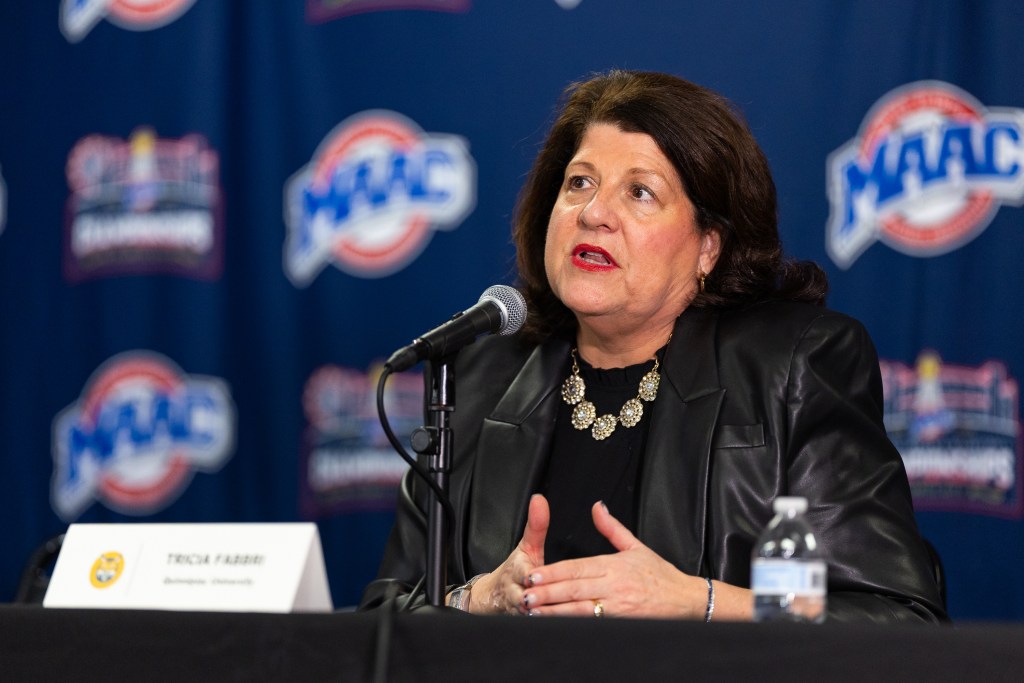
As the Bobcats got deeper into conference play, Fabbri felt in her gut that this year’s team was the right one to end on, no matter what happened in the postseason. She knew, too, that she needed to tell her team before the season was over, or the secret would eat her up inside. Then she held tight to her final week with her players, cherishing the long bus ride to Northern Virginia and the cross-country charter flight that took them over the Rocky Mountains and Yosemite National Park.
The WBIT first round brought the program’s first-ever matchup with George Mason — a first for Fabbri in her 933rd career game. But she’d known George Mason head coach Vanessa Blair-Lewis for nearly 30 years, since Blair-Lewis coached at Mount St. Mary’s and they were rivals in the Northeast Conference (NEC). About five minutes before tip-off, Blair-Lewis greeted Fabbri and handed her a rectangular blue gift bag.
“She’s seen a lot of wins, a lot of losses, but she’s poured into a lot of lives,” Blair-Lewis told reporters postgame. “And so I just wanted to honor her and just thank her for what she’s done for the game.”
The small but spirited Quinnipiac band made the trip, even bringing a sign that read, “BIG TRISH ENERGY.” The cheerleaders, Fabbri’s family, a former assistant coach, alumni, former men’s basketball players and players’ parents all turned out in force, too. And the Bobcats led by as many as 15, then held off a late George Mason run to secure the program’s first-ever WBIT win.
“The whole team kind of galvanized and was like, ‘Let’s win this game for Coach,’” Carly told The IX Basketball. (Fabbri, the kind of coach who’d asked her players not to celebrate her 500th career win in 2023, wanted them to play for Girardi. But there was room for both.)
Then the Bobcats flew to Stanford and battled through 11 lead changes and four ties. They whittled a 10-point deficit in the fourth quarter down to 4 but couldn’t surge ahead again. Fabbri’s final season ended with a 27-7 record overall and 19-1 in conference play for her 12th 20-win season in the past 15 years.
In her postgame press conference, Fabbri described the season as “special from the beginning … [with] how we were in July and how we became who we’re supposed to become today, one day at a time, staying really in the moment and getting better together. But the enjoyment outside of what we were doing with basketball was second to none, and that’s what made it so special.”
Fabbri doesn’t remember that postgame press conference now, as it happened in the fog of her career ending. What stuck with her instead was a pregame greeting from retired Stanford coach Tara VanDerveer.
“She’s pretty steady. I don’t think she comes across as very emotional in talking,” Fabbri told The IX Basketball. “And she got so excited to tell me how much I’m going to love retirement that it made me laugh.”
Listen now to The IX Sports Podcast and Women’s Sports Daily
We are excited to announce the launch of TWO new podcasts for all the women’s sports fans out there looking for a daily dose of women’s sports news and analysis. Stream on Spotify, Apple Podcasts or anywhere you listen to podcasts, and make sure to subscribe!
LONG BEFORE FABBRI closed her career in Palo Alto, she and the Bobcats dominated the NEC and the Metro Atlantic Athletic Conference (MAAC) throughout the 2010s. In 2012-13, their final season in the NEC, they went 30-3 overall and 18-0 in conference play to advance to their first Division I NCAA Tournament. Then it was off to the MAAC, where they won their first conference tournament in 2015 and added three more in the next four seasons.
In those early years in the MAAC, Carly was a high school player in Connecticut. She’d balanced her own activities with being around the team in the past, but in high school, that proved more challenging.
“Quinnipiac got to the [2014 MAAC] championship game, but I was devastated I wasn’t able to go to that because I had my own state playoff game,” Carly said. “… Then the following years, kind of the same thing happened, where they were in a championship game and I was in a championship game. So … that was almost the norm, like, ‘All right, Mom’s gonna be in a championship game and so am I.’”
Those MAAC championships sent the Bobcats to four NCAA Tournaments in five years. They pulled off three wins, beating Marquette and Miami to make the 2017 Sweet 16 and dispatching Miami again the following season in the first round.
When the 12th-seeded Bobcats learned they were going down to Miami to open the 2017 NCAA Tournament, the coaching staff smelled blood in the water just off the Florida coast. Fourth-seeded Miami was one of the weaker host schools, ranked No. 16 in the AP poll entering the tournament, and didn’t have tons of experience winning in March. Neither did fifth-seeded Marquette.
“My God, we can win these games,” Fabbri thought to herself.
So she told her team that it was time for the program to take two steps forward, which is how the glitter-gold stool entered the picture.
“[I] had it spray painted, and everybody signed it, and down it traveled with us, taking the next steps,” Fabbri said. “When we returned to go out to the Sweet 16, my president at the time literally had a ladder truck come to the school, and we all climbed the steps of the ladder truck before we went out to California.”
Carly, who was a junior on the 2017 team, remembers how Fabbri’s confidence rubbed off on the players at the end of the Bobcats’ practice before the first-round game against Marquette.
“My mom was like, ‘When we win tomorrow, just get in the handshake line. We’ll celebrate in the locker room,’” Carly said. “And I was just like, ‘Wow, she’s so confident in us.’ … But I think we were like, ‘You know what? You’re right. We can do this.’ And then we won, and we just got in the handshake line.”
Quinnipiac beat Marquette 68-65, then beat Miami 85-78 to set up a meeting with top-seeded South Carolina in the Sweet 16. Though the Bobcats fell to the eventual national champion, their legacy had been stamped.
“You don’t really realize it in the moment, but what that did for the university, how much pride we had … and now it’s almost 10 years after the fact and we still talk about it,” Carly said. “We have a Sweet 16 banner hanging in the Quinnipiac rafters. So it kind of cemented our place in history. And … for me to be doing that with my mom is just so unbelievable. It still gives me chills.”
The following year, the Bobcats played the first two rounds of the tournament at the University of Connecticut, which Fabbri said sent the basketball-crazy state into “a frenzy.” Ahead of the 2017 Sweet 16, UConn head coach Geno Auriemma had worn a Quinnipiac T-shirt to a press conference, and the Huskies faithful didn’t forget about the Bobcats in 2018. Over 6,100 fans stayed to watch ninth-seeded Quinnipiac beat eighth-seeded Miami 86-72 in the first round, and nearly 10,000 packed Gampel Pavilion for the in-state matchup in the second round, which UConn won en route to the Final Four.
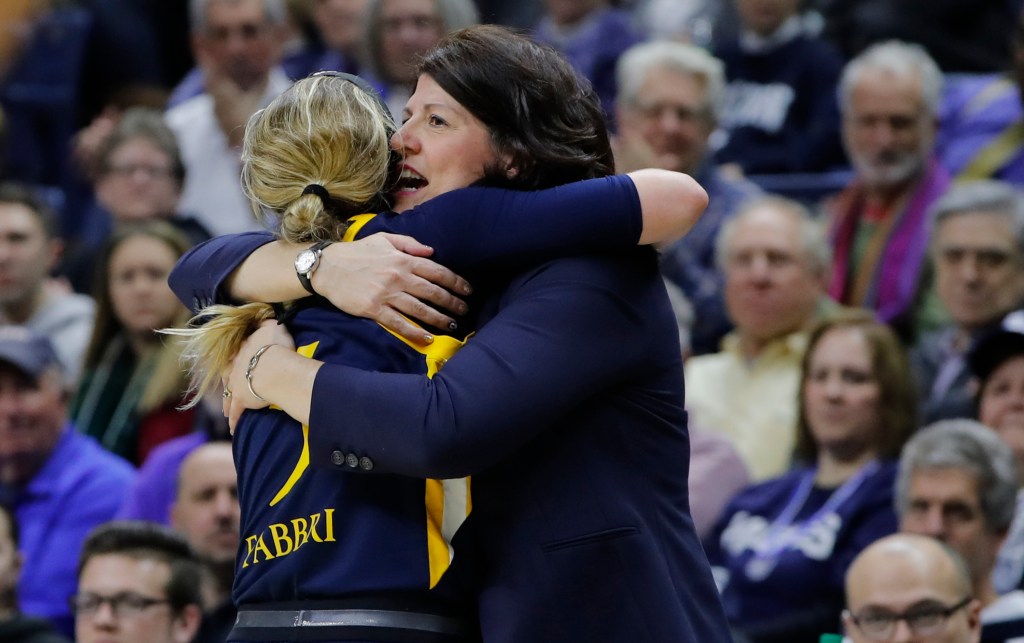
Fabbri credited a lot of Quinnipiac’s success in the 2010s to the investments the school made in athletics, particularly with the opening of the 185,000-square-foot M&T Bank Arena in 2007. That was a “crown jewel sitting on the hill,” Fabbri said, and it became a major factor in recruiting, allowing her to cast a wider net for top talent.
Quinnipiac’s success also had plenty to do with how Fabbri assembled her staff and ran the program. She hired coaches with different strengths than she had and empowered them to speak their minds. She emphasized a true family environment, with her own family spending hours and hours around the program. The program, she said on Quinnipiac’s “The Roar” podcast, was her fourth child. And as she raised her kids — and saw cellphones, social media and countless other technologies emerge and affect them — she used those experiences to help her relate to and nurture her players.
“They felt like she was their mom away from home for four years when they went to Quinnipiac,” Carly said. “So I think that’s her lasting impact, and the fact that she was so successful.”
TO FULLY UNDERSTAND how high Fabbri climbed with the Bobcats, though, it’s important to understand the beginning of her tenure. After playing and working as an assistant coach at Fairfield, she became Quinnipiac’s first full-time women’s basketball coach in 1995.
Fabbri took to coaching partly because she was a people person, and she loved being around a team every season. Many of the moments she came to appreciate the most happened in the locker room, when everyone felt something and it bonded them together.
“The different emotions that go into that locker room … made me feel so alive,” Fabbri said on “The Roar.” “… It was you being your honest self with a team that you were leading and saying anything that needed to be said at the right time in the right moment. To be so vulnerable and so happy and so disappointed and sad, to have all those emotions, I have lived a really full life.”
When Fabbri was hired at Quinnipiac, the program was Division II. She had no full-time assistant coaches, scholarships weren’t fully funded, and her office was a former closet that could only fit her and one other person in it at a time.
All in all, the program had “an intramural feel to it,” Fabbri told The IX Basketball.
That wouldn’t last long, though. Unbeknownst to Fabbri at the time, Quinnipiac president John Lahey was working to elevate athletics to Division I. Fabbri struggled in her three seasons in Division II, going 15-62, so when she heard about the move, she was initially apprehensive.
“I thought, ‘Oh my God, how the hell am I going to do this? We can’t even get off the ground with DII,’” she said. “But then the support started to come in — full-time assistants and a better budget. So I remember being excited, like, ‘OK, things are moving.’”
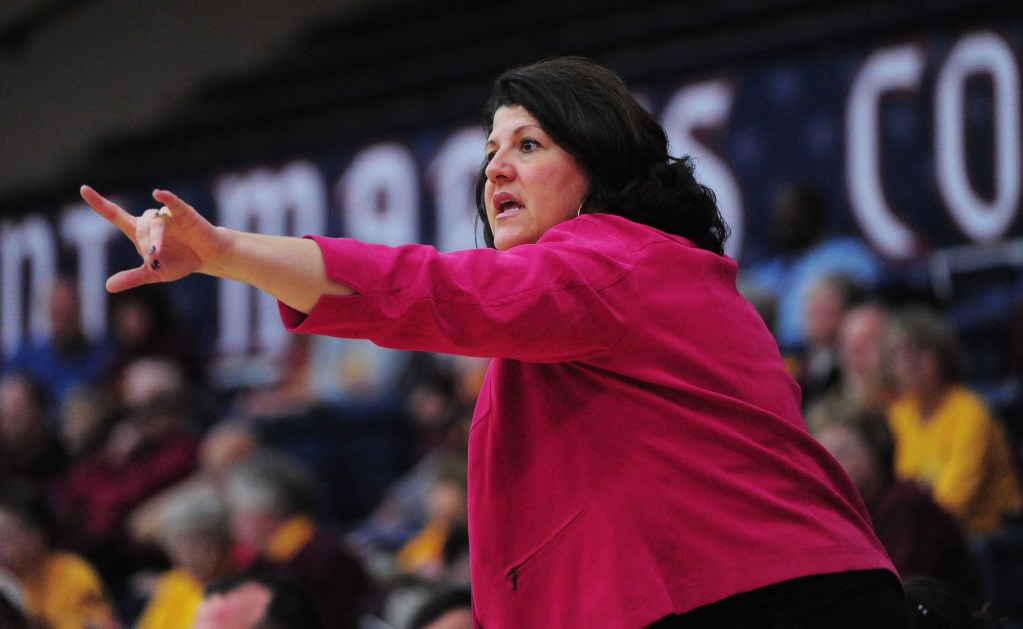
Quinnipiac struggled in its first two Division I seasons, winning just nine games each year. Fabbri described it as getting “our teeth kicked in for a while” in the NEC. But then the Bobcats started “taking big bites out of it every year” until they became a consistent top-four team.
Fabbri had opportunities to leave Quinnipiac over the years, but she never wanted to. That was partly because she didn’t want to uproot her children, but it also had everything to do with Quinnipiac’s approach to athletics. “It was always trying to be the next best version of itself,” she said, “and it took me for that journey.”
IN ALL THE MOMENTS between the wins and losses, Fabbri became someone people across women’s basketball loved and respected. She was always willing to talk with and encourage other coaches.
“Coach Fabbri is cool, she’s bold, she’s confident,” then-Merrimack head coach Kelly Morrone said in a tribute video in March. “If she’s around you, you know it. … Her teams also represent her. They’re classy, they too are bold, and she’s been such a welcoming mentor to me in this league. Although she’s wrapped me up with open arms personally on the floor, she’s kicked my butt every time.”
For Colgate head coach Shannon Bush, Fabbri was the first example she’d seen of how to be a female Division I coach when the two crossed paths roughly 20 years ago. She is “the standard I aspire to,” Bush said in a statement.
About three years ago, Fabbri was the example again for Harvard head coach Carrie Moore, who was a young, first-time head coach and didn’t have a large network yet. They ended up sitting next to each other at a recruiting event, and when Moore said hello, Fabbri offered to share her popcorn.
“She’s like, ‘You want some?’” Moore told reporters on March 17, one day after Fabbri’s retirement announcement. “And then she went to the concession stand. She’s like, ‘Can I get you anything? I’ll be right back.’ …
“For her to be so gracious and kind and just authentic and really just genuine in terms of who she is, I just walked away from that interaction being like, ‘Wow, she’s really cool.’ And no wonder she’s had a ton of success.”
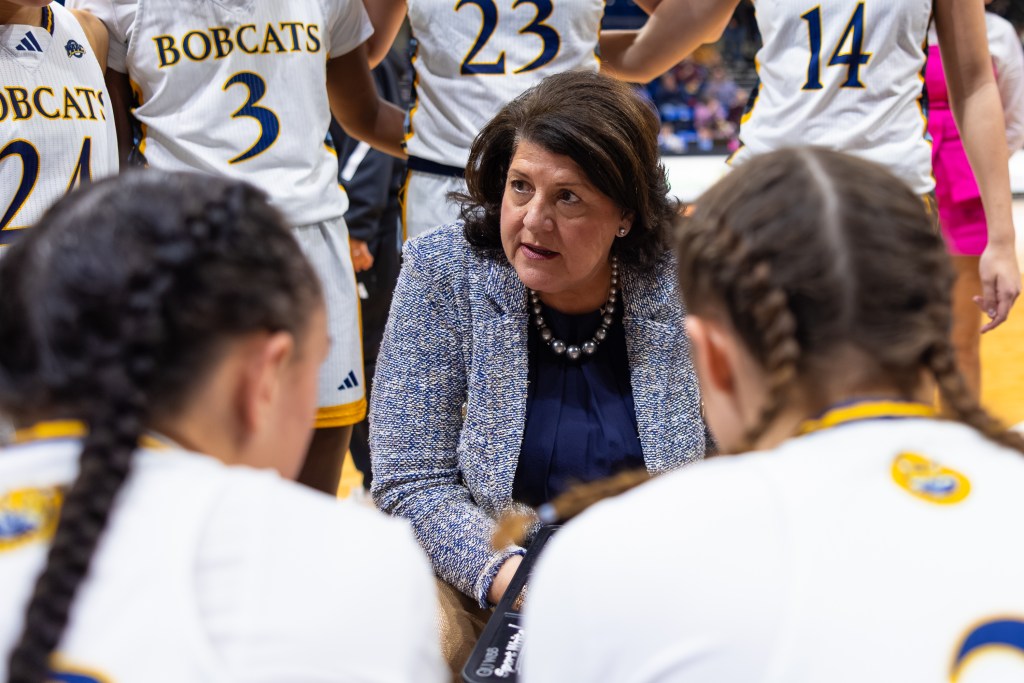
Fabbri’s players have walked away feeling similarly transformed by her presence — but also knowing she isn’t going anywhere. She plans to be there for them for the rest of their lives, for whatever they might need. In press conferences during the WBIT, players called her “one of my biggest role models” and “like my second mother.” When asked about her favorite saying of Fabbri’s, one player even likened the coach to Abraham Lincoln, drawing inspiration from George Mason’s proximity to Washington, D.C.
“She has so many lines, it’s even hard to sort out,” junior forward/center Anna Foley told reporters after the Stanford loss. “But it’s just unbelievable how well spoken she is, and … it’s poetic. We were [near] D.C. It’s like she’s our Lincoln. She’s giving the address.
“It’s just unbelievable how much she believes and just is so passionate, just can articulate how much she cares. … It’s hard to even pick out a line, but she’s destined for the show.”
MEANWHILE, QUINNIPIAC BASKETBALL became the fabric of the Fabbri family. Carly, her two younger brothers, her dad, her aunt, her uncle, her cousins and a family friend were all fixtures at games, to the point that the friend had a saying: “Bobcats get you through the winter.”
When Fabbri decided to retire, Carly said the entire family’s reaction was, “What are we going to do now?”
For Carly, Fabbri’s decision was shocking because Carly had only ever known her mom as the Quinnipiac coach. Growing up, Carly was the water girl in season and attended Quinnipiac’s camps in the summers. She went with the team on foreign tours to Portugal, Ireland and Italy and was thrilled to get to sit with the players in the back of the bus.
Then she became one of those players in the back of the bus, joining the Bobcats as a first-year in fall 2014. A 5’7 point guard, Carly started 74 of 121 career games at Quinnipiac and averaged 6.2 points and 2.7 assists per game. As a senior, she was named third-team All-MAAC after averaging 9.6 points and 4.2 assists per game and making 42.3% of her threes.
After Carly graduated, she went to physician assistant school and got a job at Yale New Haven Hospital, not far from Quinnipiac. She worked three days a week, and whenever she wasn’t at the hospital, she was around the Bobcats.
Ahead of the 2025-26 season, Carly left the hospital to join Fabbri’s staff. It was her first coaching experience, and unsurprisingly, she took after her mom.
“My coaching style, I think, is very similar to my mom’s: lots of passion, super competitive, want to win, and [have] a lot of fun while doing it,” Carly said. “And I think that’s why she gets a lot of players to say yes to Quinnipiac and to stay for four years is just because they love playing for her because she’s so passionate, she’s so energetic. So I think that’s exactly kind of — or I hope that’s how I how I coach.”
When Fabbri announced she was retiring, it looked for a while like Carly might be done with coaching, too. She’d made plans to go back to the hospital and resume her medical career.
But then Colleen Mullen, who had just taken the head coaching job at Rhode Island, called Fabbri. “What’s Carly up to?” Mullen asked.
Carly weighed the pros and cons of her two career paths as they pulled her in opposite directions. With support from Fabbri, she eventually decided to see what basketball could be like outside of Quinnipiac.
That means Fabbri will still spend many days in a basketball gym, watching Carly and the Rams. She’s also excited to visit her younger son, Paul Henry, who is a graduate assistant for the University of San Diego women’s basketball team, and her nephew, who plays football at UCLA. She’ll just need T-shirts in some new shades of blue after wearing Quinnipiac gear for over three decades.
‘Rare Gems’ is out now!
Howard Megdal, founder and editor of The IX Basketball and The IX Sports, wrote this deeply reported book. “Rare Gems” follows four connected generations of women’s basketball pioneers, from Elvera “Peps” Neuman to Cheryl Reeve and from Lindsay Whalen to Sylvia Fowles and Paige Bueckers.
If you enjoy Megdal’s coverage of women’s basketball every Wednesday at The IX Sports, you will love “Rare Gems: How Four Generations of Women Paved the Way for the WNBA.”
BUT RETIREMENT WILL also bring many more of the quiet, peaceful moments Fabbri craved.
She plans to spend some of that time in the museum that’s taken over her dining room. There, she’ll reminisce, write handwritten letters to her former players, and pick out things from the collection to mail them.
After all, history is meant to be shared, especially the kind of history that starts with an intramural-like program and ends in the Sweet 16. And Fabbri’s instinct has always been to share her successes far and wide, with players, staff, the Quinnipiac administration, other coaches who looked up to her, and even the fans who rallied around her Bobcats and their glittery stepstool to greatness.