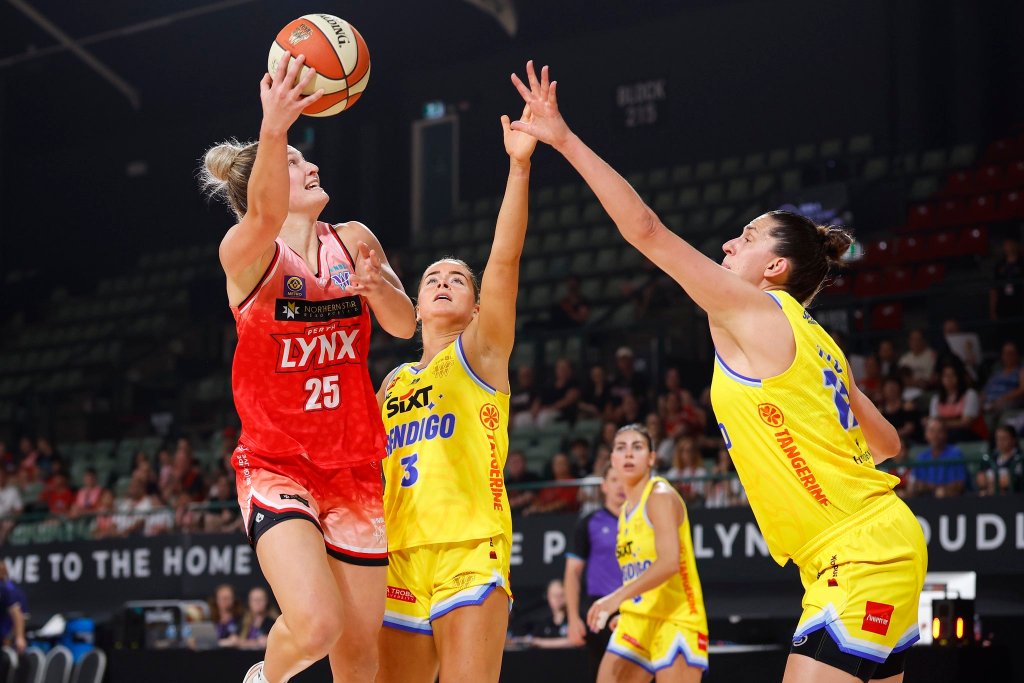
For nearly 50 minutes each day, Connecticut Sun guards Nell Angloma and Leïla Lacan had the same destination: Mohegan Sun Arena.
The Connecticut Sun guards spent those carpools navigating more than just their route. Thousands of miles from France and in a country where neither felt completely comfortable speaking English, the duo found something familiar in one another.
Lacan had already spent her rookie season last year adjusting to life in the United States. When Angloma arrived in Connecticut this season as a rookie, Lacan became a familiar voice and dependable crutch — translating when she could, offering advice and, eventually, blossoming into much more than a teammate.
“She helped me a lot because I’m not very comfortable with my English,” Angloma told The IX Sports. “She can help me to translate some details.”
What started as just a shared language and mode of transportation gradually transformed into a friendship.
Lacan used experience to help Angloma adjust
Lacan was in Angloma’s position last season when she first arrived in Connecticut. She didn’t speak much English but took it upon herself to take language lessons to improve her communication and make her sophomore season smoother.
Earlier in the season, Lacan joked that Angloma better learn some English, or it was going to be a long season.
Although their rookie seasons have been very different, Lacan has still been able to offer Angloma advice, particularly when it comes to staying game ready.
“What I can say is that, if you do your workouts and focus on the extra work after, you know that you will be ready when your name is called, no matter how long you spend on the court,” Lacan told The IX Sports.
Lacan has been able to support Angloma with advice on the court, but she gives her something even more important — a sense of familiarity.
“It’s not all new and all completely different because she can have a French speaker, you know. So there is kind of something that is familiar for her,” Lacan said.
Origins of the friendship
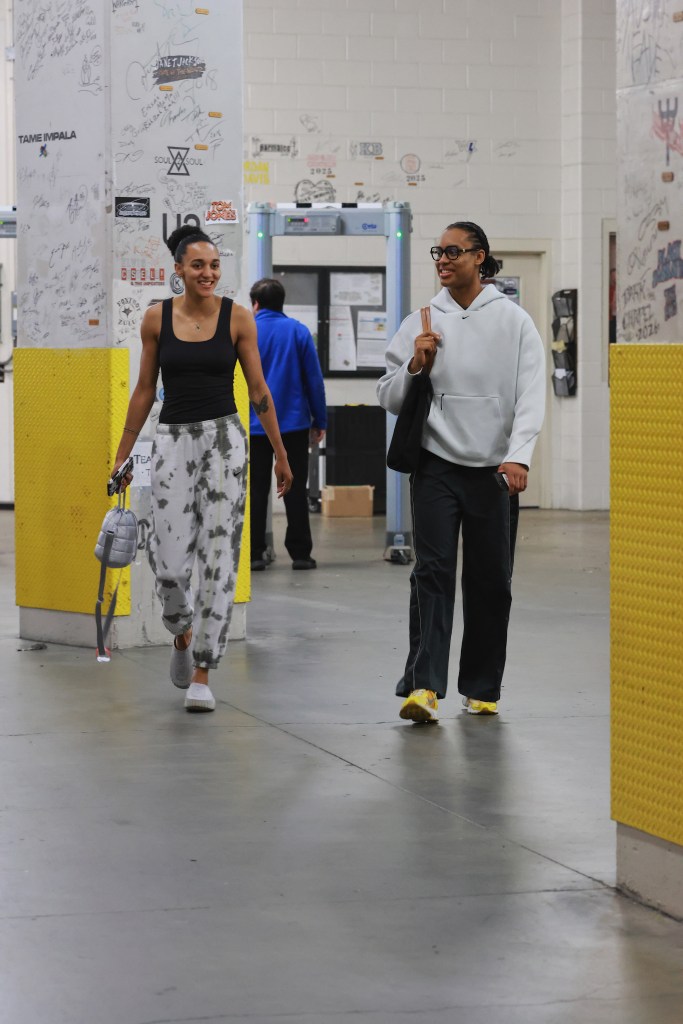
Lacan joked at the beginning of the season that they initially relied on teammates for rides to practices and games because neither had transportation of their own. That changed when Lacan got a car they could share.
“So we were driving every day to go to practice and to come back from practice,” Lacan said. “So we spent a lot of time already in the car, like 50 minutes a day.”
Their spots in the locker room are also next to each other, which gave them even more opportunities to talk. Because they are both French, those conversations come a little easier than they do with other teammates.
Angloma chimed in to offer another reason for their friendship: Lacan makes a lot of cake.
Lacan told The IX Sports that carrot cake is her specifically.
“She likes to eat,” Lacan said with a laugh.
Keeping their culture alive
Being over 3,000 miles from home also means missing the food they grew up with. Last week, the two finally got a taste of home when they shared maafe, a West African peanut stew, at a friend’s house.
“It was really good. And we can’t really find it in this area, like in Connecticut. So it was nice,” Lacan said.
Food isn’t the only way they have brought France with them — language has been another way for them to keep a piece of home close. They also have a French-speaking assistant coach in Pascal Angillis, who leads many of their workouts. Although Angillis is from Belgium, he conducts his workouts with them in French.
“[Pascal] Angillis, our coach, who is who we do all of our workouts [with], speaks French,” Lacan said.
French culture also finds its way into their everyday lives in the United States through music.
“In the lift room, Analisse [Ríos] our trainer, she put’s on French songs. So everybody’s pretty open to our culture, so it’s also easy to bring it here,” Lacan said.
Meziane’s adjustment
Angloma and Lacan aren’t the only French members a part of the Sun still adjusting to life in the United States.
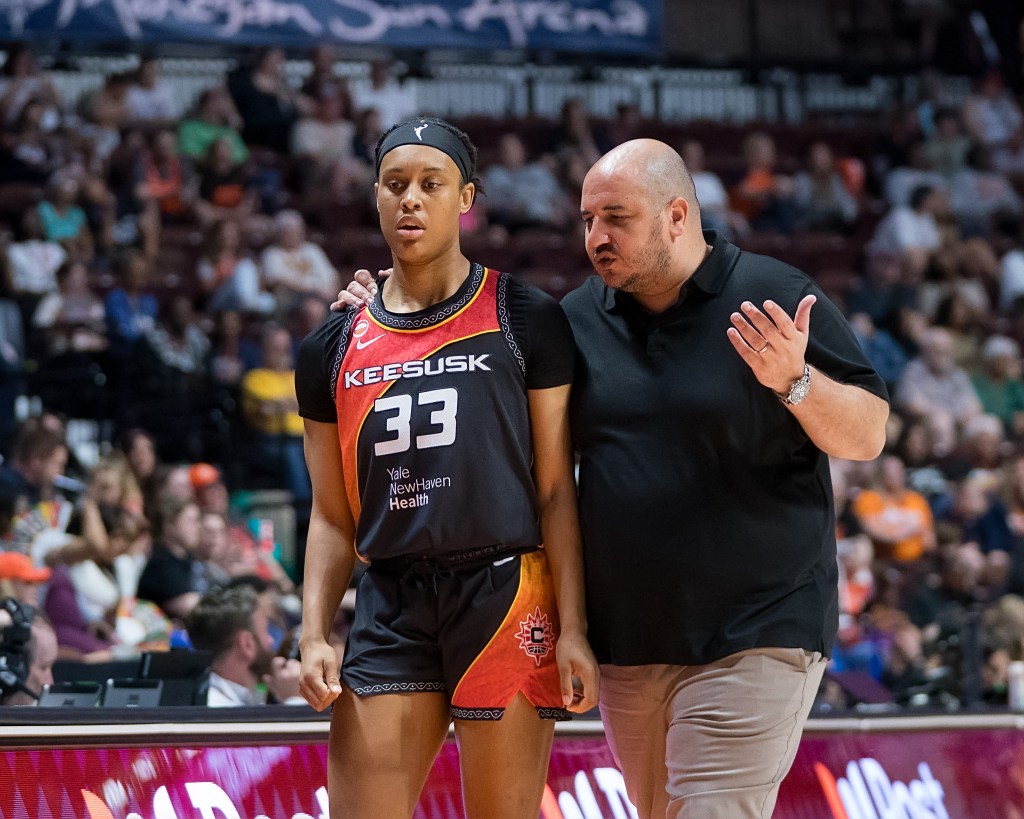
Sun head coach Rachid Meziane arrived in Connecticut with his own adjustments to make. Up until last season, he had never coached in the WNBA, was still developing his English and had to adapt to a league schedule that left small windows of time for practices.
Now, a season and a half later, he has become more comfortable with American culture and the day-to-day demands of coaching in the WNBA. But he doesn’t consider his adjustment finished.
“I still have a lot of to learn from American culture, from players,” Meziane said. “So yeah, that’s a long process.”
Meziane’s experience mirrors that of the two young guards. None of them arrived in Connecticut knowing exactly how to navigate life in the United States. They had to learn as they went — sometimes through English lessons and other times by leaning on those around them.
Lacan and Angloma’s growth
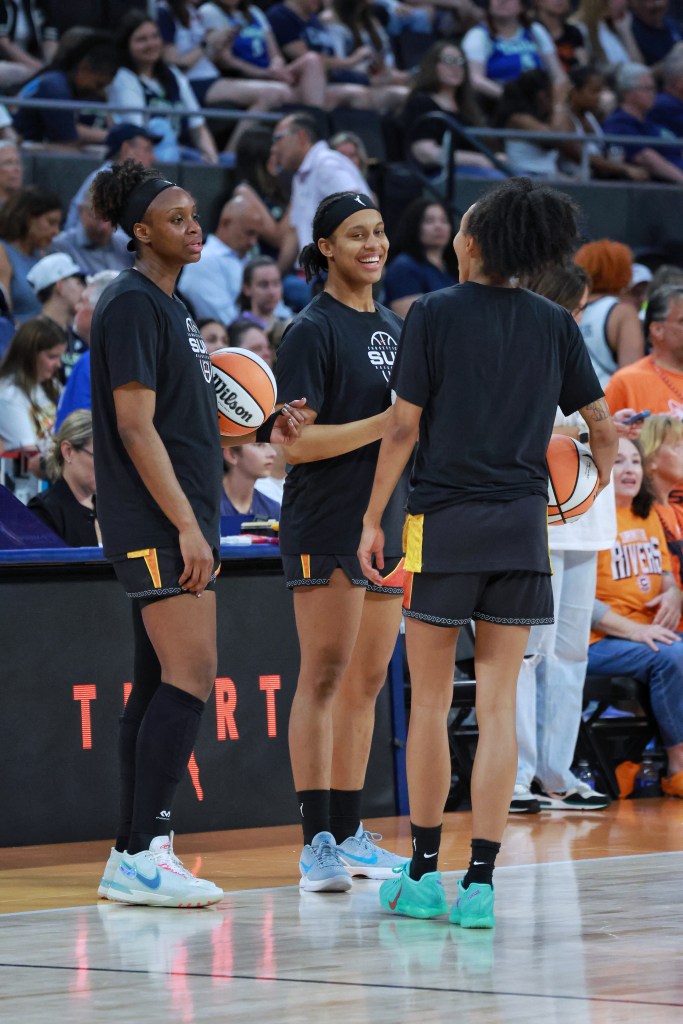
In her first season with the Sun, guard Kennedy Burke was expected to take on a larger leadership role than she has in the past. Along the way, she also developed a friendship with Angloma and Lacan.
Burke is often seen arriving at Mohegan Sun Arena with the two guards on game days. While getting to know them, Burke has watched them become more comfortable and grow into their roles.
“I feel like they do a really good job of just like being themselves,” Burke told reporters. “At the end of the day, they’re still young, they need the experience. But I feel like they come in and bring that energy no matter what.”
Burke has grown close enough to the duo that she calls them her “little sisters.”
“They keep me young,” Burke said with a smile. “So yeah, I’m really happy to have them on the team. They’re great.”
Despite the struggles of adjusting to a new home, Angloma wouldn’t hesitate to do it all over again.
“Yes, it was tough because it’s my first time in another country, and I’m not fluent,” Angloma said. “But If I had to do it again I think I’d do it again because this experience has allowed me to improve a lot of things about my game, also outside of basketball.”
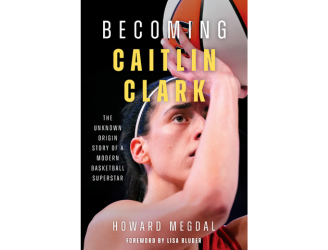
“Becoming Caitlin Clark” is out now!
Howard Megdal’s newest book is here! “Becoming Caitlin Clark: The Unknown Origin Story of a Modern Basketball Superstar” captures both the historic nature of Clark’s rise and the critical context over the previous century that helped make it possible, including interviews with Clark, Lisa Bluder (who also wrote the foreword), C. Vivian Stringer, Jan Jensen, Molly Kazmer and many others.