PHOENIX — At 4-12, many on the Phoenix Mercury are in uncharted territory. With championship aspirations following an appearance in the 2025 WNBA Finals and led by star forward Alyssa Thomas and former champions Kahleah Copper and DeWanna Bonner, this kind of early adversity can create tension, a sense of urgency and uneasy conversations in the locker room.
The question of accountability is one that arises. How do you keep frustrations from boiling over? What style of leadership emerges for a team that’s still trying to learn each other? Who will step up to lead those tough conversations?
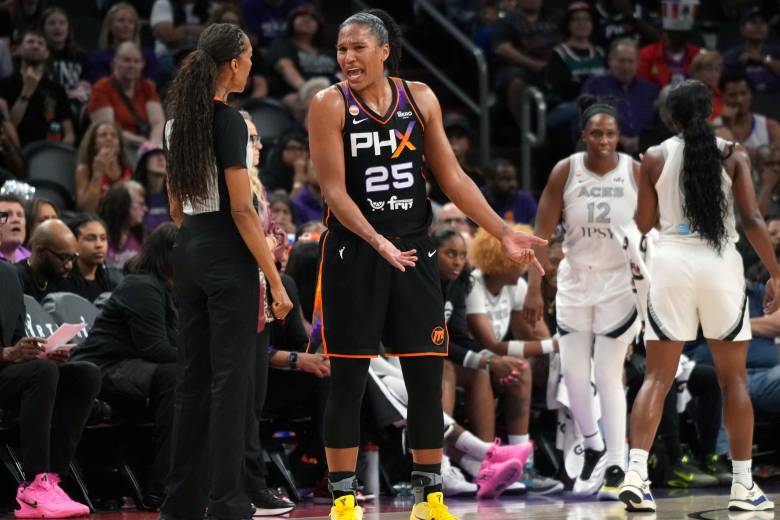
“It starts with the coaches. That’s on them,” Thomas said at a May 15 practice. “They’re the ones that tell us what to do, and when they’re holding us accountable, it makes my job easier to hold people accountable, as well. I think it works hand in hand, and like I said, it’s got to be a will to want to guard. And at some point, you’ve got to be frustrated with yourself for getting scored on time and time again.”
A balance of responsibility
Getting scored on time and time again is at the core of why Phoenix has been struggling so far this season. Recurring issues on the defensive end have caused the most frustration; last year’s team thrived on that side of the court, and this team said it would establish its identity there during the preseason.
Phoenix is ranked 11th in the league in defensive rating, and allows opponents to score 86.8 points per game.
“We’re struggling to guard anybody,” Thomas said. “That comes down to one, pride. Two, learning from our mistakes and coming in here and being held accountable. We got to get better each and every day in that area. And if we don’t, it’s just going to continue to result in how it is right now.
“I feel like we sound like a broken record of saying how we got to continue to grow, but at some point we gotta we gotta take the leap,” she later added.
The Mercury are also on a four-game losing streak, and had been on a six-game losing streak just two weeks ago. Most of those losses share a similar story: Phoenix would fight all game, often clawing back from large deficits to make things competitive, but ultimately fail to play a complete 40 minutes.
“Just trying to keep the team encouraged, because it’s easy to get down.” Copper said following a 111-102 overtime loss to the Los Angeles Sparks on May 13. “A lot of games we were in and then kind of got away from us, but just keeping our fight, you know? I think we had that tonight. We had some slippage defensively, but I don’t think we have to question our fight and our belief.”
Listen now to The IX Sports Podcast and Women’s Sports Daily
We are excited to announce the launch of TWO new podcasts for all the women’s sports fans out there looking for a daily dose of women’s sports news and analysis. Stream on Spotify, Apple Podcasts or anywhere you listen to podcasts, and make sure to subscribe!
But at the end of the day, the Mercury aren’t into moral victories. At some point, they want that fight and belief to show itself in the actual standings. That disconnect has created a delicate balancing act for the team.
On one hand, there are tangible signs of progress. Phoenix has consistently shown resilience, remaining competitive deep into games. Players continue to point to improved chemistry, longer stretches of stronger play, and their belief that the group is capable of turning the season around.
On the other hand, those flashes have yet to translate into wins. Each encouraging stretch has been followed by the same defensive breakdowns, missed assignments or costly lapses that have plagued the team throughout the season. As losses continue to pile up, the challenge of staying mentally locked in only intensifies.
The relationship between coaches and players, especially the veterans, becomes of the utmost importance during a time like this. Thomas, Copper and Bonner have years of playing experience that gives them credibility to speak up on what they feel is going wrong, but like Thomas said, the coaches are ultimately the authoritative figures where accountability begins.
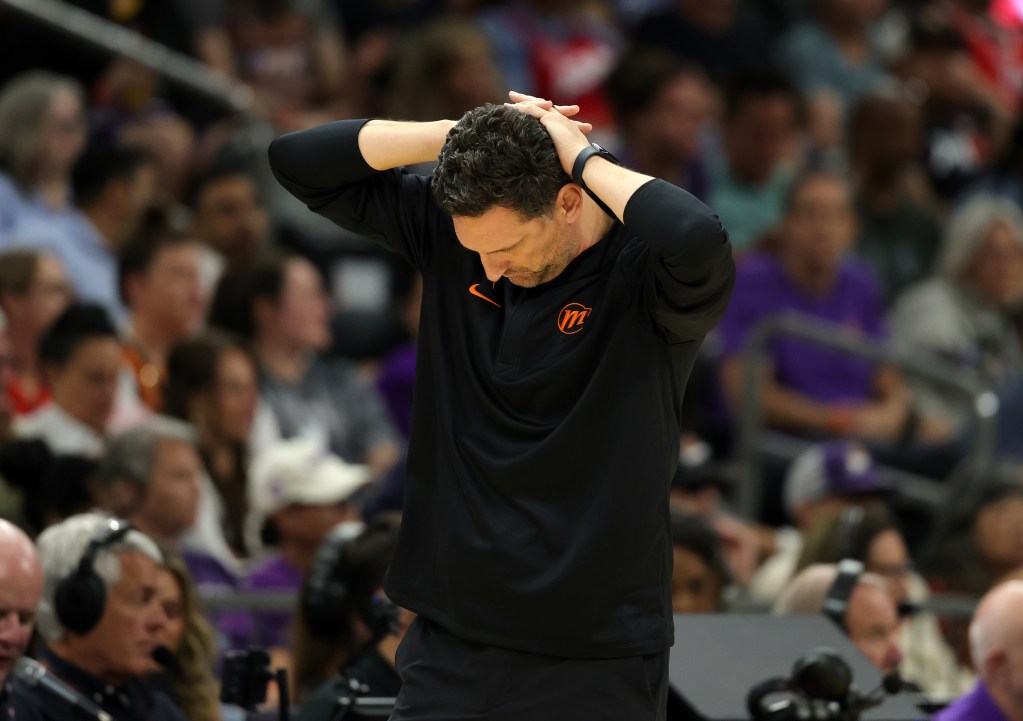
“I think as a coach, there’s always a balance, right?” head coach Nate Tibbetts said of the coaching staff’s approach to enforcing accountability. “Accountability, to me, is doing things right when they’re asked of you. But listen, you’re not ever going to be perfect, obviously. But we got to be closer to perfect than we’ve been. We just got to keep competing — I think that’s an area in accountability that we can make a step in.
Bonner, the oldest player on Phoenix’s roster, knows that the responsibility of getting the most out of players can’t rest solely on the coaching staff. Leadership during difficult moments requires a shared approach. Coaches can set expectations and establish standards, but ultimately, it’s the players who have to carry them onto the court.
“I think it’s probably like an equal balance,” Bonner said. “I mean, we’re the ones out there playing and we’re the ones that experience this. [I] know this league, 17 years, so you’re trying to give your knowledge, but also you have to let the coaching staff kind of take the reins at the same time.
“How hard you play on defense is on you,” Bonner added. “That’s not on the coaches, it’s not on your teammates, that’s kind of on yourself. Just starting there, being locked in on the game plans — what we need to do and who we need to key in on, and also rebound it, like it’s all heart and hustle. Control what you can control with your energy.”
Team chemistry starts with players
The next question for the Mercury to figure out is exactly what that accountability looks like on a day-to-day basis, and which style of feedback best connects with this roster. While some may prefer the “tough love, leave no feelings out” approach, and others the “pat on the back, focus on the positives” approach, this Mercury team has seemed to balance both by putting all egos aside and focusing on the essence of basketball.
Practices and film sessions have become crucial, especially as the team deals with the scheduling conflicts that have come with going on two lengthy road trips. Those opportunities to set aside potential grievances towards each other and focus solely on the problems that need to be solved on the court has become the primary vehicle for getting better.
“Just watching video. I think that’s really the only way we could [address accountability] at the moment with not being able to practice,” Thomas said. “Today was a good day to be able to practice. When we weren’t getting a stop, we had to do it again. But at some point you get tired of doing it again and just wanting to get it done in one rep.”
At the same time, growing closer off the court can also improve the team’s chemistry on it. During their most recent west coast road trip, the Mercury took advantage of a few days off to go wine tasting in Napa, Calif. That experience after two straight wins, and although they proceeded to lose their next game to the Golden State Valkyries, Tibbetts expressed that they played some of their best basketball of the season during that stretch.
“I think the first three games, we played better some games,” Tibbetts said of the road trip. “To be quite honest, I think probably our best game was Golden State, and we lost by six, with free throws at the end.”
Regarding how the road trip helped Phoenix’s chemistry, guard Jovana Nogic added, “When you’re on the road, you only have each other, so of course, you get closer. Spending more time with each other, getting to know each other off the court, those are all things that contribute to stuff.”
Despite returning seven players from last season, many of Phoenix’s newcomers this season are rookies from overseas still adjusting to the WNBA. While some like Nogic and wing Noemie Brochant have shown flashes of excellence, none have fully found consistency when it comes to contributing to winning basketball — making it even more important to establish trust within the team.
While coaches can empower these new players, only their fellow teammates can truly know what it’s like between the lines during a losing stretch. Playing with the pressure of having a winning record is one thing, but playing for the livelihood of their individual careers during their first season in the WNBA makes it even more difficult.
“You lean on each other. You lean on your teammates,” Nogic said after Phoenix’s most recent loss to the Las Vegas Aces. “That’s how you battle through it. When things aren’t going good for you, you try to make it go good for somebody else, and then they give you strength as well.”
‘Rare Gems’ is out now!
Howard Megdal, founder and editor of The IX Basketball and The IX Sports, wrote this deeply reported book. “Rare Gems” follows four connected generations of women’s basketball pioneers, from Elvera “Peps” Neuman to Cheryl Reeve and from Lindsay Whalen to Sylvia Fowles and Paige Bueckers.
If you enjoy Megdal’s coverage of women’s basketball every Wednesday at The IX Sports, you will love “Rare Gems: How Four Generations of Women Paved the Way for the WNBA.”
When sharing with The IX Basketball her experience of adjusting to life in the WNBA after over a decade of playing in France, Brochant explained the importance of veterans like Thomas and Copper:
“They are leaders, so when they have to say something, they are able to do it,” Brochant said. “It’s really good for the team. Even if we lose the game, they are able to speak and to say what’s not good.”
The process has rarely been linear for Phoenix. There have been encouraging stretches, frustrating setbacks and nights where the same issues resurface with no answers. Yet rather than searching for a single breakthrough moment, the Mercury have increasingly focused on the smaller signs of progress that may eventually add up to something larger.
“I think just staying together, having the most positive mindset as we can be,” guard Monique Akoa Makani said. “We had videos today and we were talking about how important it is, even when we’re losing games, to still see the little improvement that we do. It’s 1% every day. It’s a marathon, it’s not a sprint.”